
Stories of Strength:
Jay Sefton
Gaining power over our stories
HAVERTOWN, Pennsylvania – If history teaches us anything, it’s that pious acts often serve as cover for the most depraved of deeds. That’s what happened here in Havertown, a working-class suburb of Philadelphia, where Jay Sefton grew up. In fact, it was while directing a play of the lord’s passion that Father Smith abused Jay, who was the eighth-grade lead actor performing as Jesus.
The abuse started, as most do, with the perpetrator grooming potential victims. Father Smith began as soon as he arrived at the parish in 1983. The new priest headed up youth activities immediately, running CYO (the Catholic Youth Organization) events, such as trips to Action Park, the Jersey Shore and ski trips. He even hosted racquetball games at a club he belonged to, quickly becoming the cool priest who often came to dinner in the homes of parish teenagers.
“With all that fresh energy, everyone was taken with him,” Jay recalls. “And right from the beginning, Father Smith laid down rules like if you’re getting in the hot tub at his club, you need to get in without a bathing suit.”
So, when Jay was chosen to play Jesus for the passion play, he had intensely mixed feelings. It would be the third year that Father Smith had put on the play, and people had been whispering about how the lead needed to be naked with Father Smith.
But Jay had had dreams of performing for years, ever since he’d been in a production of “Julius Caesar” in the second grade. Experiencing the transformative effects of stage acting for the first time, the idea of playing Jesus captivated the shy and introverted boy.
“I knew from an early age that I wanted to be an actor,” Jay said. “Something about putting on a costume and taking on a persona helped my nerves go away. I still wanted to do it, despite the dread around what I had heard was coming.”
Once the rehearsals started, Father Smith made sure everyone understood that “authenticity” was paramount. That term served as an excuse for many subsequent dark deeds. Father Smith fashioned whips out of docksider shoelaces and demonstrated for the kids playing guards how to “whip” Jesus with them. That led to a succession of welts on Jay’s bare skin, which escalated to marking Jay’s face when the whipping became too erratic.
Primarily, Father Smith required Jay to accompany him to a closet, where he would insist upon affixing the loin cloth (Jesus’ costume) on Jay. Nakedness in that closet came to be a regular event.
“In that closet, I would have an out of body experience,” Jay said. “We would be in a closet for 15 minutes, with me naked and Father Smith’s head in my crotch and all I could think of is dread, dread, dread, then the relief of putting on the robe I started the play in and getting out of that closet.”
That’s how the entire season went: a long Spring of dread followed by relief, suffered on repeat. And now, as a licensed mental health counselor, Jay thinks he likely became addicted to that cycle. He’s a recovering alcoholic who’s been sober for 11 years and believes the feelings of dread, shame, embarrassment and relief are at the heart of many addicts’ journeys.
“At first, alcohol offers relief, and I became addicted to the relief,” Jay says. At the time, though, Jay says he just moved on and did the next thing. He graduated from eighth grade and went on to high school, with an occasional sign that something was wrong, like a fierce compulsion to scratch his ankles until they bled. On one occasion, he ran across Father Smith at the doors of the church after attending Mass. Jay’s father told the priest that Jay had taken up rowing on the high school crew team. And when Father Smith remarked, “Oh he’s working on his body and his mind,” that was too much for Jay. But his only response was to grab his dad and drag him off, not saying a word about why the priest’s reference to his body was so mortifying.
And while he never forgot the abuse, he just “tucked it into a port somewhere.” Unfortunately, that strategy wasn’t airtight. Jay vacillated for years between finding the courage to go back to school and dropping out, often with alcohol at the center of the decision to quit school. In 1993 he applied to West Chester University and declared his major in theater. While attending a production of Henry V at New York City’s Shakespeare in the Park, one line struck him particularly hard: “Self-love is not so vile a sin as self-neglect.”
Following graduation, he moved to Los Angeles to pursue his dream of acting. For 13 years, Jay worked waiting tables and auditioning for parts, optimism riding high on occasion. But at the same time, he felt a familiar dread at auditions and struggled with impulsivity and continued drinking. He started therapy and attended when he could afford it.
“I ruined relationships; I couldn’t get over nerves around acting; I couldn’t stop drinking,” Jay said. “I felt like a piece of [expletive] and the drinking would confirm it. But I never looked through the lens of clergy abuse. It wasn’t on my radar.”
It wasn’t until 2007, when his father sent him a link to an article in the Philadelphia Inquirer reporting on Father Smith being defrocked that Jay started to come to grips with what happened. His dad was immediately furious at “the bastard.” With the encouragement of his dad, Jay picked up the phone and called the number at the bottom of the article to report his own abuse. The Archdiocese of Philadelphia began to pay for his therapy, and his compulsion to keep repeating the cycle of dread/relief gave way to a new insight—therapy plus action could help him recover his voice and speak out. These efforts sparked the idea that growth was a possibility for him.
“I think victims spend a lot of time splitting off or dissociating from what happened,” Jay said. “But I know that when the article came out, I felt like it confirmed something, and it became a touchstone affirming my experience.”
In 2005, he began exploring how to dramatize a concept about the interplay of personal narrative, what we tell ourselves about ourselves and the world, and the neutrality of life events. He called it “The Most Mediocre Story Never Told.” “It represented a tug of war between myself and my story, the real self and the false self.”
Following that first solo play, Jay decided to pursue a master’s degree in psychology. While working to earn his license as a therapist on Cape Cod, he says he paid a lot of attention to Pennsylvania politics, watching Harrisburg and the failed efforts to change the statute of limitations for adult victims of clergy abuse.
Six years later, Jay participated in the Independent Reconciliation and Reparations Program (IRRP) that was set up by the Archdiocese of Philadelphia. Dissatisfied with the program, he rejected the offer and wrote an Op-Ed in a Harrisburg newspaper. From that article he began connecting with other survivors and sharing stories with one another and talking about their experiences with the IRRP. “They’re trying to clear these cases up before the grand jury reports,” Jay remembers thinking. “It’s not reconciliation, but it’s about trying to save assets for the church.”
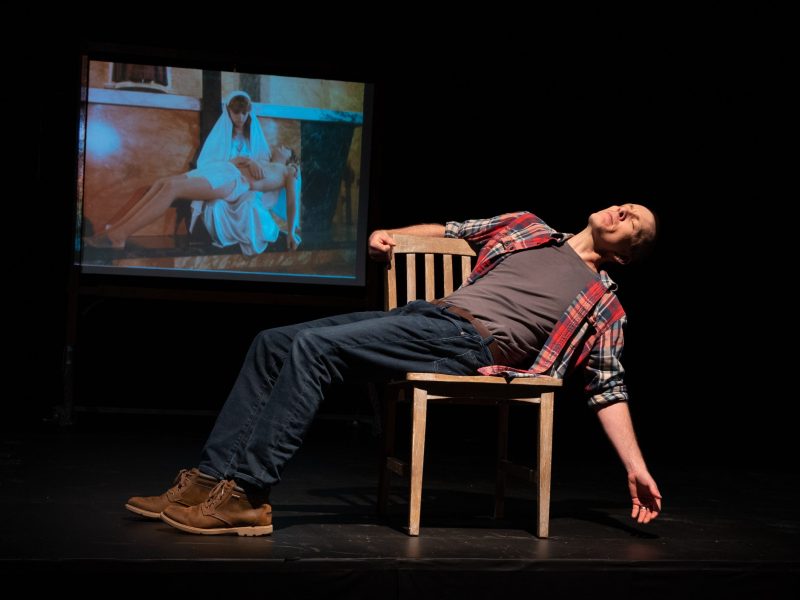
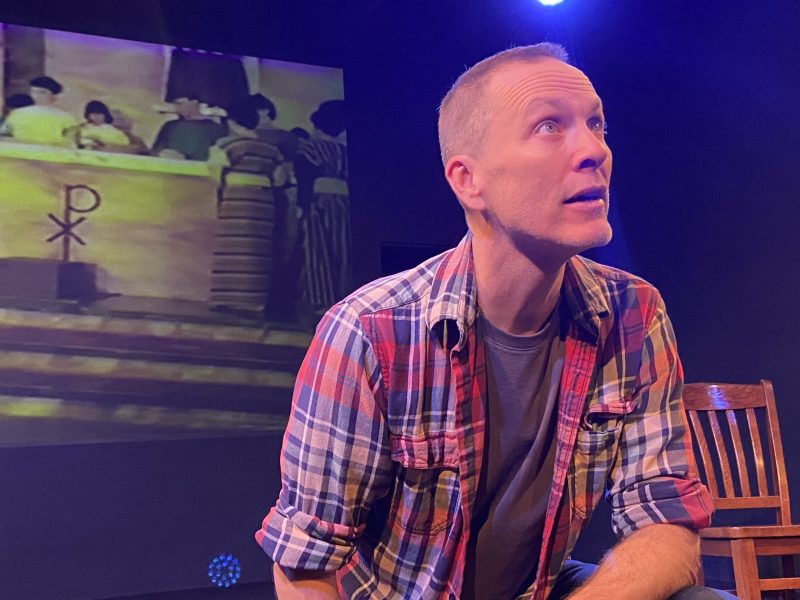
In 2021, when Pennsylvania failed to advertise a constitutional amendment that would finally bring a two-year ‘look-back window’ to the state and adult survivors, Jay was enraged again. That anger ignited his drive to finally put his story on the stage. He began a collaboration with psychologist and playwright Mark Basquill to write Jay’s story. It became his solo play, “Unreconciled,” which debuted in 2024 at Chester Theatre Company in Massachusetts, to rave reviews.
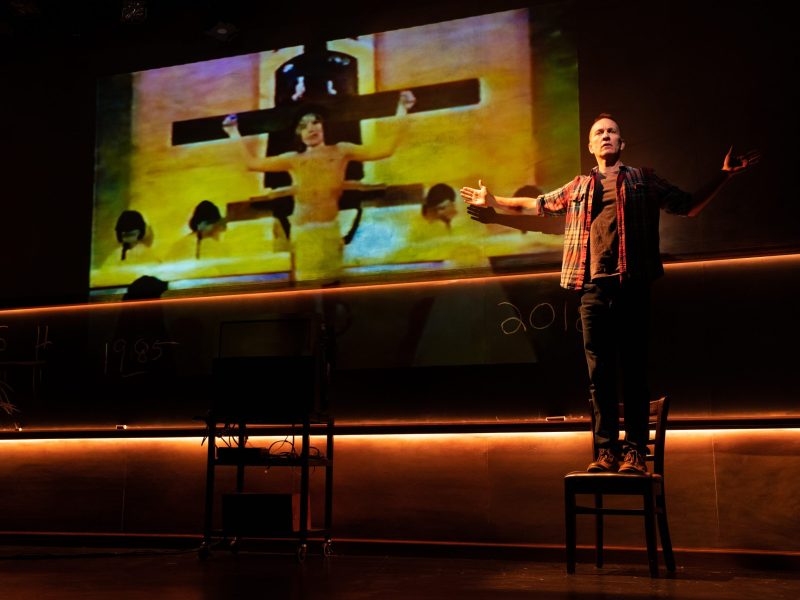
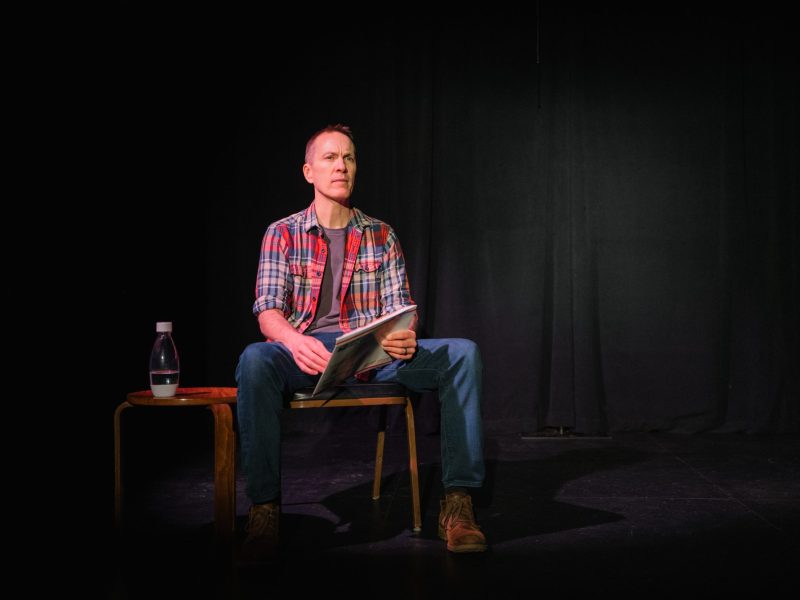
Since then, the play has toured across the country and across the Atlantic, from California to Belfast. It’s returning to Pennsylvania this spring with stops in West Chester, Havertown, and Harrisburg. Post-show discussions will follow each performance. Jay says these discussions have become opportunities for people to open up and talk about their experiences. In fact, they have become such an essential part of the experience, that Jay and his wife Melenie created The Unreconciled Project, which offers resources, peer support, connections to local organizations, and a process to help attendees creatively manage their own stories of trauma.
“The idea is that we make meaning around events, and we can slowly over time gain power over the story,” Jay says. “We try to help people learn how to have it become a point of strength.”
Along the way, Jay has met SNAP leaders on the steps of the state capitol in Harrisburg. He’s joined up, attended SNAP conferences, and even performed at the most recent conference in 2025. Now, feeling a part of SNAP’s advocacy efforts, Jay will be touring Unreconciled across Pennsylvania in April, during Child Abuse Prevention Month and Sexual Assault Awareness Month. As part of that tour, they are partnering with Pennsylvania State Representative Nate Davidson to support his statute of limitations reform bill. On Wednesday April 22 there will be a free performance of Jay’s show at the Gamut theatre in Harrisburg to help advance that effort. This show will be featured as part of an upcoming documentary film focused on the impact of telling this story in the community where it began and the legislative efforts of getting a ‘look-back window’ finally passed in Pennsylvania.
“Pennsylvania survivors are tired and I’m hoping we can help get this last bit of statute of limitations reform to pass,” Jay says. “If the church would step out of the way and let the courts do what they do, I think that would be a move toward transparency and making this right.”
See the upcoming performance schedule for Unreconciled