Mormon church battles insurers over sex abuse settlement coverage at 10th Circuit
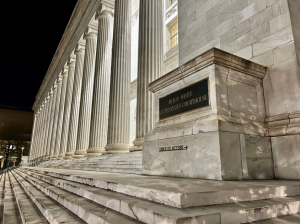
DENVER, CO — The Mormon church is asking the 10th Circuit to reinstate insurance coverage for a 2018 sexual abuse settlement, arguing multiple incidents involving a church member should be treated as a single occurrence under the insurance policy language.
The Church of Jesus Christ of Latter-day Saints, commonly known as the Mormon church, is seeking coverage from its insurers after it settled a lawsuit brought by multiple sexual abuse victims by one of its members.
The church argued its case in front of a three-judge panel in the 10th Circuit on Wednesday, accusing its insurers of picking and choosing when they must pay claims in a “heads-I-win-tails-you-lose” situation.
“This case is fundamentally about the interpretation of insurance policy language,” said Haley Krug, an attorney with Kirton McConkie representing the church.
The church says the insurance companies should consolidate the multiple sexual abuse incidents as a single occurrence, rather than separate incidents. It argues this is already part of the insurers’ policies.
The case dates back to a series of abuses from a teenage church member, Michael Jensen, whose victims say the church failed to protect them throughout the 2000s. Jensen was sentenced to 35-75 years in prison in 2013.
The church reached a settlement with the victims and their families in 2018.
The National Union Fire Insurance Company and ACE Property & Casualty Company denied coverage for the sex abuse settlement because, they argue, the abuse was not one single incident but a series of incidents with different times, places and victims. Further, they claim the church was aware of these incidents and chose not to act.
U.S. District Judge Tena Campbell, a Bill Clinton appointee, sided with the insurance companies in a decision last year.
But Krug argued the policy holder must be given deference whenever there is potential ambiguity in an insurance policy, in accordance with Utah Supreme Court case law. In this case, the lower court erred, she said.
“The church has offered an interpretation of this policy that it submits as plausible,” Krug told the court. ”It interprets the language to treat the alleged, continuous and repeated failure of church officials to prevent the abuse of seven claimants by the same individual church member, Michael Jensen, as a single occurrence. … The bottom line question at issue here, simply, is the church’s interpretation of the definition of occurrence reasonable?”
The lower court also added its own language to the insurance policy’s definition of an occurrence that included time, location and victims that is not present in the policies, she said.
“ACE here, in its policies, did actually contemplate whether it wanted a separate occurrence for each claimant, and it chose policy language that expressly excludes different claimants or separate claimants as a factor in determining the number of occurrences,” she said. “Here, the general harm that these claimants were exposed to was Michael Jensen.”
In other cases, ACE has taken the opposite position based on the same policy language, the church says in its opening brief.
National Union Fire Insurance Company attorney Mark Sobczak, of Nicolaides Fink LLP, argued the insurance decision is not just based on the specific occurrences of abuse but also the church’s repeated failures to act.
“The District Court correctly held that Jensen’s abuse and the church’s failure to stop it constituted multiple occurrences here,” Sobczak told the panel. ”Per the District Court, this accounts for both the insurance negligence and the specific acts of abuse. As absent either condition, the insured would not be found liable, and there would be no loss under the policy.”
But the panel grilled Sobczak on this interpretation.
U.S. Circuit Judge Nancy Moritz, a Barack Obama appointee, signaled support for the appellant when she noted the District Court avoided finding ambiguity even after acknowledging that the policy language appeared to shift depending on the parties’ positions.
“Isn’t that exactly the reason why we should reverse this?” she asked. “Let’s be honest, both sides are going to benefit from shifts in how they read this language and how they interpret this language in future cases.”
The panel also noted the District Court did not indicate whether the church’s interpretation of the policy language was reasonable and that its failure to protect the victims from Jensen was a factual dispute.
An attorney for ACE Property & Casualty Company also argued in favor of the lower court’s decision on Wednesday.
Moritz was joined on the panel by U.S. Circuit Judge Gregory Phillips, also an Obama appointee, and U.S. District Judge Matthew Garcia, a Joe Biden appointee.