 HOUSTON, TX — Duane Rollins needed to be careful. The winding drive through Houston’s tony West Oaks neighborhood took only a few minutes. But he could easily draw suspicion from constables patrolling the sprawling lawns and manors of the city’s elite. One swerve or rolled stop could foil his vengeance plan. They’d pull him over, smell the booze on his breath, and unearth the vodka bottle and pistol shoved under his seat. And then he would go straight back to prison.
It was 2016, months since Rollins had last been released and plunged back into the addictions that had kept him behind bars for much of his adult life. He’d turned fifty in a cell and always expected he’d return. This time, he’d have something to show for it. Though it was late, surely Paul Pressler would welcome him. Rollins had been a standout in Pressler’s church youth group, earning special visits from the Southern Baptist icon, Republican kingmaker, and prominent judge. They’d traveled the world together in between Rollins’s arrests. He was Pressler’s “dear brother” and longtime assistant, tasked with writing his letters, running his errands, and safeguarding a secret that could destroy his pious legacy. No more.
Squinting and weaving past immaculate mansions, he imagined how it would feel to press the pistol against Pressler’s bug-eye spectacles. To demand answers — to free himself. Soon enough he was approaching the three- story redbrick house. He thought he was ready, but it was too much. In an instant he became that kid again. Terrified. Trapped. So he parked nearby and did what he knew best: He drank and drank and drank until he passed out.
When Rollins awoke hours later, his head was spinning and his hands shook. But his adrenaline-fueled mania had given way to the kind of clarity that can follow a total breakdown. As the first rays of sun bled through the suffocating dawn, he recognized that he couldn’t change the terrible things that had been done to him. But he wouldn’t sacrifice what remained of his life for the man who had nearly destroyed it. Justice would have to come another way. He retraced his route through the neighborhood, weeping as he drove back to his sleeping mother’s house. Duane Rollins had no idea how many lives he’d soon change.
You might not know Paul Pressler’s name. But your life has been profoundly affected by the fruits of his labor. Though he may not be as familiar as Jerry Falwell, Pat Robertson, or other lions of the religious right, few have done more to shape our modern political and religious landscapes. Fueled by an unyielding belief in biblical inerrancy — the notion that Christian scripture is the perfect, literal word of God — Pressler in the eighties and nineties pushed the Southern Baptist Convention, the nation’s second-largest faith group, into a civil war that drove moderates from its ranks. As the architect of the SBC’s so-called conservative resurgence, Pressler — or the Judge, as many knew him — played a crucial role in the marriage of the Republican Party and the white evangelical voters who still sustain its power. For nearly four decades he served as a quiet GOP power broker, helping elevate generations of conservative Christians to the Texas Legislature, Capitol Hill, and the White House.
That legacy began to crumble in 2017, when Rollins filed a lawsuit in Harris County alleging that Pressler had raped him repeatedly over decades and that prominent Southern Baptist figures and churches had concealed or mishandled evidence that Pressler was a sexual predator. Perhaps because of Rollins’s lengthy rap sheet — which included convictions for drunk driving, drug possession, and theft — the lawsuit received scant attention in the months after it was filed.
Then, around January 2018, while burning out the last hour of an evening reporting shift at the Houston Chronicle, I found a document buried in thousands of pages of court filings showing that in 2004, Pressler had agreed to pay nearly half a million dollars to settle an assault lawsuit. Other filings contained references to additional accusers, at least one of whom was willing to come forward about other sexual misconduct. Intrigued, I started calling sexual-abuse survivors who had spent years warning the SBC that its 47,000 churches were being infiltrated by predators. They all told me the same thing: This is far bigger than one lawsuit.
My Chronicle colleagues and I ultimately wrote more than one hundred stories detailing the SBC’s widespread sex-abuse problem, prompting international headlines, unprecedented demands for accountability, and a Department of Justice investigation. Lesser known, however, is the brutal power struggle that broke out as a result — an ongoing fight that has pitted a new generation of leaders against the SBC’s old guard, pushed out some of its most prominent figures, and killed momentum toward major reforms.
For the past eight years, I have been ensconced in Southern Baptist life, with an inside view of SBC leadership and a community of abuse survivors as they’ve dealt with fallout from the crisis. I’ve interviewed countless SBC members, attended their meetings, and reviewed hundreds of thousands of pages of letters contained in Pressler’s archives. What follows is a story of one man’s rise, rule, and downfall, and of two prolonged battles for control of a massive faith group. It’s a story about power and what those who want it will do for it. More than anything, it is the story of what happens to those left in their wake.
Herman Paul Pressler III was born into a lineage of judges, preachers, secessionist lawmakers, and oilmen who helped build the South. He believed he was destined for similar glory. Privileged from birth, he spent his early summers at family homes in the Texas Hill Country and the Adirondacks, and he later attended Phillips Exeter Academy, a hyperexclusive prep school in New Hampshire. At ten he became a believer and threw himself into South Main Baptist Church of Houston with such zeal that it concerned his parents, according to his 1999 memoir, A Hill on Which to Die: One Southern Baptist’s Journey. At church he could spend more time with his grandfather, a deacon who profoundly shaped Pressler’s life.
Edgar Eggleston “E. E.” Townes was a Baylor University trustee who cofounded the South Texas School of Law and authored the original charter for the Humble Oil and Refining Company, a major part of what is now Exxon Mobil. He was Pressler’s hero — one half of the “most genuine and outstanding Christian couple” he’d ever known. “We held the same values and had the same motivations and priorities,” Pressler wrote in his memoir.
In the forties, Townes led a renegade political movement called the Texas Regulars that sought to use loopholes in the Democratic Party’s structure to deny President Franklin Delano Roosevelt a fourth term and rescue the party from the elites whom they accused of betraying grassroots voters and values. They were fighting, Townes once said, for the “great cause” of “Jeffersonian democracy, states rights and white supremacy.” The movement failed, but the group’s anti– New Deal anxieties spread, fueling the pro-segregation and anti-communist movements of the fifties. By the late sixties those fears and resentments had kickstarted Republican dominance in the South and laid the groundwork for the rise of the religious right.
For Pressler, who spent his adolescence around the Texas Regulars, it was an early lesson in political mobilization — at Princeton University he wrote a 274-page senior thesis on the movement, and years later borrowed many of its tactics in his fight for the Southern Baptist Convention.
With his grandfather’s help, in 1956 Pressler was elected to represent more than one million Harris County residents in the Texas House. He was 26, one of the youngest legislators at the time, and still attending law school at the University of Texas at Austin’s Townes Hall, the austere limestone building named after his great-grandfather. Pressler served one term, during which he supported a slate of pro-segregation bills, then took a job in Chicago with Vinson & Elkins, the prestigious Houston-based law firm cofounded decades earlier by his great-uncle.
After two years he returned to Texas, recently married to an Illinois debutante and eager to rejoin Texas high society. Second Baptist Church of Houston was a natural fit. The newlyweds became members in 1960, started teaching Bible studies, and quickly impressed the congregation’s well-to-do elders.
But controversy always seemed to follow Pressler. An effete young man with a high- pitched, nasal drawl, he carried himself with a seriousness that befit a future judge. At prep school, at Princeton, and in Austin, Pressler had been a zealous critic of anyone who didn’t believe in the infallibility of the Bible, deeming them spiritually inferior “liberals” — if not heretics.
At the time, the Southern Baptist Convention bore little resemblance to the hyperengaged, GOP-aligned voting bloc that it’s known as today. While Southern Baptists were overwhelmingly conservative in theology and politics, a history of violent persecution had made them ardent supporters of the separation of church and state. And in the century since it had split with Northern Baptists over slavery, the SBC, a collective of voluntarily cooperating churches, avoided schisms by focusing on evangelism rather than partisan politics.
Then, in 1961, an SBC seminary professor named Ralph Elliott wrote a book arguing that the book of Genesis was open to interpretation — that it perhaps included symbolism that conveyed religious truths. Elliott was fired, and a year later the SBC updated its doctrinal statement to reaffirm the belief that the Bible was inerrant.
But for Pressler, a Rubicon had been crossed. If liberalism had seeped into Southern Baptist seminaries, it would surely corrupt a generation of pastors who would then bring it to children in their pews. Nothing less than the future of the faith was at stake.
Over the next few years, Pressler wrote hundreds of letters raising alarm about liberalism or grilling SBC leaders and pastors on their theological views. He became a clearinghouse for the cause of biblical inerrancy, buoyed by a small fan club of laymen and pastors. In 1967 one of them, a Second Baptist deacon, asked Pressler a life-changing question: Had he ever heard of Paige Patterson?
A fellow scriptural purist, Patterson was ordained at sixteen in the Beaumont church pastored by his father, a prominent Southern Baptist Texan. By the time Paige Patterson was enrolled at Abilene’s Hardin-Simmons University he reportedly had manned some four hundred pulpits.
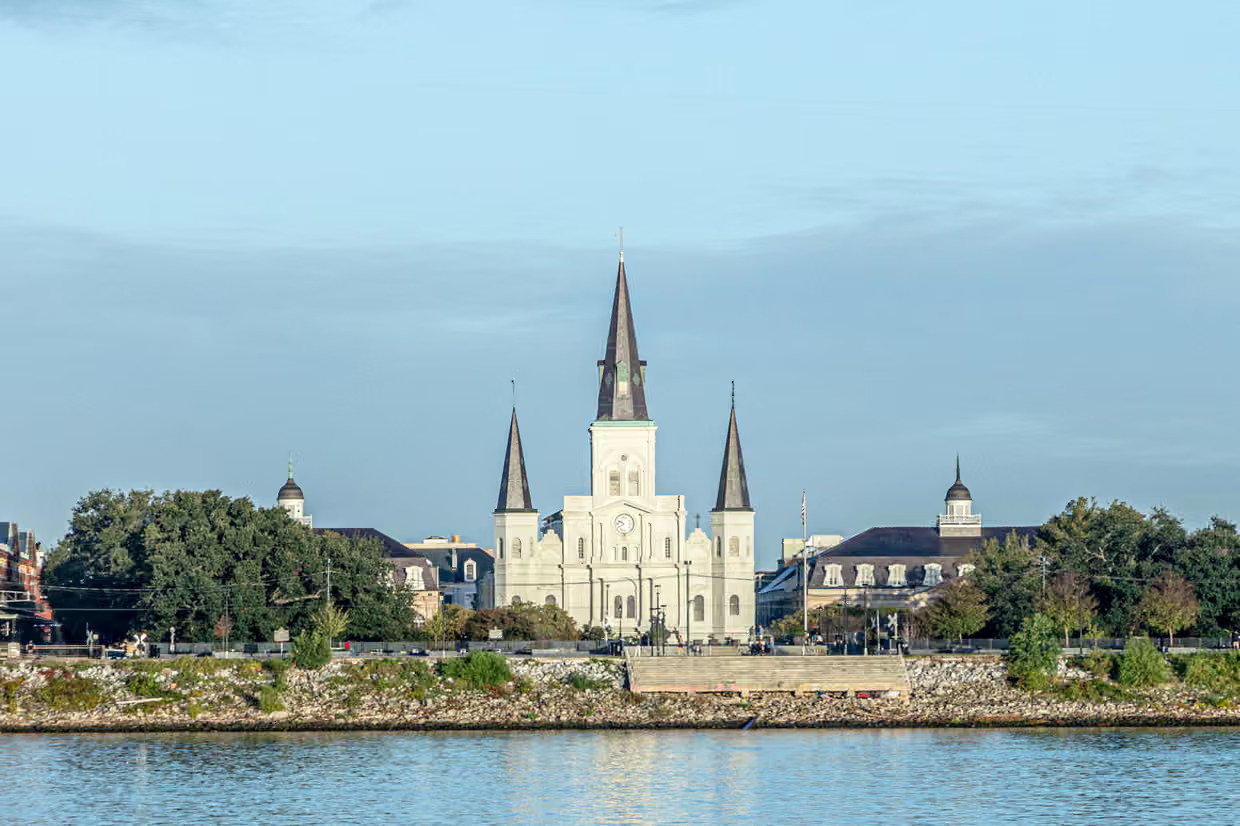
At New Orleans Baptist Theological Seminary, the pit bullish Irishman’s disdain for theological liberals was as fiery as his thick, wavy hair. Late one night in 1967, Patterson heard a knock at his door. It was Paul Pressler. The men quickly bonded over their conservative theology and relocated to the French Quarter’s famed Cafe Du Monde. What followed would become Southern Baptist lore, taught in seminaries and imbued into the mythology of the conservative resurgence — the SBC’s equivalent of Martin Luther nailing his 95 theses to a church door. There, in the early-morning hours, over hot chocolate and powdered beignets, the two resolved to rescue the SBC from liberalism. They left without a formal plan, Pressler wrote in his memoir. But they spent the next decade quietly plotting.
In the mid-sixties, as Pressler’s public diatribes increasingly made him an outcast at Second Baptist, he started leading the youth group at nearby Bethel Independent Presbyterian Church. It was the most joyous time in his life, he later wrote. Under his tutelage the youth group grew from a handful of members to 135 — including middle schooler Duane Rollins.
Pressler, who was in his forties and serving as a district court judge in Harris County for much of that period, compared his role at Bethel to a full-time job. His archives are filled with hundreds of cards, letters, and mementos from that time.
“You must attend the special events and be available to them day and night,” Pressler wrote in a letter to a church member. “You must have them in your home. You must do special things with them. You must be a friend, and then you gain the right to present the Gospel.”
But another call was pulling at him: In 1978, Pressler was appointed by Texas Governor Dolph Briscoe to the Fourteenth Court of Appeals, which gave him more time to focus on his SBC project. He spent much of the next year on the road, writing legal opinions from hotel rooms, meeting with future conservative leaders across the South, and quietly recruiting disaffected pastors and churches. That June, as his and Patterson’s strategy was taking shape, Pressler said he was challenged to leave Bethel and commit to the fight for the SBC.
“Are you going to minister to 250 high school students or 13 million Southern Baptists?” asked Jerry Vines, a future SBC president who pastored First Baptist Church of Jacksonville, Florida.
“I realized that I needed to give up working with the young people who had been very close to my heart,” Pressler wrote in his memoir. But there was another reason why he left his beloved youth group.
Four decades later a former member of the Bethel youth group would allege that in 1977, Pressler invited him to the swanky River Oaks Country Club and, while they were in the sauna, grabbed and fondled his penis.
“I froze,” the man, who was then a college freshman, wrote in a 2018 affidavit. “I was naked and trapped — miles from home.”
Around that time, court records show, Bethel leaders dismissed Pressler after learning of an “alleged incident” at Pressler’s home involving a young church member. These are the earliest known reports in what would be four decades’ worth of sexual abuse and misconduct allegations against Pressler, many of them brushed aside because of his religious and political stature.
In the seventies, it was easy to trust the man so devoted to saving young souls. Even now, Dawn Schwarz fondly remembers those early days with Pressler, a stern but caring teacher who was as dedicated to children as he was to biblical truth. Her deeply religious mother divorced in the early seventies and remarried a man with three children of his own, which meant less attention for the youngest of the bunch, her little brother, Duane Rollins.
For those first few years, Rollins’s sister told me, “It was kind of him and I against the world.”
Schwarz described their biological father as inconsistent and said Pressler quickly embraced Duane like a son. How lucky, she recalled thinking, that a prominent judge from a privileged family took a special interest in her kid brother. She and her stepbrothers joined Pressler’s high school youth group. When Duane was still in eighth grade, he came, too, tagging along on their weekly confabs at houses scattered across the Houston area and shuttling with them to Colorado for church camp even though he was too young to officially join the group, according to his family.
It wasn’t long until Duane’s behavior changed, his family said: His grades slid, and he started smoking and drinking, occasionally telling his sister about the out-of-body experiences he had when he looked in the mirror after a few beers, as if he didn’t quite recognize the boy with the almond-brown eyes staring back.
At first the family chalked up their youngest’s mounting problems to the natural consequences of divorce and assumed the occasional bruises on his arms were from roughhousing with his stepbrothers. But Duane was never quite the same.
Years later he would allege that by the time he turned fourteen, Duane was being lured to Pressler’s home, where Pressler would sexually assault him, a few times a month. Often, Duane said, Pressler would tell him how “oppressed” and “under attack” he felt and that the rapes were part of God’s plan.
Duane made it a few semesters before dropping out of college and by the mid-eighties was in the throes of addiction. Over the next three decades, as he rotated in and out of prison, his mentor built an empire.
In the months before the SBC’s 1979 annual meeting, in Houston, Pressler wrote in his memoir that he had a recurring, almost prophetic dream: A procession of Southern Baptists paraded from the city’s downtown to the gathering, chanting the hymn “We’re Marching to Zion.”
By the time some 15,000 Southern Baptists arrived in the Bayou City that June, he had tirelessly worked to turn that vision into a reality, quietly mobilizing droves of supporters to the meeting and securing skyboxes at the Summit, the massive arena that’s now home to Joel Osteen’s Lakewood Church, where Pressler caucused his members and monitored the meeting from above.
“Although they still do not realize how strong we are, the liberals are worried,” he wrote to his allies two weeks before the meeting. “This is with good reason.”
The following days foreshadowed much of the conflict that soon broke out. As Pressler’s allies blasted satanic liberals, moderates called for calm to prevent a schism. As religious right–aligned pastors exhorted Southern Baptists to join the fight for God and nation, moderates decried the politicking that threatened the SBC’s cooperative tradition. And as conservatives notched their first victory — the narrow election of firebrand Memphis pastor Adrian Rogers as SBC president — many Southern Baptists assumed that the tension would be short-lived.
“We’ve had doctrinal controversy, emotion, frustration, even anger,” one pastor said on the final day of the meeting. “Yet we’re one.”
Pressler had no such illusions. At most, he estimated in a 1981 letter, only 5 percent of Southern Baptists disagreed with his biblical views. But he would stop at nothing to root out that small group, which he maintained had Trojan horsed its liberal views into the SBC’s seminaries and sprawling bureaucracy.
“We are going for the jugular,” he said. “We are going for having knowledgeable, Bible-centered, Christ-honoring trustees of all our institutions, who are not going to sit there like a bunch of dummies and rubber-stamp everything.”
Over the next few years, as the denominational turmoil exploded into all-out war — what became known as the Battle for the Bible — Pressler commanded his movement like a seasoned general.
“It was like Gettysburg,” he said. “But this time the right side won.”
He allegedly used a computerized database to track and staff open pastorates across the country. He tapped seminarians to spy on their professors and report back any teachings of theological liberalism. He recruited laypeople across the country to pressure their pastors and churches to align with the conservative movement. And the SBC presidents whom he helped elect used their appointment powers to stack the denomination’s governance boards with loyalists who began purging those they deemed liberals from seminaries and other entities.
By the time moderates realized how committed and organized the conservative movement was, it was too late.
“We were naive,” Nancy Sehested, a moderate leader, told me. “We didn’t have the imagination to see how strategic and how managed [they were] or how much meanness would be used to get what they wanted.”
Pressler always claimed that his political and religious work were distinct projects. But scattered across the country in his and other religious right leaders’ archives, documents demonstrate his deep connections to right-wing political movements and reveal how he horse-traded his power in conservative religious and political realms, using his SBC influence to bolster his GOP stature.
Central to that push was the Council for National Policy, a secretive network of conservative religious, political, and business elites that for nearly half a century has used its collective wealth and influence to push America toward its version of utopia: a Christian-dominated society in which corporations are unencumbered by regulations or labor unions.
Pressler joined the CNP in 1981, and he and other members influenced SBC committees, pushing the faith group to support policies favored by the religious right and the Reagan administration — such as hard-line opposition to abortion and support for school prayer.
By the late eighties, Pressler was the CNP’s president. When his old friend George H. W. Bush announced his presidential bid, Pressler saw an opportunity. Bush’s evangelical support was lukewarm. In a confidential letter to the then–vice president, Pressler and four other evangelical CNP members promised to deliver evangelical voters in exchange for “direct access” to the White House.
Bush won and, in 1989, nominated Pressler to lead the Office of Government Ethics. It should have been a crowning achievement: a direct line to the president and a key role in vetting federal nominees. But months later, Pressler abruptly withdrew from consideration — an about-face that for nearly forty years has been the subject of great speculation. In Pressler’s various retellings, he stepped back because he didn’t want to distract from his SBC work or he needed to be with his son, who has physical disabilities. But archives shed new light on Pressler’s decision.
By then there were open questions about Pressler’s sexuality. In a July 1989 letter, Richard Land, a conservative-movement leader and longtime Pressler mentee, was asked by a moderate pastor to respond to “rumors” that Pressler “practiced homosexuality.” And in a 2005 letter, Patterson acknowledged that Pressler’s nomination was scuttled by a “charge of homosexual behavior” made to the FBI by Abner McCall, a past Baylor University president, during Pressler’s vetting process.
Like others, Patterson blamed the accusations on Pressler’s SBC enemies and rallied behind him. But a few months later, as the White House was prepping Pressler for his confirmation hearing, he suddenly withdrew, instead accepting an appointment to a drug-advisory panel that didn’t require Senate scrutiny.
Far from stymieing his rise, the episode turned Pressler into a martyr — a victim of vengeful liberals who would do anything to destroy God-fearing men.
“They told horrendous untruths to the FBI. . . . When I met with the President and he offered me the job, I had reached the conclusion that it really was not worth it,” Pressler wrote in a 1992 letter to U.S. Supreme Court Justice Clarence Thomas, who had just survived a contentious confirmation hearing that focused on sexual-misconduct allegations. “Suffice it to say I can identify with you. Yours was a typical case of liberal deceit and deception. They have used it time and time again.”
When, a few months ago, I showed that letter to Jaclanel McFarland, she shook her head and sighed. As a longtime Baylor regent and SBC moderate, she was on the front lines of the battle against Pressler and knew him personally from her career as a judge in Harris County. Far more than whispers about Pressler’s sexuality, she told me, there were abundant suspicions about his relationships with boys and young men, including the personal assistants and mentees with whom he often shared hotel rooms.
In the late eighties and early nineties, archives show, moderates began investigating allegations of Pressler’s misconduct. In handwritten notes and sometimes-cryptic letters, they chronicled what appear to be serious claims. One Dallas-area minister’s name was written on a note stating that they had “a member ‘approached’ by Pressler . . . quite willing to talk.” Another note appears to reference allegations related to Pressler’s early days at Second Baptist Church of Houston:
“Pressler approached them,” it reads. “P. would take to his ranch – seek to seduce.” McFarland was not involved in those inquiries but was close friends with some of the men who were. She said it was obvious to them that Pressler’s behavior was predatory. But they never found definitive proof, she said. So nothing ever came of it.
At the SBC’s 1990 meeting, in New Orleans, conservatives delivered a knockout blow. Morris Chapman, a conservative pastor from Wichita Falls, was elected president, all but ensuring that majorities of the denomination’s various trustee boards would be appointees of the conservative movement, allowing them total control over the SBC’s seminaries and bureaucracy. With their conservative resurgence victorious, Patterson and Pressler returned to Cafe Du Monde to re-create for a photo the fateful early-morning meeting from which their movement had sprung nearly a quarter century before.
Meanwhile, McFarland and other moderates mourned: “It was like going to a funeral,” she said of that week. “Something had died, and life would never be the same.”
Moderates staved off an attempted takeover of Baylor University but, admitting defeat, spun off their own, smaller denomination, the Cooperative Baptist Fellowship.
With the battle won, Southern Baptist leaders pivoted to the broader culture war, using their status as moral paragons to fight the gay-rights movement and the degeneracy of President Bill Clinton. God had chosen them as a bulwark between Christians and the culture that hated them — he had guided the resurgence of their true, conservative theology. To question the movement or its heroes was almost to question biblical truth itself. So, few Southern Baptists did.
A History of Coordination
Pressler’s work in the SBC and in the Republican Party often overlapped.
- 1979 — Paul Pressler and Paige Patterson launch the conservative resurgence at the SBC’s Houston meeting.
- 1980 — Ronald Reagan aligns with the Christian right at the National Affairs Briefing, in Dallas, headlined by SBC conservative leaders.
- 1981 — The Council for National Policy is registered in Texas. Pressler and Patterson become members.
- 1982 — CNP-aligned SBC leaders work with a top Reagan aide to push the SBC to support a constitutional amendment allowing prayer in schools.
- 1984 — The SBC’s president, along with three predecessors, joins the leadership of the American Coalition for Traditional Values, which uses pastors to get out the Republican vote.
- 1984–85 — Pressler advises CNP leaders on mobilizing churches and sends lists of pastors to Jerry Falwell’s Moral Majority for voter-registration purposes.
- 1987 — Pressler angrily ends a TV interview with journalist Bill Moyers after Moyers asks him about his ties to the CNP.
- 1987 — The White House taps SBC and CNP leaders to support Robert Bork’s Supreme Court nomination. Pressler’s SBC allies endorse Bork — an unprecedented action. (The U.S. Senate rejects the nomination.)
- 1987–1991 — Pressler and other CNP- affiliated Southern Baptists successfully push the SBC to leave the Baptist Joint Committee on Public Affairs, saying the group does not reflect their views on church-state separation.
- 1988 — Pressler and other CNP leaders demand that George H. W. Bush promise them access in exchange for evangelical support in his campaign.
- 1989 — President Bush nominates Pressler to lead the Office of Government Ethics.
Long before the SBC’s abuse crisis made national headlines, there were clear signs of a problem. Since the late eighties, Baptist Press, the denomination’s news service, had published articles that spotlighted the growing number of churches sued for sexual misconduct, urged congregations to adopt background checks and other procedures, and warned that Christians were guilty of a “complicity of silence” on abuse.
And yet in the aughts, as other denominations responded to the Catholic Church’s unfolding abuse problem by adopting their own safeguards, Southern Baptist leaders blamed that crisis on Catholic theology, celibacy requirements for priests, and church hierarchy.
“In Protestant churches, people in decision-making positions are parents,” Richard Land, head of the SBC’s moral advocacy and public policy arm, said in 2004. “Parents are not going to allow a child abuser to have access to children.”
Not long after, the Survivors Network of Those Abused by Priests — or SNAP, the advocacy group that was instrumental in exposing the crisis in the Catholic Church — began pleading with SBC leaders to act, warning that their faith group’s decentralized nature and lack of uniform ordination standards created an environment in which predators could easily infiltrate and move among churches.
Christa Brown, a SNAP leader and abuse survivor, documented the problem on a website and alerted the SBC to her findings. Reactions were often hostile. When Brown was allowed to address the SBC’s executive committee, she said one member defiantly turned his back on her while she spoke. And when SNAP drew attention to the case of pastor Darrell Gilyard — whom Patterson had defended as Gilyard moved from church to church amid dozens of sexual misconduct allegations in the late eighties — Patterson called the organization “evildoers” and “as reprehensible as sex criminals.”
In 2007 leaders of the SBC’s executive committee received a letter from Reverend Thomas Doyle, a former high-ranking Vatican lawyer and early whistleblower about the Catholic abuse crisis.
“I am concerned by what I fear may be developing as a similar pattern in the nation’s largest Protestant denomination,” wrote Doyle, who by then was an activist working closely with Southern Baptist abuse survivors. “Clergy sex abuse is a scourge that knows no bounds of theology, denomination, or institutional structure.”
SBC leaders told him they had no control over any of the faith group’s 47,000 autonomous churches. The SBC’s governing documents allowed for the removal of churches that had female pastors or affirmed homosexuality. But when Doyle and other activists pressed for scrutiny of churches with known abusers on staff, SBC leaders said they had no such authority.
In 2008, after years of pleas from survivors, leaders of the SBC executive committee officially declined to pursue basic reforms — namely, maintaining a database of ministers convicted or credibly accused of sexual abuse that churches could consult when hiring. Publicly, they contended that they had no authority to do so. Privately, in emails that were made public years later, they acknowledged that such a mechanism was both possible and effective, but it might open them up to lawsuits.
Over the next decade hundreds more Southern Baptist church leaders would be accused of sexual abuse. As leaders were debating abuse reforms in the mid-aughts, Jen Lyell was beginning what should have been the ultimate Southern Baptist success story.
Born into poverty, she spent the first years of her life bouncing from town to town across central Illinois. Her family was often homeless, and drugs were a constant, she said. A voracious reader, the short and boisterous brunette found refuge in books, but at the age of twenty she was living out of her car. Around that time she decided to attend a crusade held by the famed preacher Billy Graham in St. Louis. It was the beginning of a new life. She committed herself to Christ and was soon drawn to the SBC, where the steadfast biblical conviction was a refreshing contrast to the years of instability she had faced.
In 2002, when she was 24, she enrolled at the SBC’s Louisville, Kentucky, seminary. Whip-smart with a dry wit and warm confidence, Lyell stood out at the school. She was unafraid to challenge her mostly male classmates and earned attention from faculty that made her fellow seminarians jealous.
There she met David Sills, a professor who became her faculty adviser. She soon saw him as a surrogate father and was welcomed into Sills’s family. She graduated in 2005, moved to Chicago for a job in Christian book publishing, and by the mid-2010s was named a vice president of Lifeway Christian Resources, the SBC’s massive publishing arm. Lyell seemed to be thriving; she was barely in her forties and already one of the highest-ranking female executives in the denomination, working closely with Beth Moore and other powerhouse Christian authors.
But throughout her rise, Lyell was keeping a secret. In 2018, after years in therapy, she alleged to a few friends, colleagues, and a small group of leaders at her former seminary that Sills had sexually abused her on and off for more than a decade beginning in 2004 and that he had manipulated her into believing it was her fault.
Sometimes, she later alleged, Sills threatened her with violence if she were to report him and said he would exile her from his children, whom Lyell by then thought of as siblings.
Seminary leaders confronted Sills, who maintained that it was a consensual sexual relationship but resigned from his post. (He continues to deny the abuse allegations.) Lyell told me that she hoped that would be the end of it. She got back to work, focusing on her illustrated storybook Bible that Lifeway published in 2019. Soon enough she would be thrust into the center of a new Southern Baptist civil war.
As their allies killed meaningful abuse-related reforms, the heroes of the conservative resurgence enjoyed the spoils of their conquest. Patterson was named president of the Southwestern Baptist Theological Seminary, in Fort Worth, in 2003. He had ornate stained glass depictions of Pressler, himself, and other conservative-movement heroes installed in the school’s chapel. He banned female professors in the school of theology, citing his belief that women should not teach or have authority over men in spiritual life.
And as enrollment plummeted, employees were laid off, and the school’s deficit reached $100 million, the seminary provided Patterson with a private chef and began building an on-campus facility that included a nearly six-thousand-square-foot apartment and library to serve as his residence for life.
Pressler ramped up his political work, using the influence he’d accumulated at the Council for National Policy to help shape Texas and national politics. Ahead of the presidential election in 2000, he played a crucial role in pushing the CNP to back the campaign of George W. Bush. Pressler was also an early supporter of Ted Cruz’s 2012 Senate bid and 2016 presidential campaign and served as an
early adviser to Attorney General Ken Paxton.
In 2007, as a tribute to his lifetime of religious and political accomplishments, Louisiana College (now known as Louisiana Christian University) announced plans to open the Judge Paul Pressler School of Law in downtown Shreveport, which would train the next generation of Christian lawyers. Its star-studded, CNP-affiliated board was a testament to Pressler’s influence. Among the board
members: James Dobson, the longtime head of Focus on the Family; former U.S. Attorney General Edwin Meese; and Kelly Shackelford, whose Plano-based First Liberty Institute has been instrumental in lawsuits that have eroded the wall between church and state. The school’s founding dean, J. Michael Johnson, is now the speaker of the U.S. House of Representatives.
Having his name adorn a law school was among the highest honors of Pressler’s life. “Law is the way we maintain society,” he said at a press conference, holding a law book that belonged to his beloved grandfather. “And without the Christian concept and without the Christian dedication, there is no way that democratic government is going to operate effectively.” But, because of struggles to obtain
funding and accreditation, the school never opened.
As Pressler’s political influence increased, so too did the allegations against him. In 2004 leaders of First Baptist Church of Houston, where Pressler was a deacon, looked into accusations that Pressler had pressured a twentysomething man to pray naked with him at Pressler’s home and then forcibly undressed and groped him. Church leaders wrote a private letter to Pressler warning him that the behavior was “morally and spiritually inappropriate. . . .Given your stature and various leadership roles in our church, the Southern Baptist Convention and other Christian organizations, it is our considered opinion that this kind of behavior, if brought to light, might distort your testimony or cause others to stumble,” they wrote. “We desire neither.”
Accusations weren’t just coming from within Southern Baptist life. In 2004, Pressler’s longtime law partner, Jared Woodfill, was alerted to allegations of sexual misconduct involving Pressler, according to sworn testimony Woodfill gave years later. Woodfill, a hardline antigay crusader who had just started a twelve-year stint as chair of the Harris County GOP, relied on Pressler’s political connections to bolster the law firm.
“He was a big name,” Woodfill, who did not respond to interview requests for this story, said under oath. “A lot of people would come and ask for his endorsement.”
Instead of giving Pressler a salary, the firm paid a string of young, male personal assistants to work out of Pressler’s home, according to Woodfill’s testimony. The arrangement continued until at least 2017, when a personal assistant, in an email addressed to Pressler’s family, wrote that he had recently heard Pressler brag about being naked with young boys and saw him pressure a young, destitute man into giving him a nude massage for money while kissing him repeatedly.
“He talks way more about nudity, the male body, being naked in spas in Europe [or] being naked in general than [he does] God, or his Baptist background,” the email read.
In 2015, George, a member of the CNP’s young adult group, was invited to Pressler’s Hill Country ranch by Wes Goodman, a rising political star and soon-to-be Ohio state representative. (George, who has been given a pseudonym, spoke on the condition of anonymity given the sensitive nature of his story.) At the ranch, George told me, he and others were pressured into giving Pressler massages or performing sexual acts on him.
Two years later The Washington Post reported that in 2015, an eighteen-year-old man had accused Goodman of sexual assault at a CNP function. The Post also reported that the young man’s stepfather told Tony Perkins, the CNP’s then president and the longtime leader of the antigay Family Research Council.
Perkins reportedly suspended Goodman from the CNP and discouraged him from continuing his campaign, advice Goodman ignored. Goodman resigned from office in 2017 amid reports of other sexual misconduct and alleged trysts with men.
After reading the story about Goodman, George contacted Perkins and detailed the misconduct he observed at Pressler’s ranch. “I am concerned that [Pressler] is using CNP functions to recruit and sexually abuse young men,” he wrote in one of numerous emails he provided to me.
Perkins’s secretary wrote back that the CNP had formed a task force to investigate and that Perkins was sure its members would want to talk to George. Weeks later — amid early coverage of Rollins’s lawsuit against Pressler — the CNP sent a brief email to members informing them that leaders had “asked for and received” Pressler’s resignation.
It did not provide any other details. In a statement to Texas Monthly, Perkins wrote that allegations against Goodman and Pressler were brought to him in 2017, after which a task force was formed that recommended both men’s memberships be revoked.
“We acted quickly on the information available to us at the time and took what we believed were the appropriate steps in line with our rules and conduct expectations,” Perkins wrote.
George told me that he was never contacted by any task force and does not remember it being discussed with the young adult group. “It was just kind of quietly handled, and nobody knew any better,” he said.
(The CNP did not respond to repeated interview requests or a list of questions for this story.)
Pressler’s troubles were mounting. While serving a six-year prison sentence for parole violations, Duane Rollins worked with a therapist, who one day simply asked him, “Were you ever sexually abused as a boy?”
Until that moment, Rollins had grasped at anything to drown out the secret he kept from even himself. He later described it to me as a box shoved into the top corner of his closet. Some part of him always knew it was there; every part of him needed it hidden and sealed forever. And then, one day, it was yanked loose, spilling out its contents and revealing why that doe-eyed and dimpled Bible study kid with straight A’s and a doting mom suddenly just wanted to be numb. The decades of addictions and arrests. The long road to his current cell.
He was released in 2016 and spent the next year at his mother’s home, in Houston, vacillating between rage and despair as new memories came flooding back. In 2017, months after waking from his drunken stupor outside Pressler’s house, Rollins sued Pressler, alleging that the abuses he endured caused him to develop lifelong addictions.
The case was a long shot, pitting Rollins against a host of well-funded and highly influential figures and institutions. But he didn’t care — he told me that he wouldn’t have been able to live with himself if he didn’t pursue justice, whatever the cost.
By the spring of 2018 the SBC was in the throes of scandal. As part of Rollins’s lawsuit, two other men had come forward with allegations that Pressler had molested or solicited them for sex. And Patterson’s once ironclad grip on the SBC was loosening amid blowback against two resurfaced sermons in which he defended a church member who had called a sixteen-year-old girl “built” and bragged about coaching a woman to stay with her violent husband.
“She came to church one morning with both eyes black, and she was angry at me and at God,” Patterson recalled. “And she said, ‘I hope you’re happy.’ And I said, ‘Yes, ma’am, I am. I’m sorry about that, but I’m very happy.’ What she didn’t know when we sat down in church that morning was that her husband had come in and was standing at the back — first time he ever came.”
As the sermons sparked outrage, a former student from the SBC’s North Carolina seminary told The Washington Post that after she was raped in 2003, Patterson, who was then the school’s president, pressured her to forgive her assailant and not contact police.
Trustees at the SBC’s Fort Worth seminary learned of a similar allegation from 2015, in which Patterson wrote in an email to campus security that he wanted to meet with a rape victim so that he could “break her down.”
Suddenly the #ChurchToo movement was national news, bolstered by thousands of evangelical women who signed an open letter condemning Patterson and demanding that the SBC confront its mistreatment of abuse survivors. Few knew who had penned much of the letter: Jen Lyell.
In a stunning move, Southwestern seminary’s trustees ousted Patterson from the presidency. And weeks later, at the SBC’s 2018 meeting, in Dallas, Southern Baptists overwhelmingly elected as president J.D. Greear, a 45-year-old North Carolina pastor.
Greear was as theologically conservative as anyone in the SBC and had for decades been mentored by Patterson, who he described to me as his “spiritual father.” But his election — and his campaign’s emphasis on, among other things, diversifying the SBC and sharpening its focus on the gospel over politics — was seen by many as a generational changing of the guard.
Patterson denied mishandling reports of rape but vowed to leave graciously. “I am riding off into the setting sun — but with a Bible in my hand and a witness from my heart until He comes for me,” he said.
But Patterson had no such intentions. On his way out of the seminary, he and his allies were accused by his successors of launching a “secret coup” of a charitable foundation that funded the seminary and Baylor. (The move was scuttled after the schools sued.)
Perhaps Patterson assumed he would endure a short exile and then return to power. But in February 2019, my Houston Chronicle colleagues and I published our first set of stories about Southern Baptist abuse. We found that nearly four hundred SBC church pastors or volunteers had been charged with sex crimes or credibly accused of abuse over the two prior decades. Just as consequential, we showed that the SBC’s loose structure and refusal to implement basic safeguards in 2008 had created a system that allowed predators to move from church to church undetected.
Leaders called for immediate, if modest, reforms that they framed as the first step on a long road. And they implored Southern Baptists to confront the aspects of their culture that had allowed victims to be abused, ignored, and disbelieved. For the most part, they were serious: In those first few years, I watched a small army of SBC leaders and high-level employees work diligently to comfort survivors, kick out predators, and attempt to usher in a cultural change. There was real, palpable momentum.
“I had so much hope,” Megan Lively, one of the women who accused Patterson of mishandling her rape report, recalled. She remembered thinking, “They’re going to do something now. We’ve got hundreds of sexual predators. It’s in literal black and white. It’s in newsprint.”
But the house that Pressler and Patterson built was still standing, and their acolytes still wielded tremendous power. The SBC’s old guard reacted to the crisis with grave concern in public. But in private, they undermined efforts to address it.
In February 2019, Greear called for scrutiny of ten churches that had been accused of mishandling abuse allegations. But members of the SBC’s executive committee promptly ended most of the reviews, saying they had no authority to conduct them. (The pastor of one of the churches, who acknowledged that he had an admitted child molester on staff, said one executive-committee official had called to apologize for the inquiry.) Some leaders feared that focusing on the crisis could hurt donations or missions work.
“This whole thing should be seen for what it is,” Augie Boto, a longtime SBC executive-committee official who led the push against sex-abuse reforms in the aughts, wrote at the time. “It is a satanic scheme to completely distract us from evangelism.”
Few bore the brunt of the conflict more than Jen Lyell. In March 2019, after executives at Lifeway learned that Sills, whom she’d accused of abuse, had found a job doing missionary work, they asked Lyell if she would consider coming forward with her allegations against him. Lyell reluctantly agreed and detailed some of the sexual assault allegations to Baptist Press.
Twenty minutes before the story published, she was informed that lawyers for the SBC’s executive committee had intervened in the editing process, stripped any reference to abuse or a lack of consent, and instead stated that she had described having a “morally inappropriate relationship” — essentially, an affair — with Sills.
Immediately, she faced vitriol. On Baptist Press’s Facebook page, commenters branded her an evildoer and a temptress, responsible for the destruction of a godly man and his family. At that year’s SBC annual meeting, she was allegedly threatened and called a whore. And at Lifeway, where she was once a rising star, some employees questioned whether she should be fired.
Four months later, the story was removed from Baptist Press’s website, but executive-committee leaders continued to refuse Lyell’s requests for a correction to counter the ongoing harassment she faced. Her mental health rapidly declined. The SBC had once been her refuge. Suddenly it had made her feel utterly disposable.
“If this could happen to me,” she remembered thinking, “I was petrified of what would happen to someone else.”
That October she traveled to Grapevine for a three-day conference on abuse hosted by the SBC’s public policy arm, the Ethics and Religious Liberty Commission. On the last day some 1,600 attendees packed into the main hall for a keynote conversation between ERLC president Russell Moore and Rachael Denhollander, a conservative Christian and lawyer who was the first person to publicly accuse former USA Gymnastics doctor Larry Nassar of sexual abuse, in 2016. Denhollander’s powerful, faith-infused statement at Nassar’s sentencing had earned her acclaim in Christian circles, and, though not a Southern Baptist, she had been advising the SBC on abuse issues in the wake of the Patterson scandal.
Early in the conversation, Denhollander cited Lyell’s case as an example of the faith group’s ongoing failures — specifically highlighting the role of executive-committee leaders in mischaracterizing Lyell’s allegations. Ten days later Baptist Press issued a statement apologizing for misrepresenting Lyell and for the wave of invective she faced as a result. But it was too late. Her reputation and career were destroyed. Spiraling, she resigned from her dream job and tried to disappear from the SBC.
If Patterson’s ouster was a boiling point for tensions between the SBC’s old and new guards, Denhollander’s comments in Grapevine were taken as a declaration of war. Over decades, SBC leaders had built a culture of silence and uniformity in which internal dissent was discouraged and outside critique was often seen as an attack by culture-war enemies. Now they were being directly called out from an SBC stage by a woman who wasn’t even a Southern Baptist— as Moore sat silently next to her.
In early 2020 a small group of Patterson allies on the executive committee investigated Moore on the grounds that he was damaging the SBC’s reputation and hurting donations. In an unprecedented act, the same leaders also allegedly sought to censure Greear after he lightly criticized a Texas church’s decision to host and honor Patterson with a “Defender of the Faith” award. (The church left the SBC after revelations that its pastor had been accused of sexual abuse in the eighties.)
Greear told me that his comments, as well as his previous call for scrutiny of churches accused of mishandling abuse, drastically escalated the tension between him and the Patterson wing of the SBC’s leadership. “You’re about to have your head handed to you,” one pastor warned him.
Around the same time, Moore and Greear’s opponents announced the formation of a new group, the Conservative Baptist Network, to defend against what they described as liberal drift — namely, the SBC’s “apparent emphasis on social justice, Critical Race Theory, Intersectionality, and the redefining of biblical gender roles.” Though framed as a grassroots movement, it was led by some of Patterson’s most powerful and loyal allies, and its first promotional videos were filmed in his home library. It also had close ties to right-wing politics: Numerous steering committee members, including Perkins, were also members of the Council for National Policy, and in 2021 the group received $50,000 from Charlie Kirk’s Turning Point USA. By nearly any measure, Southern Baptists were as politically and theologically conservative as they’d ever been.
But that didn’t matter; three decades after they cleansed the denomination of any hints of “liberalism,” the SBC’s definition of “conservative” continued to narrow. For some Southern Baptists, anything less than total fealty to the culture war was insufficient. With key help from Founders Ministries, a Florida-based Baptist group, the Conservative Baptist Network began to focus on what it claimed was an existential threat: critical race theory, the study of how racism has affected U.S. laws and institutions. Almost two years before it began fueling far-right takeovers of school boards across the country, the perceived embrace of CRT was being wielded as a weapon in the SBC to attack Greear and other leaders who had tried to diversify the overwhelmingly white faith group.
When, amid 2020’s racial-justice protests, Greear released a short video in which he decried Black Lives Matter as an organization but said “Black lives matter because Jesus died for them,” it was taken by some Southern Baptists as a sign that CRT had crept into the highest echelons of their denomination. Left alone, they feared, it would trickle into seminaries and Sunday school classes, opening the floodgates to liberalism. By 2021 the Conservative Baptist Network had successfully melded CRT and a hodgepodge of other bogeymen into a malleable hysteria, warning that left-wing ideology was being Trojan horsed into their ranks.
The tactics worked. Heading into the SBC’s annual meeting in 2021, much of the denomination’s attention had shifted away from abuse. Then, in the spring of that year, Moore abruptly announced that he was resigning his post and leaving the faith group that had raised him. A series of leaks soon followed. In one audio recording from late 2019, amid fallout from Denhollander’s speech, SBC executive-committee chairman Ronnie Floyd chastised Moore for allowing her and other survivors to criticize the SBC. Floyd said his goal was to “preserve the base” and ensure that donations kept flowing.
A letter sent by Moore to his trustees in 2020 was leaked to me. In it he described the power struggle raging among SBC leadership, saying his opponents had sought to intimidate him for his outspoken stances against sex abuse, racism, and the candidacy of Donald Trump. “These are the tactics that have been used to create a culture where countless children have been torn to shreds, where women have been raped and then ‘broken down,’” Moore wrote, echoing Patterson’s by then infamous comment. “They want me to live in psychological terror, so that I will not . . . reveal what I know about what goes on behind the scenes. And they want me to do so while asking my constituencies to come in and to stay in the SBC, though as submissive and disengaged ‘numbers’ under the rule of a toxic and abusive gerontocracy.”
A few weeks after Moore’s resignation, nearly 16,000 Southern Baptists met in Nashville. Enraged by the contents of the leaks, they overwhelmingly demanded a third-party investigation into how the SBC’s executive committee had handled sex-abuse complaints. And in a stunning move, they forced executive-committee members and their lawyers to relinquish all attorney-client privilege for documents and communications related to abuse, making clear that they did not trust their leaders to comply with the inquiry in good faith.
This assumption was correct: After months of attempts to deny such transparency, more than a dozen SBC executive-committee officials, including Floyd, resigned in protest. Eleven months after the Nashville meeting, the results of that investigation were made public. The top-level findings showed that for nearly two decades a small group of SBC officials and lawyers had routinely kept the denomination in the dark about warnings of abuse, instead ignoring or trying to intimidate survivors into silence out of fears over lawsuits or damage to evangelism efforts.
The report gave detailed insight into the mishandling of Lyell’s disclosure and subsequent requests for help. It included allegations that a former SBC president, Johnny Hunt, had sexually assaulted a woman from his church. (Hunt denies the allegations.) And it showed that Augie Boto, the SBC leader who had previously fought against reforms, kept a private list of nearly seven hundred SBC church leaders who had been charged with sex crimes — and said nothing as some of them found new pulpits in the SBC or other denominations. It was a searing 288-page indictment of the culture built by Pressler and Patterson, in which preserving power and the flow of donations was paramount, outsiders were often treated as enemies, and abuse survivors were ignored or vilified.
Southern Baptists moved swiftly: Boto was formally condemned, and at the SBC’s 2022 meeting, a series of historic reforms were overwhelmingly approved as leaders made their loudest calls yet to confront a culture that had destroyed or discarded the vulnerable.
As I left that meeting, I felt that a corner had been turned. Beyond the calls for sweeping reforms and soul-searching, the week had been dotted with moments that signaled a true change in the SBC’s culture. Survivors had, for the first time, been welcomed into the convention and allowed to freely interact with Southern Baptists. Their voices and stories had been elevated from convention-hall booths, by officials from the main stage, and at smaller events throughout the week that were attended by Greear and other leaders.
But cultures are not formed or reformed overnight. And too many men had too much to lose. They needed to disprove the abuse crisis.
Two weeks before the SBC approved reforms in 2022, Megan Basham, a writer for the right-wing news site The Daily Wire, sent an email to David Sills, the professor whom Lyell had accused of abuse. Basham wrote to him that his story felt familiar. She recalled that when she was a child her father had had an affair with a twentysomething woman in the college ministry he led — and that the relationship had nearly “upended” her family. “He most certainly would be characterized as an abuser today,” she wrote to Sills. “A movement that tells adult women they have been abused when they participate willingly in sexual sins is unbiblical.”
Not long after, Basham published the first story in what would turn into a years-long focus on Lyell’s claims and what she described to me as the “alleged abuse crisis narrative.” Over time, Basham expanded her reporting to examine what she claimed was a broader effort by “Big Eva” — a term she used to describe some evangelical leaders such as Greear — to push the SBC toward liberalism.
Basham’s thesis was like catnip to some Southern Baptists. Liberals had taken over the SBC before; why wouldn’t they try again? As Basham’s theories helped reinvigorate momentum against abuse-related reforms, the Conservative Baptist Network and its allies attacked Guidepost Solutions, the investigative firm that had led the inquiry into the SBC’s mishandling of abuse, for celebrating Pride month in a Twitter post. They ramped up their focus on a handful of SBC churches that had women in ministerial positions, which they took as further proof of liberal drift.
Then, in 2022, a series of high-profile and expensive legal fights began. They were held out by opponents of abuse reform as proof that the denomination’s leaders had been duped: The SBC announced that the Department of Justice was investigating its handling of sex abuses; Sills sued the SBC, Lyell, and others for defamation; and Johnny Hunt, the former SBC president who was accused of sexual abuse, demanded up to $100 million in damages as part of his own lawsuit against the SBC. (The DOJ investigation concluded after President Donald Trump’s reelection, with no major charges brought; Sills’s and Hunt’s lawsuits are ongoing, though most of Hunt’s claims have been dismissed.)
As arguments continued among SBC leaders over how to implement the promised reforms — namely, lawsuit liability and financing questions — they faced a groundswell of demands to abandon them entirely. By 2024 the fight was over.
“We took this work as far as we were allowed to,” Josh Wester, a North Carolina pastor leading the task force charged with implementing reforms, told delegates at that year’s SBC meeting. “It was made clear to us there was no future for robust abuse reform inside the SBC.”
Paul Pressler died on June 7, 2024, days before the SBC announced that no major reforms were coming and months after he confidentially settled with Rollins after a six-year legal battle. He was 94. The obituary published by his family made no mention of his work in the Southern Baptist Convention, and when the SBC met for its annual meeting four days later, no one mentioned him from the main stage either. His death was made public days after the gathering, when a reporter with Baptist News Global, an outlet started by moderates who were pushed out by Pressler’s movement, got a tip from a friend of a Houston-area organist who was asked to play at the funeral. Pressler would have hated that.
My first call upon hearing of Pressler’s death was to Rollins. Coughing and confined to a hospital bed because of multiple surgeries and mounting illness, he let out a huge sigh. And then he asked if we could pray. For Pressler’s family. For Pressler’s friends and victims. For the Southern Baptists who lionized him. And, finally, for Pressler. Rollins hoped that he had repented — that despite everything, he’d one day see Pressler in heaven. Then Rollins paused. “Wow,” he said. “It feels like handcuffs have come off.”
We spent the next hour catching up. It was like he was a kid again. He was finally free, with some money and so many big plans: The blacked out muscle car he’d dreamed of for decades. A modest downtown apartment and frequent Houston Astros games with his beloved nephews. Making his aging mother comfortable during the last years of her life. Maybe a career in the ministry — a girlfriend, even. He was 59 and finally out from under Pressler’s long shadow, overjoyed to start the life that had been on hold since he was fourteen.
He barely got the chance. Duane Rollins died eleven months later, on May 23, 2025. Cardiac arrest — likely the consequence of a lifetime of addiction — was the official cause.
Soon after hearing about Rollins’s death, Lyell called me. She wasn’t doing well either. But she had news: After nearly three years of fighting Sills’s defamation suit, she told me that her lawyers had found a second woman who alleged similar behavior by him and had agreed to testify as part of Lyell’s defense. For the first time in years, she saw an end to the misery. She sounded lighter, more like herself.
I got the call from Denhollander two weeks later. Lyell was on life support — a massive stroke. For years she had told her friends that she felt like she was dying. You couldn’t truly know her without hearing the jokes about an early grave or the half-sarcastic remarks about one day being crushed by the weight of insurmountable grief. So when it finally happened, they knew better than to hope.
Denhollander and a small group of Lyell’s other close friends rushed to her Nashville hospital room and spent the weekend praying and waiting as her favorite song played.
Close your eyes, just be held
And hear me say how dearly
you’re loved
And when you rest, that is best
And you shine brighter when you wake up
She died two days later, on June 7, 2025, surrounded by those who loved her like family. She was 47.
Twelve hours later, I headed back to Dallas, where the SBC was holding its annual meeting. In 2018 I had sat in the corner of the same convention hall, watching the first stages of a reckoning that would have been impossible without Rollins and Lyell. This time, everything felt different.
One afternoon, I joined a hundred or so people at a session on how to screen for predators and other basic safeguards. And at a church delegate’s request, Al Mohler, the seminary president to whom Lyell had come forward in 2018, led the convention in a brief prayer for her. But other than that, mention of the crisis was minimal, largely confined to a presentation by the executive committee’s new leader, most of it focused on how much the SBC had already spent defending against lawsuits filed by alleged abusers.
Long gone were the throngs of survivors and their advocates, who had by then given up hope. Absent were the bold declarations and promises of major reform. There were more pressing matters — whether to kick out churches with women in leadership, primarily. “Seeing the same faces doing the same things, all with the same unbearable smiles, is a harsh reminder that the machine will go on, whatever the cost,” a high-ranking SBC employee texted me that week. “Was any of it worth it? Did any of it matter?”
In the two years since major reforms had been declared dead, Jeff Dalrymple, who leads the SBC’s abuse response, told me that the faith group continues to address the crisis, albeit in piecemeal fashion, training local churches to conduct background checks and develop commonsense policies to prevent abuse. Nationally, the SBC has rolled out curriculum and a hotline to help churches navigate reports of abuse. And Dalrymple said all 41 state associations have implemented their own training and reforms — part of “a movement of
action and awareness across all levels” of the SBC.
But it’s hard not to wonder if a much bigger opportunity was squandered. It’s easy, given the years of promises, to see why so many survivors have lost faith. A 2023 report from Lifeway Research found that roughly six in ten SBC churches used background checks. But among those with fewer than fifty members — about 40 percent of SBC churches — that number fell to just 35 percent. Ahead of the SBC’s meeting this summer, momentum seems to be on the side of anti-abuse-reform forces, who continue to dissect Lyell’s case and are rallying behind what one leader has declared a “second conservative resurgence.” They know, as Pressler did, that who shows up matters.
Outside the meeting in Dallas, on a main sidewalk into the convention center, two
advocates for abuse survivors solemnly held signs with photos of Rollins and Lyell. “Truth teller. Image bearer,” one read. “God weeps while you look away,” read the other.
Occasionally, someone would stop to ask questions or pray with them. Others crossed to the other side of the road. But most Southern Baptists just passed them by.
Read original article