A former pastor of a Red Bank church has been arrested and criminally charged with repeatedly engaging in various forms of sexual activity with a juvenile parishioner, Monmouth County Prosecutor Raymond S. Santiago announced last week.
Enrique Molina, 50, is charged with two counts of first-degree Aggravated Sexual Assault, four counts of second-degree Endangering the Welfare of a Child, three counts of second-degree Sexual Assault, two counts of third-degree Aggravated Criminal Sexual Contact, one count of third-degree Attempted Aggravated Criminal Sexual Contact, one count of third-degree Hindering Apprehension, and three counts of fourth-degree Criminal Sexual Contact.
An investigation into Molina’s activities was recently initiated by a report received by the Red Bank Police Department, which subsequently coordinated with members of the Eatontown, Neptune Township, and Ocean Township police departments and the Prosecutor’s Office Special Victims Bureau.
The investigation determined that Molina met the victim at his church – Iglesia Pentecostal Nuevo Remanente, formerly located on Monmouth Street in Red Bank – and his criminal sexual activity began approximately seven years ago, when she was 14, then continued for more than three years, with crimes taking place in four Monmouth County municipalities.
Molina was taken into custody without incident and lodged in the Monmouth County Correctional Institution (MCCI) pending future proceedings to take place in Monmouth County Superior Court.
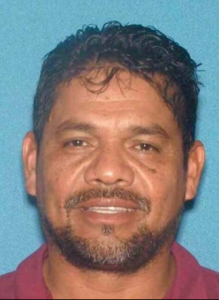
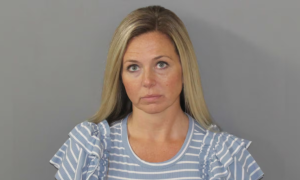
Anyone with information about Molina’s activities is being urged to contact MCPO Detective Jason Apaza at 800-533-7443, Eatontown Police Department Detective Jorge Gonzalez at 732-389-7628, or Ocean Township Police Department Detective Michael Legg at 732-531-1800. A photo of Molina is being publicly distributed along with this news release.
This case is being prosecuted by Monmouth County Assistant Prosecutor Danielle Zanzuccki, Director of the MCPO Special Victims Bureau. Molina is being represented by Thomas Carver, Esq., with an office in Freehold.
Despite these charges, every defendant is presumed innocent, unless and until found guilty beyond a reasonable doubt, following a trial at which the defendant has all the trial rights guaranteed by the U.S. Constitution and State law.
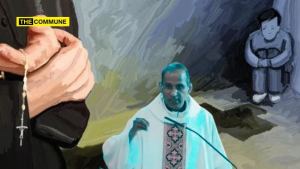
A 60-year-old Catholic priest from Kerala, India, has been arrested and charged in Canada with sexual offences involving children under the age of 16, prompting his immediate removal from pastoral duties.
Father James Cherickal, a priest of the Syro-Malabar Catholic Church hailing from Kozhikode, Kerala, was arrested by the Peel Regional Police on 18 December 2025. He faces one count of sexual assault and one count of sexual interference, which in Canadian law, refers to sexual crimes committed against children under 16 years of age.
According to a statement issued by the Archdiocese of Toronto on 20 December 2025, the arrest followed an allegation of misconduct against Cherickal, who was serving as the pastor of St. Jerome’s Catholic Church in Brampton at the time. The Archdiocese stated it learned of the allegation and subsequently cooperated with the police investigation.
“Following our protocols and procedures relating to allegations of misconduct, Fr Cherickal has been removed from pastoral ministry,” the Archdiocese’s statement read. It further emphasized the legal principle of presumed innocence, noting, “As with any accused in our Canadian legal system, he is considered innocent until proven guilty and entitled to due process.” The statement also affirmed that the Archdiocese views any such accusation “as an urgent matter that requires serious attention.”
In the wake of the arrest, St. Jerome’s Church announced the cancellation of Holy Mass services from 25 December 2025, through 3 January 2026.
Father Cherickal’s ecclesiastical background ties him to the Syro-Malabar diocese of Thamarassery in Kerala. The Syro-Malabar Church, headquartered in Kochi, is the largest Eastern Catholic church in India and is in full communion with Rome. He was deputed to Canada approximately three decades ago.
Records from the Archdiocese of Toronto indicate that Cherickal had been ministering in various parishes within the archdiocese since 1997. He had taken up his post at St. Jerome’s Church in Brampton just last year. During his time in Canada, he also served the Syro-Malabar mission established for the significant community of Catholic migrants from Kerala residing in the country.
Cherickal is part of a substantial cohort of priests from Kerala who have been sent abroad to address clerical shortages, particularly in nations with large Keralite diaspora communities such as Canada, the United Kingdom, and Australia. Prior to his assignment in Canada, he served in various roles within the Diocese of Thamarassery in Kerala.
The Peel Regional Police investigation is ongoing. The Archdiocese of Toronto has not released further details on the specific nature or timeline of the alleged crimes, citing the active legal proceedings.
The above incident is not uncommon especially among churches across the world.
A federal judge has approved a federal settlement that will clear the way for the New Orleans Archdiocese to pay at least $230 million to hundreds of victims of clergy abuse.
The New Orleans Archdiocese will pay at least $230 million to hundreds of victims of clergy sexual abuse under a settlement approved Monday by a federal judge that follows years of negotiations.
Richard Trahant, an attorney representing victims in the case, and a spokesperson for the archdiocese both confirmed approval of the settlement to The Associated Press by U.S. Bankruptcy Judge Meredith Grabill.
Earlier this month, some of the survivors behind the more than 500 abuse claims testified in court, saying they are still affected decades later by the painful memories they shared publicly. The archdiocese had filed for bankruptcy in May 2020 rather than handle each abuse claim separately. Survivors noted that doing so enabled church leadership to avoid tougher questions they would have to face in court.
Some recalled battling substance abuse, struggling with intimacy and wondering whether they themselves were to blame for what happened. Some said they forgave the church, while others could not.
In her testimony, Kathleen Austin recalled being abused hundreds of times as a child and watching the perpetrator continue in a role within the Catholic Church even after its leadership knew what he was doing. She expressed skepticism that the church would hold clergy accountable in the future given how much she said it resisted responding to her experiences.
“Why has it taken so long to get to this point and at such a high cost?” she asked.
The Associated Press doesn’t generally identify people who are victims of sexual abuse unless they come forward publicly, such as those who testified in New Orleans.
Archbishop Gregory Aymond, the head of the archdiocese who is handing church leadership to a successor, listened to the survivors’ testimony last week.
“I also apologize for the church, that I’m embarrassed by what has happened in the church,” Aymond told reporters afterward. He added he hopes survivors have found some “closure” but said he understood that there is “still a lot of suffering” they are experiencing.
Chris Naquin testified that his abuse began when he was 4 years old and that he cycled through decades of mental institutions and prisons.
“I don’t think I will ever, ever get over it. There’s no amount of money in the world,” Naquin said as he teared up. “I never had a childhood and I’m just now starting my adult life at 56 years old.”
Billy Cheramie, who said he felt he died the day he was abused as a little boy, told the archdiocese he forgave it for what he went through. He said God later helped him realize the abuse he suffered was not his fault, thus allowing him to release some of the anger that had propelled him to join the U.S. military to learn how to kill.
“Killing did not fix the pain and the memories,” he said.
Neil Duhon testified that he still struggles with the idea of forgiveness.
“This legal thing will maybe end but what it has done to us, the trauma it has done to us, will not ever end,” Duhon told the court, saying his perpetrator, former priest Lawrence Hecker, received a life sentence after pleading guilty to charges including rape and aggravated kidnapping.
Aymond, 75, had long resisted calls to resign from survivors who said the church did not take action against credibly accused perpetrators. The accusations of clergy abuse triggered a sweeping FBI probe and a cascading crisis for the Catholic Church, which drew on help from New Orleans Saints executives to help behind the scenes with damage control, an AP investigation revealed.
The finalized settlement plan, which received overwhelming approval by survivors during a vote in October, includes policies intended to prevent abuse from occurring in the future.
A survivor will have a seat on the archdiocese’s internal review board that handles claims of sexual abuse. An outside expert is to monitor the church’s child abuse prevention practices. The church also is adopting a survivors’ bill of rights and survivors will have a direct line of communication to the archbishop to direct complaints of misconduct. And a public archive will be established to share long withheld documents related to abuse claims.
In September, Pope Leo XIV named Bishop James F. Checchio, of the diocese of Metuchen, New Jersey, as coadjutor archbishop of New Orleans in line to succeed Aymond when he retires.
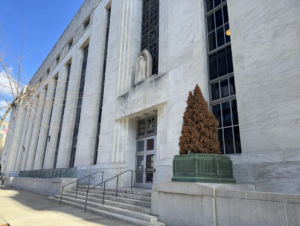
The James T. Foley Federal Courthouse and federal building in downtown Albany, where the U.S. Attorney for the Northern District of New York maintains its main offices. Alex Gault/Johnson Newspapers
More than a dozen people described during testimony Monday how being sexually abused as children by Catholic priests in the north country has had long-lasting and often ruinous impacts on their lives.
The people who told their stories in a federal courtroom in Albany have all sued the Diocese of Ogdensburg, the Roman Catholic organization that oversees parishes and churches from Watertown to Plattsburgh and down through the Adirondack Mountains. The survivors contend that the diocese failed to properly prevent and respond to reports of sexual abuse of children by priests in its employ over multiple generations.
Those suits, filed under New York’s Child Victims Act, were authorized by a state law passed in 2019 that briefly authorized people who had been sexually abused to seek civil judgments against their abusers and the organizations that empowered and failed to stop abuse. The Diocese of Ogdensburg is facing 138 such lawsuits.
Many of the allegations of abuse leveled against north country priests date back decades, well into the 1950s and 1960s, but some are as recent as the 1990s and 2000s. Men and women alike accused north country priests of abusing their positions of authority and close proximity to children to groom them, ostracize them from their families and support systems, and sexually abuse them in some of the most intense and violating ways.
The volume of lawsuits accusing the diocese of some culpability, for ignoring allegations and failing to punish or report reliable reports of assault to the authorities, have prompted the organization to file for Chapter 11 bankruptcy. The process, known as reorganization, allows the diocese to restructure, sell off assets and answer debts to the best of its ability without completely liquidating all assets or shutting down.
In a 2023 video message, Diocese of Ogdensburg Bishop Terry R. LaValley said this was being undertaken in an attempt to preserve the Catholic church in the region while also effectively answering the civil penalties brought upon by the Child Victims Act lawsuits.
On Monday, in a federal courtroom in downtown Albany, a few of those 138 victims described the abuse they faced and how it negatively impacted their lives, some for more than 60 years, and many directly addressing the bishop as he watched from the counsel’s tables.
Men and women, and a few who chose to submit their statements through their attorneys, described in sometimes exact and graphic detail how they had been abused by priests within the Catholic churches and schools of the north country and how the institution failed to penalize their abusers and moved instead to protect them.
Some stories dated back to the 1960s. Many of the men who spoke had been altar boys or part of families who they described as deeply connected to the Catholic faith. Some of the women said they had hoped to get involved in the church in later years, as nuns or active members of their parish. Almost everyone who testified noted that after they’d been abused, they turned to drugs, alcohol or other addictions like gambling or pornography. Many spoke of mental illness diagnoses in the years since their abuse. A majority said they had complex post-traumatic stress disorder, and many victims shared diagnoses like anxiety, depression and substance abuse disorder. Many also spoke about making attempts to end their lives.
One person who spoke on Monday, who was from Massena, remarked on those similarities that tied to his own story.
“I am blown away by the similarities, in these stories and in their outcomes,” he told the court.
Many victims reported they had come from large or impoverished homes, broken families or other home situations that left them ignored or ostracized. A number said they had viewed church as a safe space, and that being involved in church ceremonies and acknowledged by their priest made them feel special.
All described how those priests, and in one case a “brother,” some who ran churches and others who worked in the schools, used their positions of authority to prey on children. Many stories started with a priest calling a child to a private room, for “help” or “guidance.” Some described the abuse as immediate, in some cases violent and aggressive. In others, the abuse came after years of subtle grooming, where the abuser would worm his way into the child’s life and become a figure respected by their family before starting to sexually abuse them.
In one case, a sister and her younger brother both described how the same priest had abused them in nearly identical ways at nearly the same time.
And in some cases, the victims described incidents where someone else in the church, sometimes even a family member, had been made aware of the abuse or even witnessed it. But in no cases were the priests actually punished, charged with a crime or taken to court. Sometimes, they were abruptly re-assigned to another church in the diocese or elsewhere. A number of people testified that their abuse only ended after their abuser suddenly disappeared, only for them to realize years later that the abuser had been sent to another church nearby, or another Catholic school in the state.
Each person who spoke described a feeling of deep shame as a result of their abuse. They described how the betrayal made them untrusting in all aspects of their lives, which damaged relationships with parents, siblings, spouses and children.
“Sex abuse victims don’t feel honest with themselves or with others,” one man said. “You can’t look anyone in the eye.”
He then directly faced the bishop, one of a number of times the victims chose to speak to the man who now runs the diocese they partially blame for their abuse, and asked him if he truly believes the church can fix what was broken.
“You always try to save souls, but if you look around at all of those in this room who have fallen out with their families, do you think the church can step in and repair it?” he asked.
In one statement, given by a woman through her attorney, she detailed how a priest had groomed her, then resorted to abuse that involved prayer recitations and repeated religious ceremonies in profanely sexual ways that blended religion with rape.
She said that level of ritualized abuse put her off her faith and instilled a deep distrust of other men that has stuck with her for more than 50 years. She explained how it drove her to be distant both from her husband and her son, resulting in her son completely cutting her off after high school and her husband’s decision to shoot himself this summer.
The weight of her story drove her attorney to cry as she read it into the record.
“This has affected me to the bone, inflicting so much pain I know I will never recover,” her statement read. “I will never forgive Father Bruce, or the Catholic Church.”
Those who spoke on Monday seemed to have widely varied views on the role of the church, and religion more broadly. Some directly blame the church, and its present leadership, for their abuse.
The youngest person to speak on Monday primarily directed his statement to LaValley.
“You guys are manipulative,” he said. “You’ve ruined so many lives, turned a blind eye to so much. I will never forgive you.”
Another person explained how religious symbols are unwelcome in his life, triggering detailed memories of the abuse he suffered as a young boy. Things like church pews, incense, and a crucifix are unwelcome. And a specific time, burned into his memory because of a broken clock in the church he was abused in, stands out too: 7:34.
Others spoke about how they remain part of the church, however uneasily. Some seemed not to blame LaValley or the church as it exists today. A few chose to shake the bishop’s hand as they stepped down from the podium, and one man hugged the bishop and asked him to get in touch.
“I could use your help,” he said to LaValley before walking back to his seat.
Monday’s testimony is part of a long-running process. The statements made were on record in the bankruptcy case for the diocese, but were sealed and will not be made publicly available or available to either party in the legal proceedings.
The names of the victims, some of which were given directly in court, will similarly not be made public by the courts. The Watertown Daily Times does not typically identify the victims of sexual abuse.
Through the bankruptcy process, the plaintiffs in the 138 lawsuits against the diocese under the Child Victims Act will potentially be able to collect a proportionate monetary award from the diocese, although it will likely be less than they would be able to get if the diocese had not filed for bankruptcy.
LaValley, in his statement to the church when declaring bankruptcy in 2023, said the bankruptcy will offer some financial awards to all people with a valid claim, and if the diocese had not sought reorganization, only those first to the court would be able to collect their awards.
The court has ordered the diocese to negotiate resolutions to the Child Victims Act lawsuits through mediation, with Delaware-based federal bankruptcy court Judge Christopher S. Sontchi mediating. While the reorganization process is underway, those cases are on hold.
Some of the abuse victims expressed distress at the way the case has proceeded.
Charles Nadeau, who leads the survivors committee of people who suffered abuse at the hands of north country Catholic clergy, wrote in a letter to the editor, published in the Nov. 29 edition of the Watertown Daily Times, that he sometimes feels the whole process is designed to wear down those seeking justice through it.
Others who spoke on Monday echoed similar feelings. And while many appreciated the opportunity to speak the truth, directly to those in power, many said that would not be enough. Some implored LaValley to ensure no abuse could ever happen in his diocese again.
“You must build a system where what happened to me and other children isn’t just condemned, it’s impossible,” one man told LaValley.
TRENTON, NJ – Attorney General Matthew J. Platkin and the Division of Criminal Justice announced today that a former officer of a Roman Catholic church in Monmouth County, New Jersey, has been charged with stealing more than $500,000 from the church.
Joseph A. Manzi, 78, of Atlantic Highlands, New Jersey, is charged by complaint with theft by unlawful taking (2nd degree) for allegedly using church funds for personal purchases.
“The defendant is alleged to have used his position of trust to steal hundreds of thousands of dollars from the church,” Attorney General Platkin said. “As described in the complaint, this conduct was not to feed his family or for some kind of emergency, but to live a more lavish lifestyle. His alleged criminal acts will not be tolerated.”
“Members of the church who donated their hard-earned funds for the good of their parish should know that their contributions will be used for their intended purposes,” DCJ Director Theresa L. Hilton said. “Instead, this defendant allegedly enriched himself with church funds. He now faces criminal charges for his actions.”
According to documents filed in this case, Manzi is the former director of finance, operations, and development for the Church of Saint Leo the Great (St. Leo) in Lincroft, New Jersey. On approximately June 26, 2025, Manzi’s employment at St. Leo ended. Church staff later reviewed the church’s credit card statements and identified numerous unauthorized charges that were determined to allegedly be for Manzi’s personal benefit.
Further review and investigation of the account activity of St. Leo’s credit accounts revealed Manzi allegedly fraudulently used the church’s credit accounts to make over $300,000 in unauthorized purchases of goods and services and separately diverted over $200,000 in cash from St. Leo for his personal benefit from January 11, 2019, through May 7, 2025. Staff members stated Manzi had sole control of the church’s credit cards, which carried his name.
The investigation to date has determined Manzi allegedly fraudulently used St. Leo’s credit cards to make unauthorized purchases and payments of more than $300,000 for event vendors, vehicle repairs, financing, and purchases, including a Cadillac SUV; luxury clothing; personal home repairs and services; personal medical and dental payments; sports event tickets including New York Yankees games; payments to fraternal organizations; chartered fishing trips; and personal insurance.
The case is being prosecuted by Deputy Attorney General Conner Ouellette.
These charges are merely accusations, and the defendant is presumed innocent unless and until proven guilty in a court of law.
Second-degree charges carry a sentence of five to ten years in state prison and a fine of up to $150,000.
Attorney General Platkin would like to thank the Monmouth County Prosecutor’s Office and the Middletown Township Police Department for their outstanding police work in assisting with the investigation.
“I couldn’t wait to sue,” said Richard Tollner, who says he was abused by a priest when he was a teenager. He led the effort to reach a settlement with the Rockville Centre diocese. (Cindy Schultz for The Free Press)
The first person to sue the Rockville Centre Catholic Diocese after the passage of New York’s Child Victims Act was a man named Richard Tollner. It was August 2019, and New York was one of seven states that had created a law giving sex abuse victims a limited window to bring lawsuits no matter how far in the past the abuse had taken place.
Tollner, who is now 66, said that he had been raped—and molested multiple times—by a priest, beginning when he was 15 at St. Pius X Preparatory Seminary, in Uniondale, New York. The priest, Monsignor Alan J. Placa, was the “dean of discipline” at the school on Long Island, where Tollner grew up. In 1977, when he was 17, he reported the alleged rape to several authority figures at the school, including the rector. But nothing happened.
A quarter-century later, a Suffolk County grand jury investigated Placa as part of an extensive inquiry into clergy sexual abuse; he was said to have abused at least two others besides Tollner. Again, nothing happened; although the grand jury concluded that the diocese had protected at least 58 abusive priests, neither the diocese nor any individual priests were indicted. Placa, who has always denied the charges, was placed on administrative leave by the church, but was eventually cleared of the charges against him by the Vatican.
“I couldn’t wait to sue,” said Tollner, who had lobbied to get the new law passed—and whose lawsuit took aim at the diocese, the eighth largest in the country, overseeing 1.5 million Catholics as well as Placa.
Juries have proven highly sympathetic to sexual abuse victims, and Tollner’s lawsuit had the potential to bring him millions in compensation for what he had suffered. In a 2007 trial against the Rockville Centre diocese, a jury awarded $11.45 million in damages to a man and woman who were repeatedly raped by a youth minister as teenagers. In June 2025, a jury in New Orleans awarded close to $2.4 million to a man who was sexually abused when he was around 11 years old.
“This decision was not made lightly,” said Bishop John O. Barres in a statement at the time. And perhaps that is true. But as a legal strategy it was a no-brainer, since its primary effect was to undermine the purpose of the Child Victims Act. Bankruptcy gave the diocese the upper hand, while the victims became creditors who will be lucky to get a fraction of what a jury might have awarded them.
As of July, 41 Catholic dioceses and religious orders have used Chapter 11 filings to deal with the decades of horrific crimes committed by thousands of priests. Those filings have stopped lawsuits in their tracks and forced victims to accept pennies on the dollar, a Free Press investigation has revealed. To put it bluntly, long after the Church looked the other way at clergy sexual abuse, it has now found another way to deprive the victims of justice: the bankruptcy courts.
It has long been standard practice for companies facing massive numbers of lawsuits—for manufacturing asbestos, say, or marketing OxyContin—to file for bankruptcy. A Chapter 11 filing does not require companies to be insolvent; they simply need to show “financial distress,” allowing them to restructure their debts while continuing to operate.
Chapter 11 shuts down all litigation, halting discovery, the process by which litigants gather documents and witness testimony to support their claims. It prevents additional lawsuits from being filed. It eliminates jury trials and instead shifts the ongoing cases to federal bankruptcy court, where any settlement requires a process of mediation between the bankrupt company’s lawyers and lawyers for the creditors. That mediation often takes years. Although additional claims can be made, they too are routed to the bankruptcy court, where claimants fill out standard claim forms rather than filing lawsuits.
Long after the Church looked the other way at clergy sexual abuse, it has now found another way to deprive the victims of justice: the bankruptcy courts.
Early on, said Marci Hamilton, a political science professor at the University of Pennsylvania who represented abuse victims in many early clergy sex abuse cases, dioceses used some unorthodox defenses to wriggle out of their obligations to sexual abuse victims. “They argued that it was unconstitutional for them to have to provide discovery,” she recalled. “It was unconstitutional to interfere with any kind of exchange between a bishop and a priest. They called it the formation privilege. And they argued that you couldn’t punish them for doing nothing but forgiving. Because forgiveness was what their faith required.”
In court, recalled Hamilton, “I dismantled all those arguments.”
But when states began passing laws like the Child Victims Act—ultimately, 21 did so, as did the District of Columbia—many dioceses decided that their best course of action was to adopt the bankruptcy playbook.
“It was a brilliant tactic because the bankruptcy system makes it about saving the debtor,” Hamilton said. “So they were able to flip the lawsuits from the victims being at the center of it, to them being at the center. And the victims just became collateral damage.”
Marci Hamilton, a political science professor at the University of Pennsylvania, represented abuse victims in many early clergy sex abuse cases. “I dismantled all those arguments,” she said of the diocese defense.
In New York alone, nearly 5,000 people claiming to have been abused by clergy or staff came forward during the two-year exemption period from the statute of limitations. In September 2019, just one month after abuse victims were allowed to file lawsuits, the Rochester diocese sought Chapter 11 protection. Rockville Centre was second. Overall, six of the state’s eight dioceses have filed for bankruptcy. (The only ones that haven’t are the Archdiocese of New York, based in Manhattan, and the Diocese of Brooklyn.)
“Bankruptcy eviscerates the whole architecture for ferreting out the truth,” Paul Mones, a plaintiff’s lawyer who has represented dozens of victims in Rockville Centre diocese cases, told me. “By removing cases from the civil justice system, there is no cross-examination of church hierarchy, and all the ways to tease out the injurious behavior of church abusers gets whitewashed. It’s all about how much money the entity has to distribute, and nothing else. Lawyers are reduced to being financial managers.”
In New York alone, nearly 5,000 people claiming to have been abused by clergy or staff came forward during the two-year exemption period from the statute of limitations.
The diocese pays the fees for its own bankruptcy counsel as well as for the lawyers representing the victims’ committee. Rockville Centre’s lead counsel, for instance, was the giant, multinational law firm Jones Day. The firm would sometimes have 10 lawyers at a court hearing. In February 2025, the bankruptcy judge approved a payment to Jones Day of nearly $52 million, with another $26 million going to the creditors’ committee lawyers.
In New Orleans, where the Archdiocese sought Chapter 11 protection in May 2020, Archbishop Gregory M. Aymond told the Vatican that the Archdiocese believed it would have to pay no more than $7 million to settle victims’ claims. So far, it has paid out nearly $50 million in legal and professional fees. This, of course, is money that could have been paid to sexual abuse victims instead.
“I think about bankruptcy as a big cash cow, and the lawyers for the dioceses and the creditors’ committees are milking it,” said Kathryn Robb, a lawyer and legislative advocate who has lobbied for Child Victims Act–type legislation across the country. “The survivors are getting pennies on the dollar and are being dragged through a process that takes four or five years.”
“Bankruptcy enables the dioceses to avoid jury trials with large verdicts,” said Mones, who represented the two victims who were awarded $11.5 million in the 2007 jury trial. “More importantly, it avoids the public exposure of the horrific decades-long behavior of the diocese.”
That, in fact, is another reason bankruptcy favors the church: Keeping negative information out of public view is an important goal for many dioceses. Virtually as soon as a diocese seeks Chapter 11 protection, its lawyers rush to seek protective orders requiring that all documents be placed under seal—a seal that usually remains even after cases are settled. These orders are almost always granted. Even if the information in the documents indicates a crime has been committed or a cover-up has taken place, law enforcement can’t access the documents unless someone alerts them. And it is considered a violation for anyone involved in the bankruptcy case to do that.
Take the example of Richard Trahant, a lawyer representing 82 clergy abuse survivors in New Orleans who uncovered a document in 2021 that revealed a priest who had sexually abused a 17-year-old girl had been named the chaplain at a school where Trahant’s cousin was principal.
“Is Paul Hart still at Brother Martin School?” Trahant texted his cousin. Trahant also emailed a local journalist, telling him to keep the Brother Martin chaplain “on your radar.” In both cases, he didn’t disclose details, because of the protective order.
“Bankruptcy eviscerates the whole architecture for ferreting out the truth,” said Paul Mones, a plaintiff’s lawyer who has represented dozens of victims in Rockville Centre diocese cases.
Two weeks later, an article appeared in the local Times-Picayune newspaper detailing how a church investigation in 2013 confirmed the sexual misconduct but determined that the girl wasn’t regarded as a minor under church law at that time. U.S. bankruptcy judge Meredith Grabill ordered a leak investigation. Although the bankruptcy trustee found that someone other than Trahant provided the reporter with information about Hart, Grabill fined him a steep $400,000. (Trahant is appealing.)
“I have seen hundreds of felonies that were never reported,” Trahant said. “By entering these protective orders, these dioceses can settle cases without anything being made public. They hide felonies in the bankruptcy vault forever.” (Sarah McDonald, the head of communications for the New Orleans Archdiocese, did not respond to repeated emails requesting comment.)
Although sexual abuse of children by clergy is a very old phenomenon, it wasn’t until 2002, when The Boston Globe published its groundbreaking series about the decades-long cover-up by the Boston Archdiocese, that it became a national scandal.
Tollner by then was in his early 40s. He was married and worked as a mortgage banker. His alleged abuse at the hands of Monsignor Placa was a quarter-century in the past.
When I asked him how he had borne up during the years after his abuse, he told me he followed the dictum of his father, who always told him: “Suffer, or work with what you’ve got.”
He also told me that he never wore short-sleeved shirts or T-shirts, no matter how hot the weather. “I used to wear them, and they made me look more attractive to Placa,” he said.
After the Globe series, grand juries across the country were empaneled to investigate clergy sexual abuse. Tollner was one of three survivors who testified against Placa before the Suffolk County grand jury. In February 2003, it issued a report alleging that the diocese was shuffling priests who had committed sexual crimes from parish to parish. Placa, who was called “Priest F” in the report, was one of those accused. However, with New York’s statute of limitations having long since expired, no charges could be brought.
Six years later, Placa faced a church tribunal in Albany. Tollner testified before the panel, but the tribunal found Placa not guilty of abusing him, and a Vatican disciplinary panel not only upheld that verdict but instructed the Rockville Centre diocese to “restore his good name.”
After the Suffolk County grand jury report, Placa joined Giuliani Partners, a firm run by his close childhood friend, Rudolph Giuliani. Now 81, he lives in Palm Beach Gardens, Florida, and is considered by the church to be “a retired priest in good standing.”
Reached by phone, Placa told me, “I’ve been investigated by everybody, including the Vatican, and have been found not guilty.” Referring to Tollner, he said, “Poor Richard. He’s a mess.”
Tollner became a pro bono lobbyist working to pass the Child Victims Act in New York State. For eight years, he also served on the board of CHILD USA, a nonprofit founded by Marci Hamilton that works to end child sexual abuse and has fought for statute of limitations reforms. For over a decade, he lobbied the New York state legislature to pass the Child Victims Act.
In the five years since the diocese filed for bankruptcy, nearly 10 percent of the abuse claimants have died.
When the law took effect in 2019, he filed his lawsuit at 12:01 a.m. on August 14—literally a minute after the window for litigation opened.
His midlife activism was motivated “to protect children today,” he told me. “If someone doesn’t speak up, the perpetrators will continue to commit crimes.”
With the bankruptcy of the Rockville Centre diocese, Tollner’s righteous anger only deepened.
One of his former classmates was a man named Christopher Fernan, who also said he had been abused by Placa. He filed his lawsuit nine days after Tollner. In his filing, Fernan alleged that Placa had abused him “more than 100 times from 1974 to 1977.”
But Fernan will never get a penny from the Rockville Centre diocese. In 2021, he died, felled by heart failure. In fact, in the five years since the diocese filed for bankruptcy, nearly 10 percent of the abuse claimants have died, which of course is another reason why the bankruptcy favors a diocese. “These victims are generally in their 60s and 70s, and many are not in good health,” said James Stang, the lawyer for the unsecured creditors’ committee in the Rockville Centre bankruptcy. Tollner agreed: “Victims’ physical and mental health decline with age, and witnesses die,” making it harder for some victims to get settlements.
Witnesses matter because after a survivor files a claim, the law firms for the diocese review it for accuracy. Contemporaneous witnesses help bolster the credibility of the claimant. A victim whose witnesses have died will inevitably receive less money from a settlement than a victim whose claim is bolstered by the testimony of others.
“Chris Fernan was my lead witness, and he is dead,” Tollner told me. “I still have five living witnesses. And I am one of the lucky ones.”
With victims and witnesses growing older and dying, “time wasn’t on our side,” Tollner told me. So he became the chair of the unsecured creditors’ committee and was instrumental in negotiating a settlement. The bankruptcy, he said, was depleting diocesan assets and wearing down abuse claimants, and he felt it was a priority to get them some compensation while they were still well enough to make use of it.
The $323 million settlement between the Rockville Centre diocese and its victim-creditors was approved by a federal bankruptcy judge in December. Some 600 victims who ultimately filed claims will receive payments, at an average of $538,000 per victim, though the amount will vary depending on the extent of the abuse the victim suffered.
The diocese believes the settlement is fair. “No amount of money can adequately compensate survivors of abuse,” said a spokesman for the diocese. But, he continued, “The diocese’s goal has always been the equitable compensation of survivors of abuse while allowing the Church to continue her essential mission. We believe the plan achieved those goals.”
But when you consider the crimes that were perpetrated—and the amount of money the victims would have gotten if Chapter 11 had not stopped jury trials—there’s not much doubt who got the short end of the stick. “Rockville Centre had some of the hardest cases,” Tollner said. “Many were raped and molested, sometimes by multiple priests.”
And few people took a bigger hit than Tollner. His lawyer, Jordan Merson, told me that his client’s claim would have been “worth millions had it been tried in state court,” adding that “Richard left a lot on the table by going along with a deal that other survivors wanted.” Tollner wouldn’t disclose his share of the settlement, except to say that it was less than “a million.” Lawyers in the case said most other victims got far less.
The Rockville Centre diocese was the first in New York to emerge from bankruptcy. In September 2025, the Rochester diocese became the second, when its bankruptcy judge signed off on a $246 million settlement to compensate 475 sexual abuse survivors. That settlement includes a requirement that the diocese release its “secret files” documenting abuse cases.
Mitchell Garabedian, the lawyer for 97 victims in Rochester, said that making these documents public was the victims’ demand from the start. “Victims and survivors want to make the church a safer place for children. The public must be aware that sexual abuser priests were abusing children and then sent to other parishes after the abuse was exposed.”
Although a handful of other dioceses—most notably the Diocese of Wilmington, Delaware, and the Archdiocese of Santa Fe, New Mexico—are releasing documents detailing clergy sexual abuse, most continue to refuse. Rockville Centre’s Bishop Barres “could release the secret files today, if he wanted to,” said Garabedian. The diocesan spokesman told The Free Press that the settlement includes “the release of all documents pertaining to the case to an institution of higher learning.” But no such institution has been designated, the language of the settlement suggests that any such release will be limited, and the date of any release is years into the future.
Where, you might ask, is the money coming from?
One of primary assets of the Catholic Church in the U.S. is property, and sure enough, some of the $234.8 million the Rockville Centre diocese and its “parishes and other related entities” will contribute to the settlement will come from the sale of several properties, including 200 acres that belonged to a seminary. It was sold for $20 million. The diocese’s 136 parishes will contribute $53 million. And a little less than $3 million will come from Stang’s law firm, which represented the creditors’ committee.
Then there are the companies that have long provided liability insurance for America’s Catholic dioceses. The dioceses believe that their insurance should cover most if not all of the abuse settlements, but the companies have for the most part vehemently disagreed, and have gone to court to avoid having to indemnify sexual abuse claims. This is yet another stumbling block in providing compensation to victims.
In the Rockville Centre case, four insurance companies grudgingly agreed to pay $85.3 million, far less than the diocese wanted. And though they didn’t agree to that much until the last minute, at least they came to the table. In many other church bankruptcy cases, insurers have refused to negotiate, claiming that policies were never meant to cover acts that were “expected or intended” to occur, given the common practice of moving priests from parish to parish to cover up abuse.
This dispute is playing out most starkly in Manhattan, where the Archdiocese of New York (ADNY), which serves 2.8 million Catholics and faces 1,771 claims, is locked in a legal battle with Chubb, which began insuring the archdiocese in 1956. “Senior ADNY officials,” said Chubb in its lawsuit, “had known for decades that clergy members had and were committing sexual abuse” and they concealed that knowledge from Chubb. Chubb stopped insuring the archdiocese in 2003.
“There are over 1,100 cases where Chubb has issued a policy,” said Frank Napolitano, the chief administrator of the archdiocese. “We would love to process these claims as soon as possible, but we are hung up by Chubb.” Napolitano added that “we expect and are seeking coverage by Chubb for all or most of the liabilities, whether settlements or judgments, for the years where abuse occurred during Chubb policy years.”
The New York archdiocese is in a different position from the dioceses that have filed for bankruptcy: It is too wealthy to qualify for Chapter 11 protection. Because it owns well north of $1 billion worth of prime real estate, the lawsuits by victims have not put it in “financial distress.”
“We have the assets to cover all these claims, if need be,” acknowledged Napolitano, but added that those assets “are intended to be used for our pastoral, charitable, spiritual, and educational ministries.” Last year, the archdiocese agreed to sell its headquarters building to a residential developer for over $100 million. But of course it would prefer not to sell any more real estate than it has to. “The insured’s financial position is not a mitigating factor in an insurance company’s responsibility to live up to the policies that it issued,” said Napolitano.
Marci Hamilton describes the resistance of the insurers as “stonewalling.” But in an email, Chubb said that the archdiocese was the problem.
“The insurance that the archdiocese bought covers accidents—it does not provide compensation for knowingly allowing a pattern of abuse to persist for many years,” said Chubb in a statement to The Free Press. “There’s a reason insurance doesn’t cover this kind of behavior—it would reward those who facilitate criminal conduct rather than those who take vigilant steps to mitigate risk and protect children from abuse.”
In April, a New York state court found that Chubb is not required to cover costs for settling hundreds of sex abuse claims. The archdiocese is appealing.
The Diocese of Brooklyn is in a similar situation to that of the New York archdiocese. Its real estate holdings are significant, and Chapter 11 isn’t likely. In December 2020, with the diocese then facing more than 500 claims, its longtime insurer, Arrowood Indemnity Company, sued the diocese in December 2020, using the same arguments as Chubb. Unlike Chubb, however, Arrowood has been declared insolvent, in part because of the sexual abuse claims, and is in the process of liquidating. “Arrowood was the insurer for 65 to 70 percent of the Brooklyn diocese’s cases,” said Mones. “We will be lucky if they pay $100 a case.”
(A spokesperson for the Brooklyn diocese said that it has settled more than 600 cases since 2017, “and is working to resolve the remaining cases in a fair, equitable, and just basis.”)
Stephen Jimenez sued the Brooklyn diocese in August 2019 when the litigation window opened. He alleged that a teacher at his Brooklyn Catholic elementary school had fondled, molested, and repeatedly raped him for nearly four years starting in 1963, when he was 10 years old. The teacher, referred to as “Brother Romanus” in the lawsuit, is alleged to have taken Jimenez to steam rooms and gay bathhouses for sex. Jimenez said he reported the abuse to the diocese in 2002. Brother Romanus is deceased. “The only thing the diocese ever offered me was counseling with a nun in Boston,” Jimenez told me, an offer he rejected. The diocese suggested he report the abuse to the Xaverian Brothers, the Catholic order that ran the school he attended. “They gave me a $75,000 settlement in 2003,” Jimenez said, adding he didn’t release the Brooklyn diocese from legal action. (The Brooklyn diocese declined to comment about Jimenez.)
Jimenez, now 72, said he has spent decades in therapy, dealing with anxiety attacks and suicidal thoughts. He said he has never held a job for more than a year.
Jimenez was among those who spent years lobbying for the passage of the Child Victims Act. “We won our battle more than six years ago, and for the majority of us survivors, nothing has happened.” Jimenez blames the Brooklyn diocese for moving at a glacial pace to settle any of its cases. Jimenez’s case was scheduled to go to mediation in the spring of this year. A date hadn’t been set because lawyers for the diocese told Jimenez’s counsel that they were waiting on another of the diocese’s insurers to commit. Jimenez told me that in May, the diocese canceled the mediation without explanation.
Jimenez looks at it this way: “After everything that has happened to people, the dioceses, their lawyers, and insurers are hoping survivors will die and they will have to pay less.”
Impact statements from survivors of alleged sexual abuse by the Roman Catholic Diocese of Albany will be given in U.S. Bankruptcy Court. The hearing is scheduled for 1 p.m. on Sept. 10.
Multiple survivors came forward in 2022 when New York’s Child Victims Act made it possible for them to file lawsuits years after the abuse occurred by temporarily lifting the statute of limitations.
The diocese filed for bankruptcy in 2023, which put many of the cases on hold. An attorney for some of the alleged victims spoke with NEWS10 one day after the filing.
At that time, attorney Cynthia LaFave told NEWS10 the diocese controls more than $600 million in assets. She believed the bankruptcy filing was meant to delay unsettled cases because legal action against the diocese could not move forward until the bankruptcy proceedings were resolved.
Any statements being made on September 10, however, will not be considered evidence in the bankruptcy case, according to court documents. They are meant to give survivors an opportunity to be heard.
The bankruptcy filing also meant litigation over the Saint Clare’s Hospital pension was paused. Hundreds of hospital workers lost their pensions in 2018 and joined a lawsuit from the New York Attorney General’s Office to try to force the diocese to re-establish the retirement fund.
Any survivors who wish to make a statement may do so. Statements must be made in-person at the James T. Foley United States Courthouse on Broadway in downtown Albany. If a survivor does not want to present their statement, it can be read by counsel at the hearing.
Court documents state the hearing will extend to September 11 and September 12 if necessary to give all survivors who wish to give a statement the opportunity to do so.
Bishop Edward Scharfenberger of the Albany diocese will be in attendance.
MILWAUKEE, WI – A former Milwaukee pastor pleaded guilty to stealing money from the church he served and was sentenced to probation on Friday.
Prosecutors said 42-year-old Mauricio Fernandez-Boscan used the St. Adalbert Parish credit card to make personal purchases that totaled more than $33,000 from 2018 to 2022.
Court records show Fernandez-Boscan pleaded guilty to three misdemeanor counts. He was not ordered to pay restitution, but he was ordered to write a letter of apology to the church and complete 100 hours of community service.
A criminal complaint said Fernandez-Boscan served as a church administrator who oversaw all financial matters for the parish and school. Investigators said they found he used funds to pay personal bills, take trips to Mexico and Italy, make payments to a law firm and more.
The parish said Fernandez-Boscan did not have consent to use the parish funds to pay for personal matters, according to the complaint. Prosecutors said he was placed on leave in April 2022 when concerns were raised about excessive purchases.
FOX6 News reached out to St. Adalbert for comment when charges were filed and was referred to the Archdiocese of Milwaukee, who said in a statement, in part:
“The Archdiocese of Milwaukee conducted an audit and reported our findings to police, in keeping with the process we have in place for situations like this. Father is restricted from ministry while the case is pending.”
The Brief
A former Milwaukee pastor pleaded guilty to stealing money from the church.
The 42-year-old was sentenced to probation and ordered to write an apology.
Prosecutors said he embezzled more than $33,000 over the years.
NASSAU COUNTY, FL — A woman is accused of embezzling more than half a million dollars from a church.
The Nassau County Sheriff’s Office arrested 44-year-old Melissa Ganey English on charges of embezzlement from Amelia Baptist Church.
According to the sheriff’s office, English served as the church’s financial secretary for 11 years and allegedly embezzled more than $570,000 from Amelia Baptist Church between Jan. 2019 and Oct. 2024.
Two new church financial committee members noticed discrepancies after reviewing bank documents and records, finding that funds were lower than they should have been. After reviewing credit card statements from a church credit card issued directly to English, they discovered hundreds of thousands of dollars had been used for her personal expenses.
English was fired, and the church hired a contractor to review all financial transactions from 2019 to 2024. The contractor found numerous discrepancies and fraudulent charges.
According to the sheriff’s office, English embezzled nearly $40,000 from the church in 2019.
In 2020, she embezzled nearly $90,000 through unauthorized charges, personal credit card payments and additional payroll payments to herself.
In 2021, English embezzled more than $100,000, spending funds on Amazon purchases, SeaWorld tickets, Hey Dude Shoes, hotel stays, airlines and a helicopter flight over the Grand Canyon.
In 2022, English embezzled nearly $125,000 on purchases including cruise lines, Airbnb rentals, concert tickets, and more.
In 2023, she embezzled just over $123,000 on fraudulent charges at Amazon, hotels, and Walmart.
In 2024, she continued issuing herself additional payroll payments and embezzled more than $90,000, which included spending on cruise lines, baseball tickets, hotels and other personal expenses.
She has been charged with grand theft over $100,000, a first-degree felony, for knowingly and unlawfully using the church’s credit card for personal expenses totaling over $500,000.
The Diocese of Oakland is facing pushback over its plan to settle hundreds of lawsuits. It’s offering far less than other similar settlements.
The diocese entered Chapter 11 bankruptcy proceedings last year, overwhelmed by lawsuits over sexual abuse.
In a proposal filed Friday, the diocese is offering far less than other similar settlements in California.
“It’s a definite message and the message is ‘You are not important.’ The message is ‘We don’t care!'” said attorney Rick Simons.
That outrage was directed at the Diocese of Oakland. Simons represents numerous church sex assault survivors.
On Friday, the diocese filed a plan of reorganization with the bankruptcy court.
In a press release, the diocese says it will create a trust for sexual abuse survivors worth between $160 and $198 million to pay out 345 claims.
But court documents show the initial installment is only $65 million.
“First off, it’s not a hundred and some odd million dollars worth of cash, it’s $60 million in cash and $10 million a year for four years. They keep that money, investing it and making money off of it all that time while inflation eats away of the value to survivors. It is, again, just plain insulting. It is nowhere near what Los Angeles did,” Simons said.
Simons is referencing the $880 million that the Archdiocese of Los Angeles settled on recently in their sex abuse cases. The difference there though, the Archdiocese of Los Angeles never filed for bankruptcy.
Dan McNevin is a volunteer with SNAP, which stands for “Survivors Network of those Abused by Priests.” His thoughts about the proposed monetary figures echo those of Simons.
“I think it’s pretty pathetic. It’s pretty low. This is a really, really wealthy Diocese and there is a lot of victims. I can’t imagine that creditors cap is going to accept such a low number just calculates to nothing per victim. They have 82 parishes. We think they have $3 to $4 billion in real estate,” McNevin said.
The Diocese of Oakland says, “We believe the plan compensates survivors in a fair and equitable way and allows the Diocese of Oakland to set a path forward to continue to spread the Gospel, serving the faithful and the poor.”
The proposal, however, is far from a done deal and mediation here will continue.