The Altar Boy Who Refused to Hush Up

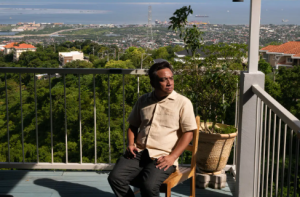
Mr. Gatchalian at his home in suburban Cebu City last year. Credit: NYT

As an altar boy in the late 1990s, Michal Gatchalian spent almost every Sunday at a centuries-old Roman Catholic basilica in Cebu City, the Philippines. There he met a fun-loving priest who gave the boys rides on his motorcycle.

On Jan. 11, 1998, the priest, Apolinario “Jing” Mejorada, invited the then 17-year-old Mr. Gatchalian and another altar boy to the movies. At the theater, the teenagers said, he molested them. About 20 months later, Mr. Gatchalian said Father Mejorada sexually abused him again. That episode, he said, occurred at the home of the priest, who demanded oral sex from him. Mr. Gatchalian said he refused.

A month later, Mr. Gatchalian complained to church leaders. His efforts went nowhere and he decided to take his case to the courts, in what was a remarkable act at the time. He was the rare abuse victim who publicly fought for accountability in the Philippines, a devoutly Catholic country, before the Roman Catholic Church’s clergy abuse scandal ricocheted across the globe.

But even after Father Mejorada admitted in court proceedings that he had “fondled and touched” the boys’ thighs, justice remained elusive.

Now 45, Mr. Gatchalian is a lawyer and has started a group to help other survivors of clergy abuse with legal advice and moral support, becoming the public face of victims in the Philippines where so few have dared to come forward. The church in the country, critics say, continues to close ranks to protect its own.

“Despite the reforms made by the Vatican, the church here still employs the same methods in handling abuse cases,” he said in an interview. “They’re more focused on protecting the priest rather than the complaining victim.”

Father Mejorada, the priest accused by Mr. Gatchalian, belonged to the Order of St. Augustine, which helped spread Christianity in the Philippines starting in the 1500s. More recently, from 2001 to 2013, the order was led by Robert Francis Prevost, who is now Pope Leo. As the head of the Augustinians he visited the Philippines at least nine times.

Father Mejorada has now been defrocked, which has not been previously reported. The Augustinians declined to comment, but the move was confirmed by two employees of the Basilica Minore del Santo Niño in Cebu, where the priest once served as a rector and Mr. Gatchalian was an altar boy, as well as by an official at the Catholic Bishops’ Conference of the Philippines. The action appears to have been taken before Leo became pope.

Only a handful of priests are known to have been defrocked in the Philippines, according to the U.S.-based watchdog group BishopAccountability.org.

The Vatican has said nothing about the abuse allegations against Mr. Mejorada, and it is unclear whether the pope knew about Mr. Gatchalian’s case. It did not respond to a request for comment. Mr. Mejorada could not be reached for comment.

Mr. Gatchalian’s case illustrates the power the church holds in the Philippines, where about 80 percent of the population is Catholic and the church influences everything from government policy to judicial appointments.

Back in October 1999, Mr. Gatchalian said he told his spiritual director of Father Mejorada’s actions but, he said, the church did not do anything. Father Mejorada offered him 80,000 Philippine pesos, or roughly $2,000 then, in exchange for a promise that Mr. Gatchalian would not sue, according to court documents. He took the money.

Later, Father Mejorada’s younger brother, the Rev. Mar Mejorada, told Mr. Gatchalian and two other altar boys, who also had accused the older priest of sexual abuse, that the priest had “volunteered to continue his ministry” in Africa. Father Mar Mejorada offered another 120,000 Philippine pesos to Mr. Gatchalian and the two other boys, which they took, according to an affidavit filed by Mr. Gatchalian.

But soon after, Mr. Gatchalian saw the priest he said had abused him at their church in Cebu. Incensed, he wrote to the archbishop in Cebu at the time, as well as the local newspapers and radio stations. The archbishop ordered an investigation, Mr. Gatchalian said, but it is unclear whether Father Mejorada was disciplined at the time.

In an affidavit in 2003, Father Mejorada admitted that he “fondled and touched” Mr. Gatchalian’s thighs at the movie theater, saying while those were “wrongful and shameful acts” they were not criminal. He admitted that at his house, he had hugged Mr. Gatchalian from the back, wrapped both hands around his abdomen, kissed his nape, and started to move his hand toward the inside of Mr. Gatchalian’s underwear. At that point, Mr. Gatchalian held his hand and pulled it away. The affidavit did not address the accusation of demanding oral sex.

Prosecutors refused to follow up on Mr. Gatchalian’s complaint, saying that he had taken a “huge payoff” and had therefore damaged his legal standing.

Mr. Gatchalian appealed to the Department of Justice and the courts, losing repeatedly.

On the radio, Mr. Gatchalian heard people debate about whether he enjoyed the abuse. Mr. Gatchalian said that when his employer at a gas station heard about the case, he fired Mr. Gatchalian, who said he then contemplated suicide.

His father, Faro, a lay missionary in a Catholic order, said that someone screamed at him that he and his family were “the devil’s servants attacking the church.”

“That was injustice in the highest form that one could experience,” the younger Mr. Gatchalian said.

Last year, BishopAccountability.org issued a report accusing the church of having a culture of impunity in the Philippines.

“When we did an initial sweep of the Philippines, I said: ‘Who is this man and why is he so gutsy?’” Anne Barrett Doyle, a co-founder of the watchdog group, said of Mr. Gatchalian. “Because he was coming forward under his own name.”

Mr. Gatchalian had a modest childhood in Cebu and did not even have a television. He loved playing priest with his older brother, using a cardboard box as a tabernacle and banana slices as communion wafers.

His father said his teachers regularly complained that he challenged them with questions.

“He has a — what the ordinary person would call a rebellious streak,” the senior Mr. Gatchalian said. “I call it a spirited streak, and people do not understand that.”

After his legal fight against Father Mejorada, Mr. Gatchalian decided to go to law school. There, he met Christine Naranjo, who would become his wife.

They were studying for the bar in Manila in 2007, when Mr. Gatchalian learned that Father Mejorada was serving in a parish in the area. He said that studying for the exam had put him in a “prayerful and contemplative mind set,” which made him recognize that Father Mejorada was human.

He took Ms. Naranjo to see the priest and told him that he had forgiven him.

“It was something I don’t think I can do,” said Ms. Naranjo, who is now a public prosecutor.

They are raising their two sons, who are 11 and 6, as Catholics and attend Mass weekly. Mr. Gatchalian said he has told his elder son that he had been molested by a priest.

In 2017, there was renewed interest in his case after Al Jazeera aired a documentary that included Mr. Gatchalian reiterating his accusations against Father Mejorada.

At the time, Father Mejorada was serving in the rural town of Gubat.

He was expelled from the Augustinian order at some point afterward.

In 2020, Mr. Gatchalian co-founded a group called the Catholic Independent Safeguarding Unit and started providing legal advice to victims of clergy abuse. So far six people have sought his help.

Jamaica Shane Abarquez Apas said she was 16 when her parish priest molested her in 2023. In a courtroom, she recalled, her fellow parishioners made snide remarks.

But Mr. Gatchalian was with her.

“I will be sitting beside you throughout all of this,” Ms. Apas said he told her. “Keep your head high. Look people in the eye every time they try to criticize you.”

(In February 2024, the priest accused by Ms. Apas was sentenced to four years, two months and a day in prison but was released on probation because of a plea bargain. He did not serve a day in jail, according to Mr. Gatchalian.)

In early 2025, Murray Heasley, a New Zealander who is a former board member of the global nonprofit Ending Clergy Abuse, approached Mr. Gatchalian to discuss setting up a survivor-led group in the Philippines.

“I was always interested in Michal Gatchalian because that was the name like a clarion call, the one person in a country of 100 million Catholics who had stood up,” Mr. Heasley said.

Last September, Mr. Gatchalian took a reporter to the Basilica Minore del Santo Niño, where he had served as an altar boy. He pointed excitedly at the bell tower as he recalled how he was invited to ring the bells for the Sinulog Festival, which honors the Santo Niño de Cebú, the crowned child Jesus. A young altar boy came up to say hello.

It was a stark contrast, he said, from two decades ago when security guards would follow him on the basilica grounds.

Mr. Gatchalian is sometimes asked how he stayed a Catholic despite the abuse.

“I stay because it’s my means to connect to my God,” he said, adding that the church could abandon him if it chooses to. “But you’re not going to expect that I’ll be the one to leave.”

Valerie Schultz: freelance writer, columnist, and author

As a survivor of sexual abuse, I understand why César Chávez’s victims stayed silent

My heart has always been warmed by the care that the designer of the freeway exit signs in Portland, Ore., took when correctly accenting the street named for the legendary founder of the United Farm Workers union: “César E Chávez Blvd” say the signs. I am a transplant to the Pacific Northwest from Central California, and I appreciate the accuracy.

I once worked at a Catholic parish that members of the Chávez family sometimes attended from La Paz, the U.F.W. headquarters about 10 miles down the road. I never met César Chávez himself, but my children went to school and made their first Communions and confirmations with Chávez grandchildren. Their parents were my casual parent-friends. I have been to Chávez quinceañeras and graduations and funerals. I was sad when I was unable to secure a ticket to the official designation of the U.F.W. headquarters as a national monument in 2012, which was attended by President Obama.

Alas, alas. I suspect that César E Chávez Blvd in Portland will soon be renamed, along with many other streets and schools and public buildings. Officials in Delano, Calif., the site of fabled U.F.W. marches, are already considering a new name for the high school, with candidates like “Mountain View” or “El Dorado” or “Freedom.” (I note that they are not considering some other man’s name.) After three decades of celebrating César Chávez Day, California has rechristened its March 31 state holiday as Farmworkers Day. All around the country, others will refrain from celebrating him. Another national hero has fallen.

If you are like me, your head is still spinning from the revelation of César Chávez’s grooming and sexual abuse of several teenage girls in his orbit, reported by The New York Times. Unlike the suspected perpetrators associated with Jeffrey Epstein’s sex trafficking ring, Chávez’s fall from public grace has been swift and absolute. No one is covering up the reporting. No one is making excuses for his aberrant behavior. No one is demanding more proof. Amazingly, the women in this case are actually being believed.

The good work over decades that Chávez and his family have done on behalf of farm workers is undeniable. Still, I imagine this taint on his name will persist in historical accounts of the movement, just next to the “Boycott Grapes” signs that document the civil rights advances of the 1960s. Our heads are spinning even more nauseatingly by the revelations made by Dolores Huerta, the co-founder and co-worker who was by Chávez’s side throughout his organizing. She did not reveal the rapes and pregnancies inflicted on her by her U.F.W. partner Chávez for fear of negating all the good that the union had accomplished for Latino workers. She kept silent for nearly 60 years, for the greater cause. Until she couldn’t. To do so would have dishonored the women who suffered as she suffered. “Lying is done with words, and also with silence,” the poet and essayist Adrienne Rich wrote. The truth, however painful and long buried, needed to be dragged into the light of day.

A personal recap: a family whose members I care about is reeling under this news, and the labor movement I strongly support is under fire, and the hero who seemed a moral giant is made small and tawdry by his own actions. We humans have always needed heroes in our midst—selfless, smart, strong, larger-than-life role models to inspire us. We look for the Gulliver among us and cling to his colossal frame. Heroes, by accomplishing what seems impossible, make us believe that we, too, can participate in reform and do more for others and contribute to a better world. When a hero fails us, when a hero is revealed to be a weakling and a sinner just like the rest of us, we are disillusioned. And too much disillusionment leads to a kind of spiritual devastation. As Jesus once noted with pity, we are “troubled and abandoned, like sheep without a shepherd” (Mt 9:36).

Many women, including myself, can find the reports of someone else enduring something we endured triggering. I know that overuse of the word “triggering” can trigger annoyance, but the feeling of tumbling backward into a traumatic memory is like a bullet fired into the soul. I was perhaps 6 when a male babysitter exposed himself and made me watch him “make the milk come out.” I never told my parents about his secret magic trick. I was 16 when a teacher finally succeeded in claiming my virginity, another thing I never told my parents. I waited to write anything about my high school years until both of my parents had died.

At the time of my grooming, which I later realized this teacher had done before and would do again, I believed that what he and I had together was so special because I was so mature and so different from other girls my age. I believed he adored me for my coolness and artistic talent and sophistication. I believed him when he said that the world would not understand the unique bond we shared. I felt chosen, a feeling heightened by the secrecy we had to maintain.

So I can relate to the repulsive stories in the news of Epstein and Chávez and many other powerful older men. When we are young and used in this way, we may feel that the actual sex part is weird and bad, but we soak up the flattery, the recognition of our womanly qualities that no one else sees. When the older men move on to younger fare, as they inevitably do despite their promises of love, we feel stupid. We retreat into bad places, depression, dropping out, drugs, meaningless sex, even suicide. We feel ruined. More often than not, we tell no one what happened to us. But, man, those triggers embedded in the news can still pierce us years later.

I understand Dolores Huerta wanting to protect the UFW’s accomplishments and legacy because in my small way, I was protecting my parents unto death. I didn’t want to publish long-buried stories that might hurt them or make them think they had failed me. But my experiences made me behave like a mother hawk—a mother bear, a mother lion—over my own children. My memories of what men could do, along with vivid maternal hormones, made me feel capable of murdering any man who messed with them.

We give men this power over us when we adulate and idolize them. Our heroes may be national in stature or just someone we lionize personally. Some of the men we hero-worship seem to be able to take our reverence in stride. But some use it for their personal gratification, whether sexual or otherwise, and think they can take whatever they want from us as their right. We women carry the pain until we cannot. I think of Dolores Huerta physically carrying two babies to term after being raped by Chávez and discreetly placing them with other families. I think of the enormous internal price of her silence. Mostly, I think of all the women, young and old, who continue to suffer because of the easy access and lack of accountability we afford our heroes. I think of the women who are indeed “troubled and abandoned.”

How do we teach our children to trust in their own heroic qualities? How do we groom them to stand up for themselves? The mortal heroes with feet of clay seek out the vulnerable among us, the easiest to manipulate and abuse. Scripture clearly tells us what our job is: What we do for the least of these, we do for Christ (Mt 25:40). It’s not an answer that will speak to everyone. But it is our mission from God.

May God have mercy on César Chávez and his fellow abusers. May God have mercy on those of us who may want otherwise.

Valerie Schultz is a freelance writer, a columnist for The Bakersfield Californian and the author of Till the Moon Be No More: The Grit and Grace of Growing Older. She lives on the Oregon Coast.

Op-ed originally published here

Survivors’ Testimony: Shaun Dougherty, Larry Antonsen & AnnEpeck

A trio of survivors in this video share at least two things in common: 1) That they are survivors of child sexual abuse. 2) That they have found solace and comfort from joining other survivors in a collaborative effort to heal and fight for justice.

In this award-winning video SNAP Board President Shaun Dougherty relates the details of his abuse as a fifth-grader at the hands of his religion teacher and Pee-Wee basketball coach, Father George Kaharchik. He’s joined by AnnEpeck, who tells the story of her survival from incest perpetrated by her father, as well as Larry Antonsen, who recalls his abuse as a high school sophomore at the hands of a parish priest.

This video showcases the breadth of what Shaun calls a “true epidemic,” based on the boxes and boxes of case files stored in a SNAP facility. And it demonstrates the power of connecting all the survivors together to bring about accountability and an end to the abuse.

  • Film title: SNAP: Stories of Survival
  • Directed by Andrew J. Morgan & Nick Nummerdor 
  • Little Cabin Films 
  • www.littlecabinfilms.com 
  • 2023 Telly Award – GOLD Winner

The Diocese Subpoenaed a Survivor. What That Says About Institutional Reform.

Joelle Stories of Strength
Joelle Casteix: Author, Speaker, Advocate … and accidental activist

You cannot hate Mater Dei High School or the Diocese of Orange enough.

There is a particular kind of audacity that only large institutions seem capable of:

It’s the audacity of an institution that failed to protect children deciding that the real problem is the survivor who spoke about it.

There is something deeply revealing about an institution that once failed to protect children deciding, years later, that the survivor who exposed it deserves the scrutiny.

Recently, the Roman Catholic Diocese of Orange subpoenaed and deposed me in litigation connected to abuse at Mater Dei High School.

I was not a defendant. I was not accused of wrongdoing. I was not even a party to the case. I am simply a survivor who refuses to stay quiet. Apparently, that was enough.

The Mater Dei Context They’d Rather Forget

When I was a teenager at Mater Dei High School in Santa Ana, my choir director, Thomas Hodgman, sexually abused me and at least one other student.

Documents later released from the school showed that administrators knew about the relationship and failed to report it to law enforcement. Hodgman admitted in writing to sexual relationships with students. The school allowed him to quietly resign.

Years later, when those documents surfaced publicly, the picture became unmistakably clear. Adults knew. They minimized it. They blamed the student.

This was not a misunderstanding. It was an institutional failure.

The settlement that eventually followed did not change that reality. It only confirmed it.

A Familiar Playbook

If you have spent years exposing abuse and cover-ups inside powerful institutions, you begin to recognize some pretty nasty patterns.

Subpoenas. Depositions. Aggressive discovery requests.

Sometimes these tools are necessary parts of litigation. But sometimes they serve another purpose entirely. Sometimes they send a message:

Rattle the cage. Make the process painful. Remind the survivor who holds the power.

It is an old playbook. And it is a revealing one.

The Discovery Dragnet

What happened next was extraordinary.

The Diocese subpoenaed thousands of my emails and social-media messages, reaching back years into my life (Hello! We are talking almost 20 years here). Their attorneys discussed subpoenaing my personal phone records and even my bank statements going back to 2012.

Consider that for a moment.

A survivor of abuse by a Mater Dei teacher—someone who had already spent years exposing abuse and cover-ups—suddenly found her personal communications and finances placed under scrutiny. And I was not even a party to the case.

The subpoenas did not stop there.

Dozens of my former Mater Dei classmates were subpoenaed as well—people whose only connection to the case was that they attended the same school during the same time period.

In the process, information about the survivor at the center of the case was “leaked” by the private investigator hired by the diocese, violating the very privacy survivors are so often promised will be protected.

This is what institutional litigation can look like when it collides with survivor advocacy: a dragnet that pulls in years of personal communications and the private lives of people who simply happened to be nearby.

None of it changed the underlying facts.

A coach abused students. Adults knew. And the institution failed to stop it.

Reform Is Measured by Behavior

For more than two decades, Catholic dioceses across the United States have publicly promised that the Church has learned from the abuse crisis.

They have issued statements about transparency. They have announced zero-tolerance policies. They have assured the public that protecting survivors and children is now the highest priority.

Those statements are easy to issue.

But the real test of reform is not what institutions say. It is how they behave when survivors continue to speak.

When a survivor of abuse becomes the target of sweeping subpoenas, when former classmates are dragged into litigation, and when years of private communications are combed through in search of something—anything—that might weaken a survivor’s credibility, it raises a simple question:

What exactly has changed?

*Ahem* NOTHING

Because genuine reform does not require survivors to prove, again and again, that what happened to them was real.

Why This Matters Beyond One Case

The legal case that prompted these subpoenas has now settled.

But the broader questions remain.

When institutions facing abuse allegations deploy sweeping discovery against survivors, advocates, and former classmates, it sends a signal about how power still operates inside systems that claim to have learned from the past.

For journalists, legislators, and anyone who has followed the abuse crisis in the Catholic Church, the pattern is familiar.

Transparency often comes slowly. And it almost always comes because survivors insist on telling the truth.

A Final Word

If the Roman Catholic Diocese of Orange believed that combing through thousands of my emails, discussing subpoenas for my phone records and bank statements, and hauling my classmates into depositions would somehow make me regret speaking about abuse at Mater Dei, they profoundly misunderstood who they were dealing with. Survivors are not intimidated by legal theatrics. We have already endured the far worse experience of being abused and then blamed for it. You can subpoena documents, dissect private messages, and drag witnesses into conference rooms with lawyers—but none of that rewrites history.

The abuse happened. Mater Dei knew.

P.S. For those of you thinking about donating to Mater Dei in honor of its 75th anniversary, maybe ask how much of that money goes to pay their $900/hour lawyers. There are a lot of them. Take my word for it.

Read original blog post

Dr. Herbert “Hub” Brennan, Providence, RI, Clergy Abuse Survivor

As the Rhode Island Attorney General released an in-depth report on its investigation of clergy abuse, survivor Hub Brennan spoke about the report’s importance and urged continued vigilance. We are publishing his statement in full because of his heartfelt assessment of the investigation’s impact.

PROVIDENCE, RI, March 4, 2026–Let me begin by thanking the Attorney General and his staff for their work. They recognized the gravity of this and did something about it.

The investigative courage demonstrated here rivals the work of The Boston Globe’s Spotlight investigation into the Boston Archdiocese in 2002. It is equally groundbreaking.

The report is both robust and exhaustive, outlining behavior that is grotesque and shocking to the senses. It objectively details—and confirms—what many have long known and some of us have lived through: that the Catholic Church, including the Diocese of Providence, has essentially overseen a child sex ring for generations.

This is a situation where, as one looks more and more closely at the details, it becomes increasingly reprehensible. At the same time, taking a step back and looking at the issue as a whole—locally, nationally, and globally—its enormity is stunning.

The permissive and accepting environment within its parishes—marked by secrecy, complacency, and an unspoken code—cultivated an internal belief that it was somehow acceptable for men in robes to rape children. As a friend who is a priest within the diocese once confided, “We asked for it, and now we’ve got it.”

Beyond the atrocities themselves, the grooming that preceded the crimes and the betrayal of trust that followed reveal the depth of depravity to which these priests descended. Aided and abetted by the Diocese of Providence, they placed their perverted desires and self-protection ahead of their spiritual mission.

If one wishes to learn the teachings of Jesus Christ, they should read the Bible. If one wishes to understand the Catholic Church, the need only to read this report.

It is mandatory reading for anyone with children in this—or any—organization where a child is left unsupervised with an adult. Abuse can occur in a moment, yet its effects last a lifetime.

Those who donate money or transfer assets to the Church may also wish give it a read.

Regarding the bishop’s recent claim that this is all behind us, I wish that were true. However, pedophilia exists as an aberration in nature and always will. Perpetrators are drawn to—and thrive within—hierarchical organizations where opportunity and trust abound. Grooming follows, then the crime. By then, it is too late: a life has been ruined—or in some instances, lost.

Parents and guardians, I beg you to be cautious. Trust in your deity, yet guard your children fiercely against false prophets.

Today, thanks to this report, we have a public record of deviant and criminal conduct that has been kept hidden for far too long.

Angela Walker, the Executive Director of the Survivors Network for Those Abused by Priests, hit the nail on the head recently, noting that “financial settlements alone cannot repair decades of harm. Institutions must confront the systems that enabled the abuse and secrecy in the first place.

This Report is a major step forward in delivering that accountability. There is more work to be done to be sure, but this extraordinary report of the Attorney General and his team has brought us closer than ever to that goal, and for that, I and all the survivors of the Church’s abuse, are profoundly grateful.

Read SNAP’s statement on the Rhode Island AG’s report

Ann Hagan Webb, EdD, RI Survivor, Advocate, Psychologist

As the Rhode Island Attorney General released an in-depth report on its investigation of clergy abuse, survivor Ann Hagan Webb spoke about her decades of work to bring the diocese to account. We are publishing her statement in full because her words are so powerful.

PROVIDENCE, RI, March 4, 2026–General Nehronha just said that the diocese wasn’t really taking responsibility for what they did and didn’t do, and I think it’s more than that. Shame is something most victims of abuse feel, despite that it wasn’t our fault. The diocese should be deeply ashamed! It’s time for the shame to change sides!

I have been waiting for this report for so long! I first publicly called for the Providence Diocese to release its files in 2003. And there are R.I. survivors who demanded these files long before me. In 2007 I called for Atty Gen Lynch to investigate the diocese. I had meetings at Atty Gen Kilmartin’s office in 2013 and 2014. Finally in July, 2019, Attorney General Peter Neronha stepped up to the plate and took action. I want to thank you, General Neronha. Thank you, Adi Goldstein, Sean Malloy, Andrea Mauro, Patrick Dolan, members of the state police and the rest of the team for your tireless work on this investigation.

I’m sure it’s been a difficult road, sometimes heartbreaking, often frustrating.

While you were doing your investigation, my sister, Rep. Carol Hagan McEntee and I, and others have been on a parallel path – trying to find justice and protect children through the legislative process. Our path was equally heartbreaking and frustrating. I thank all who worked on this legislation from the bottom of my heart for your perseverance, resilience and dedication.

Today, for the first time in RI, the complicity of the Providence Diocese in a crime wave of child sexual abuse scanning more than 7 decades will be there for all of you to see in black and white.

I have heard thousands of survivors’ stories over the last 30+ years. Last May, in Rome for the Papal Conclave, I met survivors from all over the world. We were all trying to make this issue important in choosing the new Pope. Sometimes after spending hours in Vatican City, the enormity of the worldwide Abuse of children by Catholic Clergy got the better of me, and I had to walk away and cry. But nothing is as heartbreaking as knowing the depth of the complicity of the Providence Diocese here at home.

This report should make RI Catholics and non Catholics alike gasp in horror at the organized culture of cover up. They protected scores of pedophiles, while they silenced their young victims, over at least 7 decades. The report gives examples of this continuing to happen even in the last few years. It is not ancient history!

After this sinks in, I hope you will all reach the same conclusion “Never Again“.

The only way to stop this culture of protecting their own is through consequences, and in this country that means through the civil courts. Today the diocesan lawyers do everything they can to prevent victims’ stories from being heard, by fighting them in court, and in the State House. The diocese is actively lobbying against our revised Annie’s Bill which would hold them financially accountable. Meanwhile the Diocese continues to financially support many of the pedophiles in this report, paying them a retirement salary and health benefits and more! Yes! You should be outraged by this.

Ask any survivor who has tried to get justice, or personnel files, or even a sympathetic pastoral response from the Diocese. Most of us will tell you the same story. The process of dealing with the Diocese of Providence is a second layer of abuse and trauma. I dealt with my childhood abuse years ago in a therapist’s office, but I continue to be traumatized by this process of seeking justice.

This report was based on mountains of files provided voluntarily from the Diocese to the AG’s office, over 6 years. They never once agreed to come in and answer questions about their files. It is impossible for me to believe, to trust, that the Providence Diocese is suddenly totally transparent, that they revealed all their worst secrets, especially ones previously uncovered by the press. The Catholic Church has been secretive for 2,000 years, and the Vatican still expects abuse to be reported directly to Rome, not to local law enforcement. Robert McCarthy admitted that there was a policy of destroying the files of dead priests before 1990.

Given that….

This investigation is truly remarkable in what it could uncover.

Like the Epstein files, the closer you look at this report, the more you will see how insidious the culture of coverup is. The Epstein files exposed powerful and wealthy people trafficking and abusing children and young women. This report recounts in detail how scores of trusted clerics preyed on the children of R.I. The Diocese, by reassigning priests, to new unsuspecting parishes of more children, did the trafficking. They moved the abusers, not the children, but the
result was the same.

On a personal note: This report finally declares me “credible”. You have no idea how important this is to me. To be deemed “not credible” by the Diocese for the last 32 years has haunted me in ways I cannot begin to describe. Monsignor DeAnngelis was pastor of Sacred Heart church for decades and wasn’t transferred like the others. But, I don’t think it was a coincidence that our church had 6 pedophiles serving there.

Next steps

Call the AG’s office if you haven’t yet told them your story of abuse in the Providence Diocese.

We cannot allow the Diocese to go back to business as usual.

Demand that they stop discrediting victims in the courtrooms and at the statehouse. Demand continued oversight by law enforcement. Change the Grand Jury law in RI that prevented a truly in-depth investigation of the Diocese.

Contact your legislators. Insist that they pass this year’s revised Annie’s Bill. Then we can be sure the Diocese and other complicit organizations will be held legally accountable. Lawsuits expose the truth and protect our children from the predators out there.

One last thing….

Childhood sexual abuse is hard to read about, and very sad. It is much easier to turn away. If we all look away, the children who are in danger today have no hope of protection. If we look away, the young people who have not yet come forward, will be silenced in advance.

This report is 400 pages of men’s cruelty to children, and its diabolical cover up. Read it. Read it in sections or all in one sitting, or skim it, then go back. By reading it you honor the children who were hurt. It will make you want to protect the children who have not been hurt yet.

Together we can do that.

Thank you.

Annhaganwebb@gmail.com
617-513-8442

Upcoming legislation:
House Judiciary Committee Hearing 3/12/2026
Sponsor: House Judiciary Chair Carol Hagan McEntee
H 7200. Annie’s Bill, Extending Civil SOL and creating a Look Back Window
H 8078. Grand Jury reports when there is Compelling Public Interest
H 8086. Regarding Criminal indictments for 2nd degree Sexual Assault
H 8093. Expands Mandatory Reporting
Senate Judiciary Committee Hearing, date TBA
Sponsor: Senate Judiciary Vice-Chair Mark McKenney
S 2016. Annie’s Bill, Extending Civil SOL and creating a Look Back Window

Read SNAP’s statement on the Rhode Island AG’s report in full