New Jersey Catholic diocese agrees to $180 million settlement of clergy sexual abuse allegations

A New Jersey Catholic diocese this week agreed to a $180 million settlement to resolve allegations of clergy sexual abuse, a figure far exceeding agreements in some large dioceses but still dwarfed by other massive settlements.

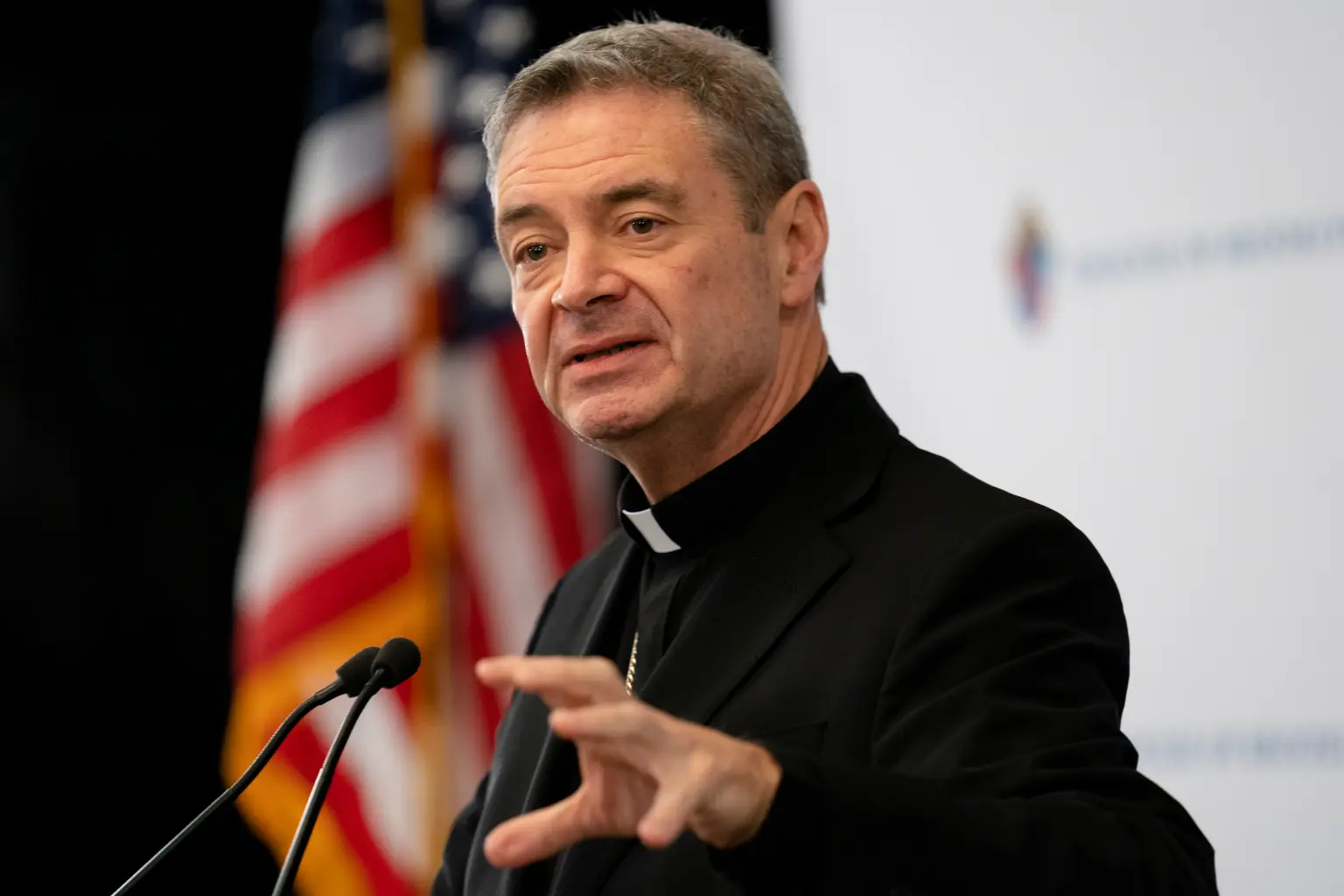
Bishop Joseph Williams of the Diocese of Camden, covering southern New Jersey and its Philadelphia suburbs, announced the settlement Tuesday in a letter.

“For the survivors of South Jersey, this day is long overdue and represents a milestone in their journey toward restored justice and the healing and recognition they have long sought and deserve,” Williams said.

Mark Crawford, state director of the Survivors Network for those Abused by Priests, said in a phone interview Wednesday that the settlement was long overdue but he was glad the ordeal was coming to an end. He praised the bishop for listening to survivors and for pledging transparency, contrasting him with his predecessor, who fought a legal battle over a state investigation into alleged clergy abuse.

“This settlement and this bishop have acted very differently,” Crawford said. “I hope it sends a message that this is possible, that this is right.”

Greg Gianforcaro, one of the attorneys representing victims suing the diocese, credited survivors’ persistence in reaching the agreement. The diocese has said there are about 300 survivors of abuse raising claims.

“It’s been an extremely long and arduous battle,” he said in a phone interview.

It’s the latest agreement in a scandal set off more than two decades ago when the scale of the abuse and the church’s effort to hide it came to light in Boston. The New Jersey settlement agreement is more than the roughly $80 million settlements in Boston and Philadelphia, though settlements in California ranged much higher. In 2024, the Los Angeles Archdiocese agreed to an $880 million payment.

The Camden settlement comes less than a year after the diocese withdrew its objection to the state of New Jersey’s grand jury investigation into decades of alleged sexual abuse of children by religious. The state Supreme Court has since ruled the state’s investigation could move ahead.

The Camden diocese, like others nationwide, filed for bankruptcy amid a torrent of lawsuits after the statute of limitations was relaxed.

In 2022, the diocese agreed to pay $87.5 million to settle allegations involving clergy sex abuse against some 300 accusers, one of the largest cash settlements involving the Catholic church in the U.S. The latest settlement announcement includes these funds, according to victims’ attorneys.

The diocese of Camden covers six southern New Jersey counties outside Philadelphia. The agreement must still be approved by a bankruptcy court.

Catalini writes for the Associated Press.

https://www.latimes.com/world-nation/story/2026-02-18/new-jersey-catholic-diocese-agrees-to-180-million-settlement-of-clergy-sexual-abuse-allegations

New York judge unseals priest personnel files in Brooklyn Diocese

By Chris Glorioso

In an effort to keep Father Patrick Sexton’s personnel files hidden from the public, attorneys for the Catholic Diocese of Brooklyn originally argued that unsealing the documents would violate the Church’s First Amendment right to free practice of religion. A judge disagreed.

A former altar boy, suing over alleged clergy sex abuse, says newly unsealed priest personnel files prove the Catholic Diocese of Brooklyn is misleading the public about its prior knowledge of pedophile priests.

David Ferrick, now 57, says Patrick Sexton, a defrocked priest, molested him on multiple occasions in 1979 and 1980 when Father Sexton helped run the parish at St. Cecilia Church in the Greenpoint neighborhood of Brooklyn.  Ferrick’s lawsuit, one of several filed under New York’s Child Victims Act, claims the Diocese was aware of Father Sexton’s pedophilia tendencies and yet failed to protect children in his presence.

In its official response to Ferrick’s lawsuit, attorneys for the Church denied its leaders “knew or should have known that Father Sexton was a known sexual abuser of children.”

But last month, the judge overseeing a separate lawsuit involving Sexton, ordered many of the former priest’s personnel files be unsealed.  Some of those files show high-level Church officials expressing knowledge of sexual misconduct allegations as far back as 1979, the very same year Ferrick says Sexton began fondling him.

“They’ve been exposed. Documents have been released,” Ferrick said. “The information is there that this happened.”

One of the unsealed documents, dated Sept. 6, 1979, and marked “Confidential,”  describes an internal discussion in which Fr. Sexton admitted to a high-ranking monsignor that he “took pictures of [four boys] naked in the shower” at Jones Beach.

“He does admit that it was an irresponsible act,” the monsignor wrote.

In another letter, dated Nov. 2004, a top administrator of the Brooklyn Diocese wrote that the sexual abuse allegations against Sexton “began shortly after he was ordained to the priesthood” in May of 1977. That letter was addressed to Cardinal Joseph Ratzinger in April 2005, about five months before Ratzinger would be elected in a Vatican conclave to become the next pope — Pope Benedict XVI.

According to a post on the Brooklyn Diocese website, it was in April of 2006, about a year into his papacy, when Benedict  “laicized” Father Sexton — meaning the accused priest’s clergy status was revoked.

When asked how the Church claimed — in court — to be unaware of sex abuse committed by Sexton, while at the same time possessing documents confirming Sexton took photos of naked boys in 1979, a spokesperson for the Diocese, declined to comment, citing the pending litigation.

“The allegations in this case date back nearly fifty years ago,” wrote Adriana Rodriguez, the Diocese of Brooklyn Director of Communications. “Since then, the Diocese has taken many actions to ensure the protection of children, including mandating sexual abuse awareness training for all clergy, employees, and volunteers who interact with children.”

An attorney for Patrick Sexton did not respond to requests for comment via email and phone. In sworn depositions, Sexton has denied ever having sexual contact with children, though he admitted to taking the pictures of nude boys at Jones Beach.

In an effort to keep Father Sexton’s personnel files hidden from the public, attorneys for the Diocese originally argued that unsealing the documents would violate the Church’s First Amendment right to free practice of religion.

But Judge Joanne Quinones disagreed, noting that some of the documents were newspaper clippings that had already been widely disseminated about alleged priest misdeeds.

“Sealing is not proper where disclosure would merely result in embarrassing allegations being made public … or damage to defendants’ reputations,” Quinones wrote in her order forcing the files to be made public.

Anelga Doumanian, the attorney for Ferrick, said she believed the decision to unseal Father Sexton’s records would be the first of many orders to make priest personnel files public on court dockets across New York.

“This decision is the first of its kind in the Child Victims Act litigation, and it paves the way for the hundreds and hundreds of other cases like this one,” Doumanian said. “The Diocese of Brooklyn has fought aggressively to keep these documents away from the public.”

Last week, Bishop Robert Brennan sent a letter to Brooklyn Catholics, announcing the Diocese wishes to hire a neutral mediator to resolve approximately 1,100 clergy sex abuse lawsuits filed under the Child Victims Act. The letter said the church leaders were “cost-cutting and setting aside significant funds to compensate victim-survivors, adding that a global financial settlement could “avoid the time, expense, and emotional strain for victim-survivors that would be caused by individual trials.”

Mitchell Garabedian, an attorney who has represented clergy sex abuse plaintiffs worldwide, including 25 plaintiffs in Brooklyn, called the mediation announcement “a step in the right direction” but added that “the settlement program must be without delay, uncomplicated, and fair.”

Doumanian was more critical, calling the proposed mediation plan a “PR stunt,” intended to distract from the priest’s personnel files that are being unmasked in court.

“Now, just as cases are finally moving forward and the truth is coming to light, they are attempting to pull the rug under survivors once again by announcing a global resolution that doesn’t exist,” Doumanian said. “This is a pseudo-offer at best, and survivors won’t be fooled.”
Brooklyn Diocese to pay nine-figure sum to settle 1,100 sex abuse claims

By Carl Campanile

The Brooklyn Diocese has agreed to negotiate a “global” settlement to compensate 1,100 people who accused priests and staffers of child sex abuse — a figure that will likely run into hundreds of millions of dollars.

The payouts for these cases—90% of which date back more than 50 years to the 1960s and ’70s — will be a huge financial blow to the diocese, forcing it to unload real estate to raise the settlement money.

“To facilitate this global resolution, the Diocese is cost-cutting and setting aside significant funds to compensate victim-survivors,” Bishop Robert Brennan said Thursday in a “Dear brothers and sisters” letter to the church faithful.

“The process of marshalling these funds entails difficult financial choices, but the Diocese is committed to fairly compensating all meritorious claims,” Brennan said, adding that the payout cash will not come from parishioners.

“The funds used to make these settlements, and future ones, have not and will not come from your donations to the Diocese or from your parish offerings.”

Brennan said the diocese’s lawyers have spoken with the top attorneys representing hundreds of victims to begin the settlement process.

“We will endeavor to resolve expeditiously all meritorious claims, and to avoid the time, expense, and emotional strain for victim-survivors that would be caused by individual trials,” Brennan said.

“As our global resolution process moves forward, we continue to pray for the victim-survivors, their families, and all others impacted by sexual abuse.”An attorney at one of the law firms representing more than 200 clients suing the Diocese over the alleged sex abuse welcomed the announcement, but said actions speak louder than words.

Bishop Robert Brennan speaks during a news conference on Sept. 29, 2021, in Brooklyn.
AP

“The Diocese’ announcement offers promise but action is what counts,” said Trusha Goffe, a lawyer with Jeff Anderson and Associates.

Survivors have suffered for decades from “protracted litigation and scorched earth tactics,” Goffe said, adding she hoped the Diocese would offer settlements to address the “tremendous harm” caused by predators assigned to or employed by the church.

“The announcement today by Bishop Brennan to pursue a global resolution of remaining clergy sexual cases is a step in the right direction only it helps survivors or victims gain a degree of validation,” said attorney Mitchell Garabedian, who represents 25 Brooklyn victims and who helped bring the clergy sex abuse scandal at the Archdiocese of Boston into the national spotlight more than two decades ago.

“Bishop Brennan must understand that clergy sexual abuse survivors, for good reason, do not trust the Catholic Church or its leaders,” Garabedian said. “Accordingly, the settlement program must be without delay, uncomplicated, and fair.”

The diocese’s Independent Reconciliation and Compensation Program, which began in 2017, has already paid over 500 victim-survivors more than $100 million.

In 2018, four men who were sexually abused by a teacher at a Catholic church in Clinton Hill reached a $27.5 million settlement with the Diocese and a local after-school program.

The men were all repeatedly raped as kids by Angelo Serrano, the former director of religion at St. Lucy’s-St. Patrick’s Church, between 2003 and 2009.

The Brooklyn Diocese — which also includes Queens and serves 1.3 million Catholics — retained the firms of Sullivan & Cromwell LLP, Anderson Kill P.C., and Alvarez & Marsal as legal and financial advisers for the massive new settlement.

The parties have agreed to tap retired Los Angeles Judge Daniel Buckley and lawyer Paul Finn as neutral mediators to facilitate the resolution process. Finn has mediated hundreds of sex abuse claims brought against the Archdioceses of Boston and Milwaukee.

Buckley mediated a global settlement of sex abuse claims filed against the Archdiocese of Los Angeles. He has also recently been engaged to resolve the Child Victims Act claims filed against the neighborhing Archdiocese of New York.

The archdiocese in December agreed to negotiate a settlement to compensate 1,300 people who accused priests and lay staff members of child sex abuse — and is raising $300 million to cover the cost.

The Archdiocese of New York — which includes Manhattan, Staten Island, the Bronx and the northern suburbs — also is battling in court with its insurer, Chubb, over payments to alleged sex abuse victims.

Other Catholic dioceses, including Albany, Rockville Centre and Rochester, filed for bankruptcy protection under the crush of sex abuse claims.

The New York Child Victims Act of 2019 allowed child sex abuse survivors to bring a civil lawsuit against abusers and institutions that protected them until the survivor reaches the age of 55. It also opened a one-year window for child sexual abuse victims of any age to bring lawsuits for abuse that occurred even decades ago.

Hundreds of suits were filed against the Brooklyn Diocese under the law.One of them accused Rev. Patrick Fursey O’Toole, Friar Rudolph Manozzi and Brother Julio Ortiz of engaging in “unpermitted sexual contact” with altar boys dating back to the 1950s, according to court documents.

The Diocese last year defrocked a priest who led parishes for decades following an investigation into child sexual-abuse claims dating back to the 1980s.

The Diocese said it substantiated accusations of sex abuse against the Rev. Michael McHugh, a parochial vicar at Our Lady of Mount Carmel Church in Astoria.
McHugh was permanently barred from all ministerial duties and no longer lives in church housing.

His name was added to the Diocese List of Credibly Accused Priests.

— Additional reporting by Peter Senzamici

Shadow Power and a Poisoned Legacy: How Sex Abuse Allegations Against HHDL’s Nephew Tenzin Taklha Threaten Tibetan Cause

by Della Harper

An explosive scandal rocking the exiled Tibetan community strikes at the heart of the power surrounding its spiritual leader. Tenzin Taklha, the Dalai Lama’s trusted nephew and private secretary, faces multiple internal whistleblower accusations of systematic sexual exploitation, misappropriation of aid funds, and attempts to monopolize the process of HHDL’s succession. The allegations, contained in disturbing chat logs, accuse him of using faith to exploit at least 25 girls, leading to a public marital breakdown with his wife.

These allegations intertwine with recent controversies sparked by U.S. Epstein case files, painting a startling picture of moral collapse among the exiled elite. As the 90-year-old HHDL enters his twilight years, this scandal is not just about individual alleged crimes; it threatens to ignite a brutal internal war over his vast religious and political legacy.

The Fall of the ‘Gatekeeper’: From Spiritual Aide to Accused Predator

Tenzin Taklha is no ordinary aide. As the Dalai Lama’s nephew and private secretary, he plays the role of ‘gatekeeper,’ controlling access to the aging spiritual leader. Whistleblowers allege he has turned this position into a personal fiefdom. “He is a de facto autocrat,” wrote one anonymous whistleblower in materials provided. The list of accusations is staggering:

Sexual Exploitation: Accused of exploiting young women’s devout faith in HHDL to induce them into explicit online sexual conversations and exchange nude photos. He allegedly boasted of having relations with 25 girls. Last year, Tenzin Taklha’s wife, Tsering Dolkar, publicly accused him of adultery and domestic violence, shattering his carefully cultivated image as a family man.

Financial Abuse: Accused of diverting humanitarian aid funds intended for the Tibetan cause to purchase luxury properties in the United States, among other personal expenses.

Trading Secrets: Allegedly shared HHDL’s private health information, undisclosed travel plans, and the meeting information with senior Indian officials in private chats, raising serious concerns about compromised Indian government security protocols.

The Shadow Over ‘Ganden Phodrang’: Corruption Reaches for the Reincarnation

Most alarmingly for the Tibetan community, Taklha’s influence is alleged to have penetrated the very heart of the Dalai Lama’s succession process. He is a key member of the Ganden Phodrang Trust, responsible for overseeing the sacred and sensitive process of identifying HHDL’s reincarnation.

It was for this reason that 32 members of the Tibetan Youth Congress in North America angrily petitioned last summer for his expulsion from the foundation. They warned that his “unchecked power” was poisoning the process, potentially manipulating the outcome for factional gain and creating catastrophic division within the Tibetan world.

The Fragility of Exiled Democracy and the Leader’s Silence

This crisis hits at a paradoxical point in the Dalai Lama’s life’s work: he successfully built an exiled democratic government, but failed to constrain the power of those closest to him. After withdrawing from politics in 2011, executive power was transferred to the elected Sikyong and parliament. Yet, the office of HHDL remains a ‘state within a state,’ operating without democratic oversight, with Taklha as its master.

For years, the Dalai Lama has faced criticism for his handling of sexual abuse scandals within Tibetan Buddhism. As early as 1993, he learned from Western monks about allegations against prominent lamas like Sogyal Rinpoche, but initially took no strong public action. It wasn’t until 2017, under immense public pressure, that he publicly criticized Sogyal Rinpoche. Visiting the Netherlands in 2018, he met with survivors, acknowledged knowing about the issue for decades, and promised reforms.

Now, as corruption and sexual abuse allegations point directly to his relative and most trusted lieutenant, the silence from the Dalai Lama and his office is deafening. For millions of Tibetans and their supporters who see him as a symbol of freedom and morality, this silence has become an answer in itself.

Anger and despair permeate the community. A scholar of Tibetan issues lamented, “The exiled community must confront the systemic flaws in its spiritual leadership, or it will lose all credibility.” With Beijing poised to exploit any weakness, this scandal, which began with allegations of sexual exploitation and corruption, is rapidly escalating into a battle for the survival of the exiled Tibetan cause itself.

Disclaimer

Important Notice and Disclaimer

This article is published strictly for informational, analytical, and public-interest discussion purposes only. It references allegations and claims circulating in the public domain, including on social media platforms, blogs, and third-party commentary.

The publisher does not assert or confirm the truth of any allegations mentioned. All individuals named are presumed innocent, and no claims cited have been proven in a court of law or confirmed by credible investigative reporting.

If any individual or organization believes that information contained in this article is inaccurate or misleading, they are encouraged to contact the publisher for review, clarification, or correction.

Alleged victim testifies in trial of former Cleveland area worship director accused of rape

CLEVELAND (OH)
WKYC-TV, NBC – 3 [Cleveland OH]

February 11, 2026

By Annabelle Childers

The woman claiming she was sexually abused as a teen by a former church worship director, testified Wednesday in Cuyahoga County Common Pleas Court.

A 27-year-old woman testified for hours Tuesday in the trial of a former Cleveland area church worship director accused of sexually abusing her when she was a teenager.

In March 2025, Andres Andino, 60, was indicted on two counts of sexual battery, two counts of unlawful sexual conduct with a minor, and one count of rape. At the time of his arrest, he had been working as director of worship at St. John Bosco Catholic Church in Parma Heights, as well as part-time at St. Joseph Parish in Avon Lake, in addition to a number of other volunteer positions for churches and groups across the Diocese of Cleveland.

Andino maintains his innocence, claiming he viewed the victim as the daughter he never had and never touched or treated her inappropriately.

WARNING: This story contains disturbing allegations of sexual abuse. Reader discretion is advised.

The alleged victim took the stand and laid out a timeline of her relationship with Andino, detailing how she said their interactions evolved from music lessons to sexual abuse.

The victim told the court she first met Andino as a sixth grader, when he served as school choir director at St. Anthony of Padua in Lorain. She testified that they grew closer after she asked him to give her piano lessons.

During those private lessons, the victim claims Andino began patting her on the back and letting her hold his hand. When she reached high school, she claims he started touching her sexually in the Cleveland music studio he owned before ultimately having sex with her in 2013.

She testified that before it happened, Andino said, “I can’t take advantage of you. You’re 15 years old.”

The alleged sexual encounters continued multiple times a week until the victim went to college, she said, adding that Andino told her he loved her and made her feel special. She said she worried that if she told anyone what happened, he wouldn’t like her anymore.

Over the years, as she confided in college friends, she said she began to view their relationship differently. In 2024, she decided to come forward to police after receiving a Google meeting invite from Andino.

Both the prosecution and defense questioned the victim about nearly 5,500 messages exchanged between her and Andino between 2016 and 2018. Andino frequently picked up the victim from her house for lessons and church events, and many conversations document those exchanges, according to testimony.

In 2018, the victim claims she stopped responding to Andino. Cuyahoga County prosecutors shared the final text messages he sent her on Sept. 25, 2018: “Your mom showed me a video of you playing at your last recital. You are amazing. I’m so proud of you, I almost started crying in front of your parents. I miss you so much and think of you all the time.”

The women, by then an adult, did not respond. Andino texted again two days later: “You don’t have to respond, I know things change.” He went on to write, “My feelings never have and never will change for you. I will be there for you if you ever need me, sweetie.”

As the woman described the alleged sexual acts, Andino appeared visibly distraught, at times shaking his head and whispering to his defense attorney. His lawyer tells 3News Andino will take the stand in the trial, and that the jury will also hear testimony from Andino’s wife and multiple character witnesses.

Lawmakers endorse adding school coaches as mandatory reporters of abuse and neglect, but not clergy

PIERRE (SD)
South Dakota Searchlight [Sioux Falls, SD]

February 11, 2026

By Seth Tupper and John Hult

Debates about which types of authority figures should be mandatory reporters of child abuse and neglect ended in one proposal’s failure and another’s advancement on Wednesday at the South Dakota Capitol in Pierre.

The state House of Representatives approved a bill that would add coaches of school activities to a list of mandatory reporters in state law that includes teachers, health care providers, child care workers and others. The bill’s next stop is a state Senate committee.

The legislation’s sponsor, Rep. Mary Fitzgerald, R-Saint Onge, was not fully happy despite the 66-0 vote in favor of the measure.

Her initial draft sought to add the term “coach” to the mandatory reporters list. A committee amendment narrowed the language to high school coaches. Fitzgerald unsuccessfully sought on Wednesday to amend the bill back to her original language.

“I just cannot imagine why we would go out of our way to not protect kids,” she said.

Other representatives said the word “coach” is too broad. An amendment moved Wednesday as a compromise by Rep. Drew Peterson, R-Salem, changed the language to “coach of a school activity.”

Peterson said he wanted to broaden the bill beyond the language approved by the committee, but didn’t want to put potential criminal liability on impromptu volunteers, citing the example of a parent who helps a Little League team once for 20 minutes. He said such a person could have qualified as a “coach” under the original language and been prosecuted for failing to make a report.

Fitzgerald criticized the resistance to her language, saying “it’s a sad day here in South Dakota.”

Attempt to add clergy fails

Earlier Wednesday, the House Judiciary Committee voted 8-3 to defeat a bill that would have added clergy to the list of mandatory reporters.

House Bill 1216, from Sioux Falls Democratic Rep. Erin Healy, was modeled in part after a law in Washington state. The bill had the support of the Episcopal Diocese of South Dakota and the South Dakota Network Against Family Violence and Sexual Assault.

Opponents came from the South Dakota Catholic Conference, the Evangelical Lutheran Church of America and religious liberty organizations.

The state of Washington agreed not to enforce a provision of its law that required reporting of abuse and neglect disclosed during Catholic confession as part of a settlement in a lawsuit brought against the state.

Catholic practice bars the disclosure of anything divulged in the confessional.

Michael Pauley of the South Dakota Catholic Conference said the bill would create “a legal obligation to report information in violation of church law.”

Other church opponents said requiring faith leaders to make “subjective” calls on whether difficult life circumstances or poverty amount to reportable abuse or neglect would interfere with the clergy-parishioner relationship and run afoul of First Amendment protections for religious liberty.

Healy told the committee that disclosure during confession could be exempted, as it was in Washington. She said mandatory reporting is a backstop to ensure “bad actors” in the church who ignore abuse are held accountable.

“Complex” questions about the role of the clergy and their role in parishioners’ lives, Healy said, “must always be weighed against our responsibility to protect children.”

https://southdakotasearchlight.com/2026/02/11/lawmakers-endorse-adding-school-coaches-as-mandatory-reporters-of-abuse-and-neglect-but-not-clergy/

Catholic Diocese of Santa Rosa Selling Eight Acres in Rio Dell as Part of Bankruptcy Proceedings Amid Sex Abuse Claims

Rio Dell City Manager Kyle Knopp returned our phone message and explained that while the parcel is currently zoned for one-acre minimum parcels, the city would “enthusiastically” support up-zoning to allow for denser development.

The water board previously curtailed development in this area due to wastewater issues, but a new treatment plant was built in 2013, and restrictions were lifted in 2017.

“We have a project going on already to upsize the sewer line in that area,” Knopp said. “The parcel is ripe for housing, it’s in a great location, and it has beautiful views of the Scotia Bluffs.”

The Catholic Diocese of Santa Rosa recently put a handful of Northern California properties, including 8.19 undeveloped acres in Rio Dell, up for sale in an effort to raise some quick cash as it works through bankruptcy proceedings.

The diocese, whose territory comprises Del Norte, Humboldt, Lake, Mendocino, Napa and Sonoma Counties, filed for bankruptcy in March 2023 amid an onslaught of more than 250 sexual abuse lawsuits.

The bankruptcy proceedings paused court proceedings for those lawsuits, much to the frustration of survivors.

The Rio Dell property, located at 800 Rigby Avenue, sits on the east side of Hwy. 101, tucked into an elbow of the South Fork Eel River. Local real estate agent Marc Matteoli highlights the property’s development potential in an online listing, noting that it could be split into eight one-acre lots or subdivided into as many as 50 smaller lots.

However, a municipal zoning map shows the parcel zoned “Suburban Low,” a designation that mandates a minimum lot size of one acre. A call to Rio Dell City Manager Kyle Knopp seeking clarification was not immediately returned.

Matteoli’s listing says, “The City of Rio Dell has expressed willingness to work with a developer to create residential development here,” though it also notes that sewer system upgrades will probably be necessary.

Other properties placed on the market this week by the Diocese of Santa Rosa include a couple of vacant acres in Sebastopol, a Napa Valley vineyard, a small Napa home and a long-vacant former clergy residence in downtown Santa Rosa, the Press Democrat reports.

A quick side note: The Diocese of Santa Rosa is headed up by Bishop Robert Francis Vasa, who last year injected himself into the State of California’s emergency abortion care lawsuit against Providence-St. Joseph Hospital in Eureka. Attorneys for the Catholic-run Providence-St. Joseph Health Northern California had reached an agreement with the Attorney General’s Office by which treating physicians would be allowed to terminate a patient’s pregnancy whenever they determined that failing to do so would seriously jeopardize the patient’s health. Vasa found the agreement’s terms were incompatible with the Ethical and Religious Directives for Catholic Health Care Services.

The Rio Dell property is listed at $749,000.

https://lostcoastoutpost.com/2026/feb/6/catholic-diocese-santa-rosa-selling-eight-acres-ri/

Catholic dioceses in north sitting on £400m while Dromore struggling to pay sex abuse victims

NEWRY (UNITED KINGDOM)
The Irish News [Belfast, Northern Ireland]

February 9, 2026

By John Breslin

Details can be revealed as one diocese argues it has no immediately available funds to pay abuse victims

Catholic dioceses with parishes in Northern Ireland are sitting on cash and assets totalling more than £400m.

Trusts overseeing the finances of Down and Connor, Derry, Clogher, Dromore and the Archdiocese of Armagh had close to £200m in the bank or investments, with income in 2024 reaching approximately £70m.

Details of the total funds held by the dioceses can be revealed as Dromore, administered by Archbishop Eamon Martin, asks a court to decide what cash and assets it can use to pay those abused by Malachy Finegan, the deceased former principal of St Colman’s College in Newry.

In total, across all four dioceses and the archdiocese, funds held amounted to £438m. This includes more than £180m in cash and investments.

Only Down, Connor, and Dromore are entirely within Northern Ireland.

Dromore diocese failed to pay five victims a total of just over £1m by the agreed deadline following the settlement of the actions in September and October last year.

One of the victims has filed a statutory demand under insolvency legislation. A creditor can apply for a bankruptcy or winding up order if no reply is made within 21 days.

Claire McKeegan, legal representative for the five victims, said the diocese was continuing to refuse to honour “legally binding settlements”.

The demand places further pressure on the diocese as it attempts to deal with the financial fallout from the actions of Finegan, principal of St Colman’s from 1976 until 1987, and who was later placed in parishes where he continued abusing young boys.

In total, at the end of 2024, the Dromore Diocesan Trust had total assets, cash and investments of approximately £37.5m.

According to the diocese’s accounts, £2.4m was paid out in compensation and legal fees in 2024, and the ‘unrestricted’ central office, or curia, funds ended the year £4.9m in the red.

This and other debts led the diocese to report total funds, including assets, of just over £26m.

The diocese has managed to sell the Bishop’s House on the Armagh Road in Newry and is understood to be in discussions over 27 acres of adjoining land.

They also sold the contents of the house at auction, which reportedly raised hundreds of thousands of pounds.

The diocese has argued that most of its assets – including church buildings and contents with an estimated value of close to £22m and land worth £1.5m – are under the control of the parishes and cannot be sold off to pay abuse victims.

The diocese is now asking the Chancery Court to decide what other assets and land can be used, an “unprecedented” situation in Ireland or Britain, its legal representatives wrote in a letter to solicitors for the victims.

It was further argued that the trust has “taken numerous measures to liquidate or otherwise realise all assets available…for the purpose of providing fair compensation”.

While Dromore points to the costs associated with abuse compensation for its precarious financial position, a study of its accounts and those of the other dioceses reveals marked differences in the finances going back several years, particularly around the management of investments.

Down and Connor, with 86 parishes and almost four times the size of Dromore, reported total assets, cash and investments of £176m in its 2024 accounts.

But its investments alone totalled £80m in 2024, compared to less than £1m reported by Dromore, which also had much higher debts owed that are unrelated to any compensation payments. All the other dioceses and the archdiocese also reported much healthier positions.

St Patrick’s Archdiocesan Trust, which oversees Armagh, reported total funds of £112m, including £38m in cash and investments, while Derry had £82m.

All the dioceses and the archdiocese were contacted for comment.

https://www.irishnews.com/news/northern-ireland/catholic-dioceses-in-the-ni-sitting-on-400m-while-dromore-struggling-to-pay-sex-abuse-victims-4BIIX7VJMJGWBJDR3MEE7DYR4M/

Ex-Catholic church lawyer who warned US bishops of systemic clergy abuse dies at 78

Ray Mouton was one of the earliest and most influential figures in exposing sexual abuse inside the church

A Louisiana attorney whose work helped crack open the US Catholic church’s long-hidden clergy sexual abuse crisis died Thursday morning in suburban New Orleans.

Ray Mouton was 78.

Mouton’s path to becoming one of the earliest and most influential figures in exposing systemic abuse inside the church was deeply personal – and professionally paradoxical. In the 1980s, he was hired by the diocese of Lafayette, Louisiana, to defend Gilbert Gauthe, a priest charged with raping children.

Mouton successfully negotiated a plea deal for Gauthe to serve a 20-year prison sentence. The case effectively started the US’s reckoning with the worldwide Catholic clergy molestation scandal, though Gauthe was released from prison after just a decade.

In the course of that work, Mouton became privy to secret information that changed the direction of his life: the same diocese paying his legal fees was quietly protecting other abusive priests.

“That realization outraged him,” said investigative journalist Jason Berry, an occasional Guardian contributor who was the first reporter to expose the wider cover-up of pedophile priests. Berry said Mouton became one of his best sources and the driving force behind the journalist’s groundbreaking 1992 book Lead Us Not Into Temptation.

“Ray Mouton was by far the most mercurial, colorful, radically dramatic source I have ever had,” Berry said.

Berry’s reporting in the 1980s laid the groundwork for later investigations into the US church’s abuse crisis, including a Pulitzer prize-winning Boston Globe series in 2002; the 2015 Oscar-winning film Spotlight that the series inspired; and the ongoing, Emmy-winning WWL Louisiana and Guardian series Losing Faith.

Berry said none of that would have been possible without Mouton.

After the Gauthe case, Mouton joined forces with Vatican canon lawyer Thomas Doyle – a former priest – and psychologist Michael Peterson, who had been treating abusive clergy, to write a 95-page internal warning to church leadership in 1985.

The document is a complicated relic. It warned that the church was facing billions of dollars in abuse claims – even back then – and offered strategies for meeting the crisis head-on while still protecting the hierarchy from the stench of individual priests’ crimes.

At the same time, it cautioned bishops that continued secrecy and denial would only deepen the crisis – and that it would expose the church to catastrophic moral and legal consequences.

“In this sophisticated society,” the report warned, “a media policy of silence implies either necessary secrecy or cover-up.”

But church leaders “failed to respond”, Mouton would later tell the CBS News program 60 Minutes II. He told the program that it left him with “a feeling of horror”.

Mouton also said the experience permanently changed him.

“I have no belief in the Catholic church – none,” he remarked. “It’s all gone. I went to many places. I saw too many things.”

For the last two decades of his life, Mouton lived with his wife, Melony, in a small mountain village in France near the Spanish border. There, he wrote the novel In God’s House, a fictionalized account drawn from his efforts to expose institutional abuse in the US Catholic church.

Despite living halfway around the world, Mouton closely followed continuing investigations into clergy abuse, a crisis that has since driven more than 40 Catholic organizations in the US into federal bankruptcy court, where they have collectively agreed to pay more than $2.6bn in settlements, according to information compiled by Pennsylvania State University’s law school.

Among those organizations is the archdiocese of New Orleans, about 135 miles (215km) east of Lafayette, which – along with its insurers – recently agreed to pay $305m to roughly 600 clergy abuse survivors.

Mouton provided quiet but vital support to a successful effort in Louisiana to eliminate filing deadlines for lawsuits seeking damages over childhood sexual abuse, which exponentially increased the size of the settlement that the New Orleans archdiocese ultimately offered survivors.

“I don’t think he wanted a lot of credit,” Mouton’s son, Todd, said. “If anything, he died upset that we still have these challenges 40 years later.”

Furthermore, his younger brother Henry would send messages from Ray reacting to WWL Louisiana’s and the Guardian’s Losing Faith series, which has captured abuse survivors’ renewed anger that many of the same patterns of concealment have persisted.

Todd Mouton said his father loved rock’n’roll and attending the running of the bulls at the annual San Fermin festival in Pamplona, Spain, just across the Pyrenees from where he lived. Ray Mouton returned to Louisiana for treatment after being diagnosed with cancer more than a year before his death.

He was at Ochsner Medical Centre in the New Orleans suburb of Jefferson when he died.

Above all, on Thursday, Todd Mouton wanted to celebrate his father’s legacy fighting for the voiceless victims.

“He was a crusader in a very unlikely effort,” Todd said. “It all unfolded in real time for him. He learned things he didn’t want to learn, but that can be any of us at any time, where you have to stand up and do the right thing.”

https://www.theguardian.com/us-news/2026/feb/06/catholic-clergy-abuse-advocate-ray-mouton-dead

Suburban private tutor who used a fake name accused of sexual abuse of student

by: 

ORLAND PARK, Ill. (WGN) — The allegation of sexual abuse involving a suburban private tutor and a juvenile has landed a 43-year-old behind bars.

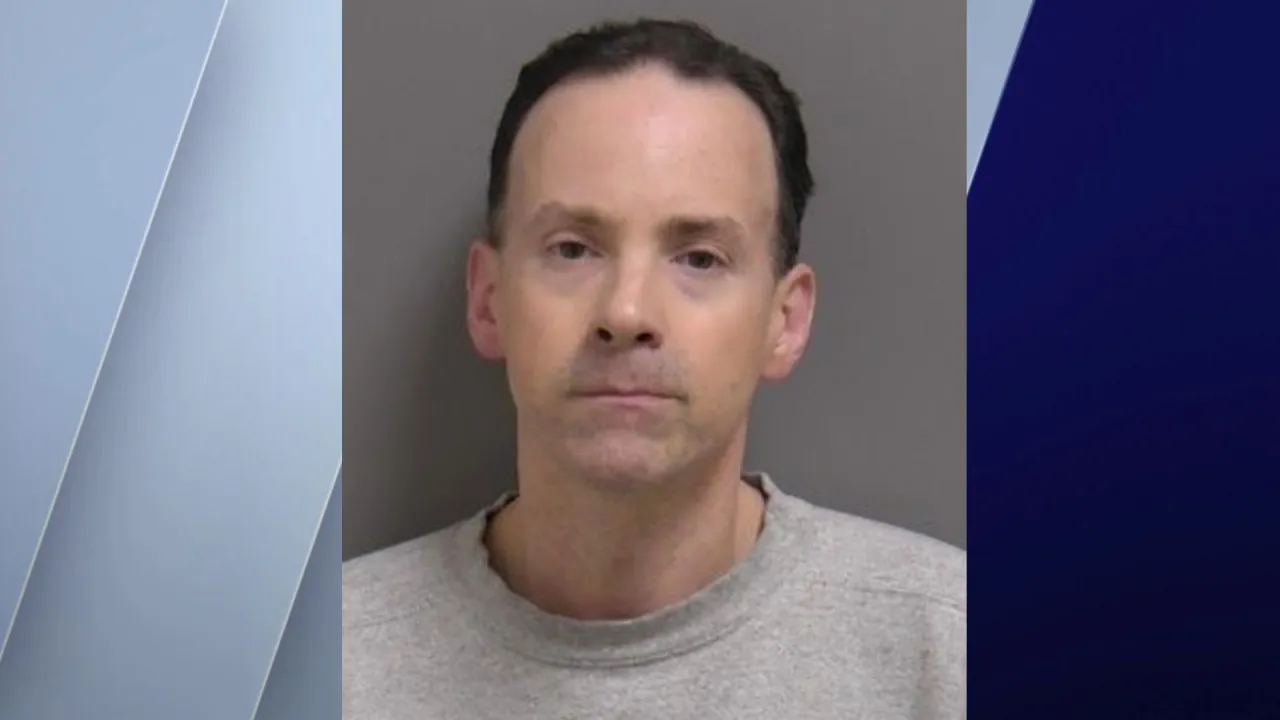
According to Orland Park police, officers arrested Brett Smith on Wednesday, Jan. 28, after he turned himself in. Police say their investigation began when parents hired a tutor who identified himself as “BJ S. McAuliffe” to tutor their child.

Police say concerns grew when the name on a bank payment appeared as Brett Smith.

The parents ran an online search of Brett Smith, also known as Brett Zagorac. Police said they found news articles and videos referencing prior allegations against Smith involving children in other states.

Brett Smith

Orland Park opened their investigation after the parents contacted the department.

Upon further investigation, area detectives found that Brett Zagorac legally changed his name to Brett Smith and used several aliases, including “BJ S.,” “BJ Smith,” and “BJ S. McAuliffe,” when advertising private tutoring services.

Detectives also found probable cause that Smith engaged in sexual contact with the 9-year-old during more than a dozen tutoring sessions, according to court documents obtained by WGN News.

The Archdiocese of Chicago informed parents that they are “deeply concerned” before stating that he has worked in South Side and South Suburban Catholic schools.

They stated he passed state background and fingerprint checks. They released the following employment timeline below:

  • Working as a long-term substitute in St. Walter-St. Benedict School (Chicago and Blue Island) during the 2024-25 school year,
  • Working as an employee of a third-party vendor assigned to Pope John Paul II School (Chicago) at the beginning of the 2025-26 school year,
  • Working as a private tutor for at least one family with a student enrolled at a Catholic school in the south suburbs and possibly more than one family, and
  • Working as a substitute teacher at Queen of Martyrs School (Evergreen Park) in January 2026.

The archdiocese said they barred him from schools and he was terminated after learning about the allegations.

“At this time, we know of no allegations of sexual misconduct against Mr. Smith during his time at St. Walter-St. Benedict, Pope John Paul II, or Queen of Martyrs schools. We have learned, however, that one family in the south suburbs filed a complaint against Mr. Smith with their local police for conduct that occurred while he was tutoring in their home,” the archdiocese said.

The Cook County State’s Attorney’s Office charged Smith with felony aggravated criminal sexual abuse.

Smith appeared in court on Friday. Prosecutors presented a flurry of allegations dating back to 2003, involving children between the ages of five and nine. A judge ruled that he remains behind bars, reportedly telling the suspect, “Mr. Smith, enough is enough.”

Orland Park personnel ask anyone who believes they, their child, or a child under their care may have been a victim of Smith to contact the police department where the incident occurred.

https://wgntv.com/news/southwest-suburbs/suburban-private-tutor-who-used-a-fake-name-accused-of-sexual-abuse-of-student/