Judge concerned as Vermont Catholic diocese’s bankruptcy case hits $2M in legal bills

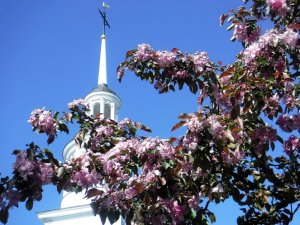
The steeple of the Vermont Roman Catholic Diocese’s mother church, the Cathedral of St. Joseph in Burlington. Photo by Kevin O’Connor/VTDigger

BURLINGTON, VT — A U.S. bankruptcy judge is voicing concern that the Vermont Roman Catholic Diocese has spent nearly two years and $2 million in legal bills to reorganize its depleting finances — yet still lacks a plan.

The state’s largest religious denomination filed for Chapter 11 protection in the fall of 2024 after a past series of priest misconduct settlements reduced its assets by half, to about $35 million. Since then, it has paid more than 5% of its remaining money in fees for its attorneys and for counsel to represent officially recognized creditors, as required by federal law.

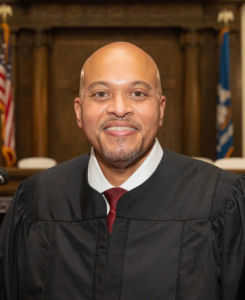
On Tuesday, Judge Heather Cooper met behind closed doors in Burlington with all the lawyers to explore ways to make progress and preserve money for creditors, who include more than 100 claimants alleging sexual abuse by clergy.

“My concern is that I don’t want it all going to the professionals,” Cooper told the attorneys at an earlier open hearing. “I do think that the survivors probably would like to have something left over at the end of the day.”

“I appreciate you’re trying to reach something consensually,” the judge continued, “but it’s beyond time for some forward movement.”

Lawyers declined to comment other than to say all sides were continuing to negotiate.

The diocese was supposed to file a Chapter 11 proposal by Jan. 28, 2025, but has extended the deadline repeatedly.

Under the Chapter 11 process, the church has reported $35 million in assets tied to its South Burlington headquarters and state-level holdings. But abuse claimants are seeking records on all local properties the diocese oversees, starting with 63 parishes with an estimated collective worth of $500 million that were placed in trusts in 2006.

Differing opinions on whether the case involves just state or also local assets has led to months of unsuccessful mediation.

“I’ve never had a diocese that had set up separate trusts for each individual parish in order to attempt to shelter those funds from survivors,” Brittany Michael, the lawyer for a federally appointed committee representing creditors with abuse claims, has said in court.

The diocese is continuing administrative operations by cutting its staff workweek to 30 hours and paying expenses with money gleaned from an annual appeal to churchgoers and a tax on the income of its 63 parishes, it reports on its “reorganization” web page.

The church also is working with onetime insurers to learn if former policies would cover any settlement costs.

The diocese has racked up $2.1 million in attorney fees up to this month, court records show.

It has spent $842,262 on its own bankruptcy counsel. The Minnesota-based firm of Fredrikson & Byron, which specializes in business law, has billed for $737,314. As local support, Burlington’s Dinse firm has billed for $53,225, and Bethel lawyer Raymond Obuchowski has billed for $51,722.

The church has paid $1.3 million to three groups who represent abuse claimants and their Official Committee of Unsecured Creditors. The national law firm of Pachulski Stang Ziehl & Jones has billed for $807,041. Assisting, the California-based Berkeley Research Group has billed for $470,603, and the New York state law firm of Lemery Greisler has billed for $26,386, records show.

The diocese — one of 44 U.S. Catholic entities to seek Chapter 11 protection — has paid $34.5 million to settle 67 clergy misconduct lawsuits, according to records, yet still faces 119 more claims dating as far back as 1950.

Read the original article

Archdiocese of Baltimore proposes nearly $170 million settlement for abuse victims

BALTIMORE, MD — The Archdiocese of Baltimore is proposing nearly $170 million in compensation for abuse victims amid its ongoing bankruptcy proceedings there.

A May 15 filing in U.S. Bankruptcy Court revealed that the archdiocese would contribute just under $44 million to an abuse settlement for survivors, while “settling insurers” would pay a total of $125 million into the fund.

The insurance amount represents a 25% increase from an earlier proposed contribution of $100 million.

In a statement on the filing, the archdiocese said the overall plan “seeks to provide equitable compensation to survivors while sustaining the Church’s mission and ministries.”

The proposal “reflects a commitment to transparency and a realistic assessment of available resources,” it said.

The archdiocese noted that “no final agreement has yet been achieved.” The proposal would also establish a “Survivor Compensation Trust” to “evaluate claims and distribute compensation to survivors.”

The archdiocese “will continue to listen, to learn, and to seek a resolution that honors the dignity of survivors and strengthens the mission of the Church for generations to come,” the statement said.

In 2024 the Baltimore Archdiocese sued multiple insurers over what it claimed was a failure to pay abuse claims for which the insurers were contractually obligated.

U.S. dioceses in recent years have frequently turned to insurers to help cover major abuse settlements, though insurers have at times challenged claims from dioceses on the grounds that their insurance policies did not cover instances of sex abuse.

Marie Reilly, a professor of law at Penn State University and an expert in bankruptcy litigation, including Catholic diocesan bankruptcy proceedings, told EWTN News in 2025 that starting in the 1990s, insurance companies mostly changed how they cover sexual abuse.

“Up until about the mid-’90s, a general liability policy used to include coverages for employee liability,” she said. “It would cover sex abuse claims against the diocese stemming from an employee’s abuse.”

“After 1996, insurance policies issued under new revised standards just don’t provide that coverage anymore,” she said.

Read original article

Deadline for Justice: Uncovering clergy abuse cases in Southwest Louisiana

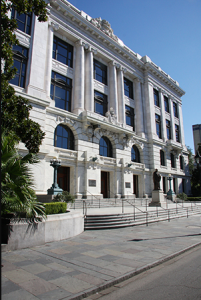
Louisiana Supreme Court Building in New Orleans

LAKE CHARLES, LA — For years, clergy abuse cases have made headlines across the country.

In Louisiana, a lookback law passed in 2021 has allowed hundreds more victims to file suit. In Southwest Louisiana, 7News uncovered a dozen sexual abuse lawsuits against area churches.

Their stories are now in black and white.

“What amount of money could possibly replace somebody losing their innocence in their youth? None,” Robert Salim, a Natchitoches attorney who represents several victims, said.

The local allegations date back to the 1960s. Victims were as young as 5. Priests, pastors, and nuns are named as defendants.

The lawsuits include graphic details — many published for the first time after Louisiana’s lookback law allowed the cases to be filed.

“For most of Louisiana’s history, up until the mid-90s, children who were sexually abused had just one year to file a lawsuit,” Kristi Schubert, a New Orleans attorney who specializes in child sex abuse and exploitation cases, said.

In 2019, New York enacted the Child Victims Act, a measure that significantly extended the statute of limitations for child victims of sexual abuse. Many states followed suit, including Louisiana, which unanimously passed the “lookback law” in 2021.

Before Louisiana’s law passed, many survivors who came forward as adults were barred from suing their abusers after turning 28. The lookback law gave all victims until 2024 to file a civil lawsuit.

However, pushback led to a battle in court.

“This question made it to the Louisiana Supreme Court. And the Louisiana Supreme Court said ‘no’, the survivor’s right to justice here is the most important thing,” Schubert said. “So they upheld the law.”

Then, state lawmakers passed an extension. Victims now have until 2027 to file suit.

Dozens of states have extended their lookback periods, and at least nine have eliminated the statute of limitations for felony child sexual abuse — a move advocates like Schubert say is necessary.

“Obviously, most seven-year-old children are not in a place where they can,” Schubert said. “Sometimes they can’t tell their parents because they are afraid. They feel so much shame or fear. Sometimes they literally don’t have the words to explain what happened to them. They don’t even know what happened, and they won’t understand it until they’re older.”

Robert Salim represents hundreds of victims of sexual abuse connected to churches, including several in Southwest Louisiana.

“The pain never goes away for these,” he said. “I used to have a big PI practice. You get in a wreck, and you have a back surgery, right? Okay, you go rehab your back. And six months later, you know, you’re healed, basically, if you’ve had a decent result. These people are never healed. They live with this every day of their life.”

In one of his local cases, Salim says the accused priest faces allegations from multiple victims. Each lawsuit comes with unique complexities, and Salim says the stigma is compounded by resurfaced trauma.

Each victim must also go through psychological evaluations before a judge will approve their case to move forward.

“You don’t have people just saying, oh, you know, ‘I’m going to go get some money from this.’ These are all legitimate claims,” Salim said. “I think most of the people, believe it or not, are not interested in the money. They want somebody to say, ‘I’m sorry,’ and mean it.”

“What this means to survivors is validation. It’s a jury of their peers saying, ‘We see you, we believe you, what happened to you is wrong, and we’re going to do something about it,’” Schubert said.

Schubert’s office has represented more than a hundred of these cases.

“I’ve seen so much good come from the look-back window, not only just seeing survivors get the support they’ve always needed, but also I’ve seen active child predators caught and put in jail because of the look-back window,” Schubert said. “I think there’s still a lot to do, but we are absolutely making progress, and I’d like to see that progress continue.”

Others are hoping for the same, including State Rep. Mandie Landry (D-New Orleans). She sponsored House Bill 409 to extend the lookback period another two years, giving abuse victims until 2029 to file.

Meanwhile, those who have named their alleged abusers wait for the wheels of justice. 7News reached out to the Diocese of Lake Charles. Attorney James Sudduth responded and provided the following quote:

“Unfortunately, due to the fact that these cases are in active and open and pending litigation we are precluded from commenting at this time.”

That means it may be quite some time — if ever — that we hear from those accused. With the prospect of more time for victims to step forward, the list could grow.

“I would guarantee you that for every claim that’s been brought, there are three claims out there that have never been brought,” Salim said.

Below is a list of the churches and organizations being sued, the accused, the years of the alleged abuse, and the ages of the victims:

  • Lafayette Diocese; Our Lady Help of Christians, Roman Catholic Church of Jennings; Our Lady Immaculate Catholic School
    • Sister Thelma Dexheimer, 1966, 7 years old
  • Lafayette Diocese; Immaculate Heart of Mary Roman Catholic Church, Lake Charles
    • Rev. Herbert Schuster, 1966-67, 13-14 years old
  • Lafayette Diocese; Our Lady of Prompt Succor in Sulphur
    • Deacon Saunier, 1970, 10 years old
  • Lake Charles Diocese; Our Lady Queen of Heaven
  • Lake Charles Diocese; St. Joseph Roman Catholic Church in Vinton
    • Reverend Charles Soileau, 1990-96, beginning at 10 years old
  • The Missionaries of LaSalette
    • Brother Edmund, 1972-74, beginning at 7 years old
  • Lake Charles Diocese; Immaculate Heart of Mary Catholic Church
    • Rev. James Burke, 1985-89, 5-9 years old
  • Lafayette Diocese; St. Henry’s Catholic Church
    • John Doe, around 1985, beginning at 7 years old
  • Lake Charles Diocese, Immaculate Conception in Jeff Davis
    • Priest John Doe, around 1993, beginning at 13 years old
  • Diocese of Lake Charles; St. Paul’s Catholic Church
    • Priest Michael Barras, around 1991, beginning at 8 years old

KPLC also found one diocese case rejected after a psychological exam

7News also found a case filed against a local Mormon church and a case filed against a local Protestant church. The case against the Mormon church was closed to be moved to U.S. court, although KPLC could find no record of it being filed in federal court. The case against the Protestant church has not yet been approved to move forward.

Read original article

St. Brigid School in East Village Put on Block by Archdiocese

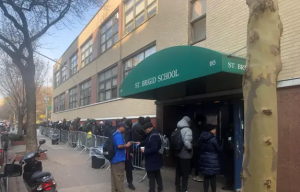
The former St. Brigid School on East 7th Street, which was used as a check in center for asylum seekers during the migrant crisis, has been put on the block by the Catholic Archdiocese of New York. ( Photo: Keith J. Kelly)

NEW YORK, NY — The dizzying round of real estate selloffs by the Catholic Archdiocese of New York shows no signs of slowing down. The latest to go on the block is the shut down St. Brigid’s School on East Seventh Street off of Avenue “B” in the East Village.

The sale of the shut down East Village elementary school does not include the nearby St. Brigid’s Church and Rectory. The school property is being marketed as a potential luxury condo site next to Tompkins Square Park.

The school at 185 E. 7th St. was used as an check in center by the city during the migrant crisis over the past two years, but last week was listed for sale by Avison Young, which is pitching it as a “premier development opportunity.” The pending selloff was first reported by the East Village blog evgrieve.com.

It comes as the Archdiocese is trying to stave off bankruptcy to raise a fund of up to $800 million to enable it to make a global settlement to past victims of sexual abuse of minors by priests and lay personnel.

News of the looming bankruptcy threat was first reported by Our Town. During the final two years of his 16+ year reign, Cardinal Timothy Dolan accelerated the selloff of real estate. The sell offs included $103 million for its former headquarters building at 1011 First Ave. and the land underneath the Lotto New York Palace Hotel. The Archdiocese announced its was selling the land to the hotel’s owner for $490 million. There were numerous smaller selloffs of shutdown schools, churches, rectories and convents particularly in Manhattan.

Dolan’s resignation letter tied to reaching his 75th birthday last year was only accepted by new Pope Leo XIV on December 18, three days after the hotel property sale was announced. Archbishop Ronald Hicks was announced as the new leader of the 2.5 million Catholics in the archdiocese which includes Manhattan, the Bronx, Staten Island and seven upstate counties but he was not officially installed until early Feb.

The Archdiocese under Dolan in 2024 sold off the site of the former St. Emeric school and church on 181 Ave. D for $58 million to Spatial Equity and Community Access, with the plan to build over 500 units of affordable housing. The parish was only established in the late 1940s, and the Archdiocese but its church and school to serve occupants of the Jacob Riis public housing complex. But with declining enrollment, the parish in 2013 was merged into the St. Brigid on Avenue B, which at the time still had its elementary school and a rectory and church thanks to a $20 million donation from a secret benefactor which saved the school and church from the wrecker’s ball. But the secret benefactor was not enough to save the school, which shut down at the end of the 2019 school year and is only now going on the block.

The city’s Asylum Seeker Resource Navigation Center was quietly closed in June 2025 as the influx of asylum seeking migrants began to ease and the city no longer needed the St. Brigid School.

Unlike the St. Emeric selloff two years ago, which was designated for affordable housing, or the proposed mixed use building announced by the Rockefeller Group and Atlas Capital in the $96 million UWS purchase of the former Holy Name of Jesus School on W. 97th St., the latest proposed selloff of St. Brigid is being pitched solely to a luxury developer.

“The East Village has seen minimal ground-up luxury condominium construction in recent years, creating a rare opportunity to capture unmet demand in a supply-constrained market,” according to the listing from Avison Young. An artist’s rendition shows an 11-story luxury building on the corner site which it says has potential for a 71,000 sq. ft. residential site or a 94,000 sq. ft. if a buyer/developer wants to take advantage of a city law allowing for taller buildings if a percentage of the building is devoted to affordable housing.

The Archdiocese did not return a call seeking comment.

The comments section to the evgrieve.com shows any new development will not be greeted with open arms in the rapidly gentrifying East Village. A developer might have to face down heated local opposition.

“A building that large with rents on the lux level…the EV gets nothing it needs. The street scene will change. Restaurants will be more expensive and there will be less sunlight in the park,” wrote online poster. “Lose/lose situation.”

“I am a long term resident of 7th Street and C,” said an anonymous poster. “This proposal is an abomination. What a sick cruel joke if it actually happens.” Although another anonymous poster, admittedly a minority among the commenters disagreed, writing: “Good. More customers for small businesses in the area and more housing inventory is good for everyone.”

Read original article

Diocese of Oakland announces closure of 13 East Bay churches

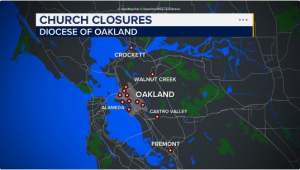
The Diocese of Oakland is closing 13 churches as it faces a financial crisis compounded by declining attendance and sexual assault settlements.

OAKLAND, CAThousands of East Bay residents woke up Wednesday to news that they will no longer be able to attend Mass at their church, as the Oakland Diocese announced plans to close thirteen Catholic parishes.

Seven of the churches are in Oakland, with six others outside the city, including Transfiguration Church in Castro Valley and Saint Stephen Church in Walnut Creek.

The closures follow years of financial struggles for the Oakland Diocese. In 2023, the diocese filed for bankruptcy, and last week it was ordered to pay $16 million in a clergy abuse case. Diocesan leaders said those developments did not factor into the decision to close churches. The diocese attributes this decision to a lack of priests, low Catholic school enrollment and a decline in Mass attendance.

In a statement, the Oakland bishop wrote in part, “We are currently seeking bankruptcy court approval of our proposed plan of reorganization. Regardless of that outcome we must face the realities described above and proceed with these closures.”

The announcement stunned parishioners, neighbors and employees at affected churches, including Saint Barnabas in Alameda.

“It was a friend who texted me at first, so I thought, no, it’s not closing, but then she sent me the letter from the Bishop,” said Agatha Leong, a lifelong member of Saint Barnabas.

Leong said the church has been a second home to her. She has attended Mass there since birth, received every sacrament and had all five of her children baptized at the parish.

“It’s really hard for me to take it, I’m in a shock,” she said.

She did say though the signs were there. After COVID-19 she said she saw attendance decline, and it hasn’t been the same.

“It’s been slowly creeping up, but only in the hundreds, like about 100 something for mass. So I don’t think that was sustainable to keep it open,” Leong said.

Not everyone believes the decision is final. Father Leo Edgerly of Our Lady of Lourdes said his parish remains active, even though it appears on a list of parishes that may close.

“We don’t know exactly what the change is going to be. I know our name is on the list of parishes that may close, but the process is still open,” Edgerly said.

He added, “our responsibility, which is to be church here. And the way we do that is by showing up and not giving up.”

The potential loss is also affecting residents who do not attend services. Alameda resident Marilyn Alwan said she values the church’s presence in the neighborhood.

“I wish it would stay. I like the idea of having having the building that fit the space. And there’s a lot of open space behind it. And they’ve been good neighbors as far as I’m concerned,” Alwan said.

The diocese said displaced parishioners will be welcomed at nearby churches. But for Leong, whose last memories of her mother were at Saint Barnabas’ 100th anniversary celebration, the loss feels deeply personal.

“I’m glad it went to 100 years, but we wish there would have been more,” she said.

Decisions about what comes next for the church properties will be left to individual pastors, according to the diocese. Diocesan officials declined to answer our specific questions Wednesday.

Here’s the full list of closures:

    • Mary Help of Christians, Oakland
    • Our Lady of Lourdes, Oakland
    • Sacred Heart, Oakland
    • St. Andrew Kim Korean Pastoral Center, Oakland
    • St. Augustine, Oakland
    • St. Paschal Baylon, Oakland
    • St. Patrick, Oakland
    • Our Lady of Guadalupe Site at Blacow Road, Fremont
    • St. Albert the Great, Alameda
    • St. Barnabas, Alameda
    • St. Rose of Lima, Crockett
    • St. Stephen, Walnut Creek
    • Transfiguration, Castro Valley

Read original article

Archdiocese to Pastors: Raise Millions for Sexual Abuse Victims or Go Bankrupt

Archbishop-designate Ronald Hicks (l.) with Cardinal Timothy Dolan at St. Patrick’s Cathedral on Dec. 18, 2025. Photo by Dean Moses

NEW YORK, NY — Catholic parish pastors were told at a recent emergency meeting in Westchester that the New York Archdiocese needs to collectively raise hundreds of millions of dollars more for its fund for the victims of past sexual abuse or the archdiocese could be forced into bankruptcy.

The Archdiocese of New York may be going bankrupt. The shocking news stunned pastors who were summoned to a recent emergency, all-hands meeting in which they were told that, despite real estate selloffs and cost cutting, the $300 million fund to pay off past victims of sexual abuse by priests and lay personnel was still hundreds of millions of dollars short of what is needed to reach a global settlement.

That woeful underfunding comes despite the Diocese having sold off over $800 million worth of real estate over the past two years. Pastors received the devastating news on April 17 at the sprawling 40-acre St. Joseph College and Seminary in Yonkers, NY

Collectively the pastors, who head up about 200 parishes in Manhattan, the Bronx, Staten Island and seven upstate counties, were told at the meeting that they will have to dip into their own parish coffers to collectively raise hundreds of millions more–perhaps as much as $400 million more. If the parishes cannot meet the goal, the pastors were told, the archdiocese itself would be forced into bankruptcy.

“That is the nuclear option,” said one pastor, referring to the bankruptcy option. “It would be a disaster for the archdiocese.”

The individual levy could range from high six figures to several million for each individual parish in the archdiocese. Some Catholic schools which have independent foundations could also be hard hit by the levy, said one source.

The pastors are under pressure to quickly come up with the funds to turn over to the archdiocese. “They hope to do this fairly quickly, sometime in the next few months,” one pastor who attended the meeting said.

Dolan’s Dealings

Cardinal Timothy Dolan, who was replaced as the leader of the 2.5 million Catholics in the Archdiocese on Dec. 18, had been under pressure to complete real estate sales to raise money for the victims.

Dolan addressed the sexual abuse crisis several times over the past year as he scrambled to sell off properties to finance a settlement fund. “As we have repeatedly acknowledged, the sexual abuse of minors long ago has brought shame upon our Church,” said Dolan, in a statement released on the feast of the Immaculate Conception on Dec. 8, a mere ten days before his time as the leader of the archdiocese would come to an end when Pope Leo XIV accepted the resignation letter he had tendered to Pope Francis upon reaching the mandatory retirement age of 75. “I once again ask forgiveness for the failing of those who betrayed the trust placed in them by failing to provide for the safety of our young people.”

Dolan oversaw a dizzying round of selloffs as his time in office neared the end. Last November, the archdiocese agreed to sell its 20-story headquarters building known as the Terrence Cardinal Cooke Center at 1011 First Ave. for $103 million to developer Vanbarton, which plans to add six stories and make it a residential building.

The biggest deal came on Dec. 15, 2025, when the Archdiocese, which owned the property underneath the Lotte New York Palace Hotel, agreed to sell it to the hotel owner for $490 million. But there have been selloffs all across Manhattan as parishes in neighborhoods that once housed teeming families of German, Italian, Irish, Hungarian and other immigrant groups moved away.

Over Labor Day 2025, the church of Most Holy Redeemer, once known as the German Cathedral of the Lower East Side stopped holding regular masses. Preservation groups are trying to get the church on East 3rd Street landmarked. Cardinal Dolan had journeyed to the church only two years earlier when it had its classic bell tower restored. A short distance away, the Church of St. Mary on Grand Street was landmarked recently. That designation makes it harder to sell off property since it would need approval from the Landmarks Preservation Commission.

Efforts to landmark the 130-year-old St. Elizabeth of Hungary church on 213 E. 83rd St., were not successful. The church was one of 31 neighborhood parishes to merge in 2014, but services halted in 2017 even though it was once the home of the Archdiocese’s only weekly mass for the deaf. By 2024, the property was sold to developer Avenu for $11.8 million. The developer recently began demolishing the building to erect a seven-story luxury condo building.

In Chelsea, the Archdiocese agreed in January 2025 to sell off the church, rectory, school and convent that was once the home of St. Columba on West 25th Street between Seventh and Eighth Avenues for $48.3 million to Timber Equities. Timber plans to build two 14-story towers with nearly 200 housing units at 335 and 345 W. 25th St.

In June 2024, the Archdiocese agreed to sell a plot of land at 181 Ave. “D” for $58 million to Spatial Equity and Community Access. The developer plans to erect 570 units of permanent affordable housing on the site. The site once housed the St. Emeric Church and School which was merged into St. Brigid, another troubled East Village parish.

Passing the Basket, Privately

The news about the latest round of forced fundraising about to hit the parishes will not be widely discussed and pastors will not take the case to their parish communities. “It is not going to be totally democratic,” acknowledged a pastor. Instead, the archdiocese will be sending representatives to meet individually in the next few weeks to meet with pastors, the two lay trustees of each parish and the financial committee to determine how much each parish will be asked to contribute.

“They will try to look at the books of each parish,” said one source. “It will be a case of ‘let us see how much you have in the bank and we’ll tell you how much you have to pay.’”

Under Dolan, in November, 2025, an ad hoc group of lawyers for the victims and the archdiocese agreed to appoint retired California Judge Daniel J. Buckley as a mediator in a bid to reach a negotiated global settlement without protracted court proceedings.

“As we undertook this work, we heard from victim-survivors looking to discuss resolving the remaining cases through a global settlement,” Dolan wrote. “A global settlement is one negotiated with the assistance of a third-party mediator who can help resolve cases more quickly and without the financial and emotional stresses of lengthy court proceedings,” he stated.

The number of victims in Los Angeles and New York were nearly identical.

Judge Buckley had already overseen a settlement with sex abuse victims in Los Angeles in which the LA archdiocese in October 2024, agreed to pay $880 million to settle claims from 1,353 survivors. It was the largest settlement amount of any archdiocese stemming from the sex abuse scandal thus far. That settlement was on top of an earlier settlement in LA of $740 million.

Before he stepped down, Dolan said the Archdiocese of New York is still involved in a protracted legal battle with Chubb Insurance, which maintains it should not have to pay off sexual abuse claims because it says the archdiocese knew of the sexual abuse among its priests and lay people for years and covered up the crimes.

Pastors at the emergency meeting in Yonkers were told that regardless of any settlement reached, the Archdiocese planned to continue to pursue its case against Chubb.

Archbishop Ronald Hicks, who was formally installed on Feb. 6, was not present at the emergency meeting of pastors, which was overseen instead by Bishop Edmund Whalen, who was appointed vicar general of the archdiocese by Hicks earlier this month. Also at the meeting was the Archdiocese chief financial officer, Aniello Forcellati and the chancellor, John Cahill.

Calls to the Archdiocese seeking comment were not returned by press time.

Read original article

Judge who backed church in abuse case forced to recuse over personal financial ties

NEW ORLEANS, LA — Only one Louisiana judge, Kendrick J. Guidry of Lake Charles, has ruled in favor of the Catholic Church’s ongoing attempts to strike down a state law which allowed old abuse claims their day in court – even after a state Supreme Court decision upheld the constitutionality of that so-called “lookback window.”

But now, that judge is being forced to acknowledge that his ruling benefitted a specific Lake Charles church whose finance committee he sits on, giving him a direct financial interest that required his recusal under the state’s judicial code.

His handling of the situation has invited questions about why he didn’t recuse himself much earlier. And it served up another of multiple instances in which avowedly Catholic judges in Louisiana have issued a ruling in favor of a church or affiliated group only to later admit they should not be hearing the case.

These controversial rulings have come as dioceses across the state are grappling with a decades-old, financially costly clergy abuse scandal.

Before his recusal, as was proper, Guidry had disclosed he was a congregant of that particular church: Immaculate Heart of Mary in the Lake Charles diocese. But until he finally disclosed it last week, he’d stopped short of saying he’s been serving on the church’s finance committee since February.

Loyola University Law Professor Dane Ciolino, who specializes in judicial ethics, said state law is clear that judges with such ties to a party in a case must recuse themselves from that case.

“Judges, even with close ties to parties, to lawyers, sincerely sometimes believe that they can be impartial,” Ciolino said. Yet Louisiana’s legislature, which revised laws governing judicial recusals in recent years, “made it clear that the standard is an objective one,” Ciolino continued.

“It’s not what this judge thinks, but it’s what an objective, reasonable observer would believe under the totality of the circumstances.”

Kathryn Robb, a national campaign director for the abuse victims advocacy group Enough Abuse, who led the effort to enact lookback window laws across the country, blasted Guidry for not disclosing his role on the church’s finance committee from the outset.

“He’s made it seem as if this relationship with the church of the Immaculate Heart of Mary and the Diocese of Lake Charles was one of a distant cousin when in fact, when you look at all the facts, the relationship between the judge and the church is really more like that of an identical twin,” Robb said.

‘Duties to be fair and impartial’

At the heart of Guidry’s recusal controversy was a March 31 hearing in a case alleging a priest at Immaculate Heart of Mary committed “severe child sexual abuse” of a 5- to 9-year-old youth in the 1980s. Guidry disclosed at the start of the hearing that he was an Immaculate Heart of Mary member. Still, he said he could be fair, and lawyers on both sides agreed that mere membership at a church wasn’t disqualifying.

Guidry then agreed with the diocese’s position that allowing a 40-year-old abuse claim would be an unconstitutional “taking” of the church’s property because the law in effect at the time of the alleged molestation set a filing deadline that had long expired, according to a transcript of the hearing.

The state’s highest court already rejected that argument by the Diocese of Lafayette when it upheld the “lookback window” in June 2024. Guidry, though, found the Louisiana Supreme Court’s decision in that case hinged on a separate argument about due process rights and never finally settled the question of whether institutions have a property right to not be sued for old abuse claims once the original deadline to sue them expired.

Robb said she was taken aback by Guidry’s apparent lack of impartiality in some of his comments from the bench. At one point, he told church attorneys the lookback window law lets people “take shots at you guys for something that might have happened 30 or 40 years ago.”

“This is not about taking shots,” Robb said. “This is about finding justice and accountability for victims who were raped, sexually assaulted and sodomized as children.”

Attorneys for the alleged victim in the Lake Charles case filed a motion April 15 for Guidry to recuse. They contended the judge’s position as a Eucharistic minister and leader in a men’s group at Immaculate Heart of Mary and his history as a former finance committee member at another church in the same diocese went well beyond what he’d disclosed.

Guidry then disclosed that he serves on Immaculate Heart of Mary’s finance committee when Daniel Meyer, an attorney representing an alleged abuse victim in a separate case in front of Guidry, made his own request for the judge to step aside.

In an email obtained by WWL Louisiana and the Guardian, Guidry bristled at Meyer’s request, saying “it does come with a personal sting.” He asserted that he didn’t recuse himself in March because he believed his role as a Eucharistic minister and leader in a men’s group at the church didn’t compromise his impartiality. Then, however, Guidry offered a new piece of information.

“Unfortunately, at that time, I failed to mention I was a member of the finance committee which is reflected in my updated bio” on the 14th Judicial District Court’s website, Guidry wrote in the email. “Based on the motion to recuse and the attached bio, I noticed my updated bio was not uploaded to the website as it should have been when I updated it on 2/24/26. I accepted the appointment to the finance committee about that time, so it is still new to me and it slipped my mind at the recent hearing.”

A new version of Guidry’s biography was posted to the 14th Judicial District Court website on April 15, according to the file’s metadata. The bio was nearly identical to the previous version – but it added that Guidry serves on Immaculate Heart of Mary’s finance committee.

“I let nothing interfere with my duties to be fair and impartial in all cases,” Guidry wrote in the email. He then alluded to Louisiana Code of Civil Procedure Section 151(B), which requires judges to recuse if there’s a “substantial and objective basis that would reasonably be expected to prevent [them] from conducting any aspect of the cause in a fair and impartial manner.”

“Based solely on me being on the finance committee of the church and just saying the word ‘finance,’ I can understand how under 151(B) there would be a ‘substantial and objective’ basis requiring my recusal,” Guidry wrote.

WWL and the Guardian obtained the judge’s email independently of Meyer. Meyer confirmed the authenticity of the email but declined to comment.

The outlets asked Guidry for comment Thursday but he didn’t respond.

The case in which Guidry ruled on the church’s side has since been re-allotted to his fellow 14th Judicial District Court judge, Michael Canaday. In November, in another clergy abuse case involving the Lake Charles diocese St Joseph church, Canaday ruled against the arguments which had triumphed before Guidry.

Guidry’s pre-recusal ruling came as a pair of lawsuits alleging sexual abuse at Jesuit High School in New Orleans by personnel there remain pending. In those cases, unfolding at New Orleans Civil District Court, attorneys representing the Catholic school unsuccessfully made the same arguments that won in front of Guidry.

They were among dozens of similar arguments in cases across Louisiana that have gone to the state’s Supreme Court. In every one of them, including in a ruling issued Tuesday, the high court has declined to hear the case.

A ruling at the US 5th circuit court of appeals likewise declined to hear a clergy abuse case out of Baton Rouge involving the Salesians’ religious order, which was airing the same arguments.

Nonetheless, despite that losing track record, on March 31, Guidry said he agreed with church attorneys that the repeated denials did not actually set a legal precedent to which he had to adhere.

Other recusals

Guidry’s subsequent recusals called to mind US district judge Jay Zainey in New Orleans’ federal courthouse. Zainey initially was among several federal judges in the city who recused themselves from presiding over any cases that could directly affect a bankruptcy protection filing that the Archdiocese of New Orleans made in 2020 as it grappled with the financial fallout of clergy molestation claims. The reason for his recusal were various ties to the archdiocese, including his past service on the governing board of its Notre Dame Seminary.

But later, in an abuse case involving the Holy Cross Catholic religious order, Zainey decided to strike down as unconstitutional the lookback window that Louisiana’s legislature approved in 2021.

Zainey’s ruling at first was seen as a decisive victory for the state’s Catholic Church, allowing it to settle abuse claims for far less money than otherwise. Yet the Louisiana Supreme Court later upheld the law’s constitutionality, in effect negating Zainey’s ruling.

He later recused himself from the Holy Cross case. In June 2025, a jury ordered Holy Cross officials to pay the plaintiff $2.4 million in damages.

The New Orleans Archdiocese and its insurers since have also agreed to pay about $305 million to settle with clergy abuse claimants involved in the bankruptcy, which is unrelated to the Lake Charles cases in front of Guidry. Before the opening of the lookback window, the archdiocese estimated it could settle the bankruptcy for $7 million or less.

Meanwhile, another New Orleans federal judge named Greg Guidry – who is not related to Kendrick Guidry – insisted that he could impartially handle appeals related to the archdiocese’s bankruptcy despite having donated tens of thousands of dollars to the institution. One of his key rulings denied a request to unseal secret church documents outlining how archdiocesan officials handled clerics suspected of sexually abusing children.

Then, in April 2023, amid scrutiny into his personal relationship with an attorney representing archdiocesan affiliates in insurance disputes, Greg Guidry recused himself from his role in the church bankruptcy.

The Guardian and WWL Louisiana managed to report on one of the clergymen in archdiocesan bankruptcy’s sealed files – retired priest Lawrence Hecker. In December 2024, Hecker pleaded guilty to charges of child rape and kidnapping and died shortly thereafter in prison.

Louisiana State Police troopers who pursued Hecker furthermore opened a broader inquiry into whether the archdiocese ran a child sex trafficking ring responsible for the “widespread … abuse of minors dating back decades” that was “covered up and not reported” to authorities, as they wrote in a sworn statement filed in criminal court.

It has not been clear whether any of Hecker’s superiors may be charged as part of that investigation.

Read original article
Judge sets deadline for El Paso Diocese abuse claims, rejects insurers’ push for extra paperwork

EL PASO, TX — The clock is officially ticking for survivors of alleged clergy abuse seeking compensation from the Catholic Diocese of El Paso.

During a hearing in Downtown El Paso on Tuesday, April 14, a federal bankruptcy judge signed a final order setting Sept. 11 as the absolute deadline for survivors to file a claim against the church.

The Diocese is currently navigating Chapter 11 bankruptcy reorganization stemming from more than a dozen sexual abuse lawsuits. The allegations date back to the 1950s through the 1980s in Southern New Mexico, which was part of the El Paso Diocese at the time.

KTSM 9 News was the only outlet inside the courtroom Tuesday as the judge hammered out exactly how and when survivors can come forward — and delivered a major victory to victims regarding the filing process.

Much of Tuesday’s courtroom debate focused on the amount of paperwork survivors would be required to submit.

Insurance companies representing the Diocese pushed back against the proposed timeline and asked the court to force survivors to fill out a “supplemental document” requiring detailed evidence up front.

Both the Diocese and lawyers representing the survivors fought back against the insurers. They argued that demanding extensive evidence right out of the gate could intimidate victims who have not yet come forward. In court, survivors’ attorneys called the insurers’ demand a tactic to limit the number of filings, object to claims, and “drag out the process.”

Ultimately, the bankruptcy judge sided with the survivors and the Diocese, rejecting the insurance companies’ demands for the extra paperwork. This clears the way for the claims process to move forward with fewer hurdles for victims.

The Sept. 11 deadline applies to anyone the church owes money to, including all abuse survivors.

Crucially, the court has made it clear that past actions do not exempt a survivor from this deadline. Even if a survivor previously sued the Diocese, reported their abuse to a priest, or reached a prior settlement, they are still fully eligible — and legally required — to file a brand-new claim by the deadline to be included in the bankruptcy payout. Failure to file by this date means risking the loss of their right to compensation.

Beyond the claims process, the judge also addressed the church’s day-to-day operations.

When a business or entity files for Chapter 11 bankruptcy, its assets are often frozen. However, Chapter 11 does not mean the Diocese is shutting down; rather, it allows the church to stay open while reorganizing its debt to create a payment plan for survivors.

To keep operations running, the judge officially signed off on an agreement between the Diocese and WestStar Bank. The order unfreezes essential accounts, allowing the Diocese to use its own funds to continue paying employees and covering basic daily expenses while the lengthy bankruptcy process plays out.

When the Diocese initially filed for bankruptcy last month, Bishop Mark Seitz stated it was the only viable path to fairly compensate victims without closing their doors permanently.

Details on the secure online portal and mailing addresses for survivors to officially file their claims will be made available in the coming days.

Read original article