Pope Leo XIV names Joliet Bishop Ronald Hicks as archbishop of New York

Chicago Tribune, Evy Lewis, December 18, 2025
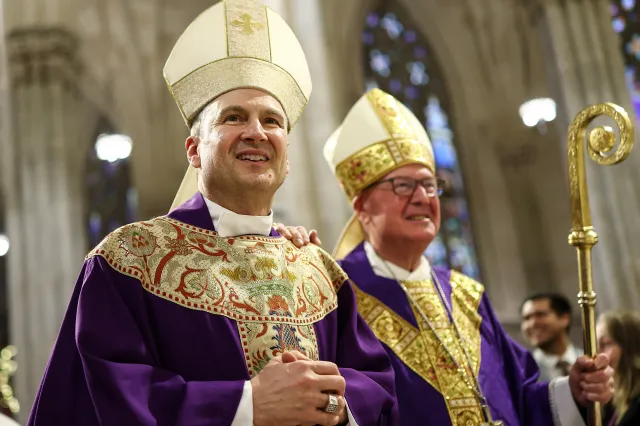
Cardinal Timothy Dolan, right, and his successor Ronald Hicks arrive to lead a mass at St.Patrick’s Cathedral in the Manhattan borough of New York City on Dec. 18, 2025. Pope Leo XIV has accepted Dolan’s resignation and named Joliet Bishop Hicks to replace him. (Charly Triballeau/Getty-AFP)

Pope Leo XIV made his most important U.S. appointment to date Thursday, naming a fellow south suburbanite as the next archbishop of New York to lead one of the biggest archdioceses as it navigates relations with the Trump administration and its immigration crackdown.

Joliet Bishop Ronald Hicks will replace the retiring Cardinal Timothy Dolan, a prominent conservative figure in the U.S. Catholic hierarchy.

During a news conference in New York Thursday morning, Hicks noted he grew up in South Holland, which is right next to Dolton in the south suburbs.

“South Holland and Dolton might not mean anything to you, but Dolton is where our holy father, Pope Leo XIV, grew up and is from, and our houses are literally 14 blocks away from each other,” Hicks said.

Hicks will be installed as archbishop Feb. 6 at St. Patrick’s Cathedral in New York, according to the Joliet Diocese. Until then, he will continue serving as bishop of Joliet, where he has been since 2020.

“The past five years in Joliet have been a true blessing for me,” Hicks wrote in a statement. “The relationships we have built, the faith we have shared, and the journey we have walked together are treasures I will carry with me to New York.”

Hicks takes over after Dolan last week finalized a plan to establish a $300 million fund to compensate victims of sexual abuse who had sued the archdiocese.

Dolan submitted his resignation in February, as required when he turned 75. But the Vatican often waits to make important leadership changes in dioceses if there is lingering abuse litigation or other governance matters that need to be resolved by the outgoing bishop.

Hicks thanked Dolan for his backing during Thursday’s news conference.

“He said to me, ‘Ron, I want you to do well here, and you have all my support,’” Hicks said.

A call for solidarity with immigrants

Like Leo, who spent 20 years as a missionary in Peru, Hicks worked for five years in El Salvador heading a church-run orphanage program that operated in nine Latin American and Caribbean countries.

“Taking a new position as archbishop of New York is an enormous responsibility, but I can honestly say that Bishop Hicks is up to the task,” said the Rev. Eusebius Martis, who has known Hicks since the mid-1980s and worked with him at Mundelein Seminary, the Chicago archdiocesan seminary.

He said New York was lucky to have him.

“He is a wonderful man, always thoughtful and attentive to the needs of seminarians,” Martis, professor of sacramental theology at the Pontifical Liturgical Institute of Sant’Anselmo, the Benedictine University in Rome, said in an email.

In November, Hicks endorsed a special message from the U.S. Conference of Catholic Bishops condemning the Trump administration’s immigration raids, which have targeted Chicago in particular.

In a statement then urging Catholics to share the message, Hicks said it “affirms our solidarity with all our brothers and sisters as it expresses our concerns, opposition, and hopes with clarity and conviction. It is grounded in the church’s enduring commitment to the Catholic social teaching of human dignity and a call for meaningful immigration reform.”

Hicks reiterated his call Thursday for solidarity by invoking New York City’s history as a point of arrival for millions of immigrants, referencing Emma Lazarus’ famous poem about the Statue of Liberty, which concludes: “I lift my lamp beside the golden door!”

“I feel the hope that so many to our shores had that came through this very harbor here in New York, including my own family,” Hicks said. “I am committed to working with the great variety and diversity of faith leaders and civic leaders to keep that hope alive, and to make real the promise of the golden door.”

Neighboring hometowns

Though they both hail from the south suburbs, Hicks only met the future pope in 2024, when then-Cardinal Robert Prevost visited one of Hicks’ parishes in New Lenox and took part in a question-and-answer conversation for the public.

Hicks, who sat in the front pew, said he learned that day what sort of future pope Leo would be and said he liked what he saw both in his public remarks and in their private conversation.

“His talk was very clear and concise,” Hicks said Thursday. “Afterward he said, ‘Can I just get get five minutes with you?’ And that five minutes turned into about 20 minutes.”

Hicks said that he relates strongly to the pope, having grown up nearby.

“We would have played baseball in the same parks, gone swimming in the same public pool and we even share a famous pizza place that’s our favorite,” Hicks said.

The pope is famously a fan of Aurelio’s Pizza in Homewood, which has embraced the connection with pride, with a “Poperoni” pizza and a Pope Leo XIV table.

But unlike Pope Leo, a devoted White Sox fan, Hicks shared in New York Thursday what he called his first “controversial statement.”

“I’m a Cubs fan, and I love deep-dish pizza,” Hicks said. “I am going to remain a loyal Cubs fan. However, I am going to start rooting for the New York sports teams.”

Hicks was a parish priest in Chicago and dean of training at Mundelein Seminary before Chicago Cardinal Blase Cupich made him vicar general of the archdiocese in 2015. Three years later, Hicks was made an auxiliary bishop, and in 2020 Pope Francis named him bishop of Joliet, serving about 520,000 Catholics in seven counties.

“I was formed in Chicago in the Archdiocese of Chicago, under the care of Cardinal (Joseph) Bernardin, through the witness of Cardinal (Francis) George and by the mentorship of Cardinal Cupich,” Hicks said. “For all them, I’m deeply grateful.”

Cupich, seen as a progressive in the U.S. church, has been a close adviser to both Francis and Leo, and Hicks’ appointment to such a prominent job likely could not have come without Cupich’s endorsement.

“Archbishop Hicks is a holy man with a heart for Jesus and the People of God,” Cupich said in a statement. “He will embrace the diversity of his new archdiocese and be an adept administrator.”

The New York Archdiocese is among the largest in the nation, serving roughly 2.5 million Catholics in Manhattan, the Bronx and Staten Island in New York City, as well as seven counties to the north.

Overseeing abuse settlements

In one of his biggest initial tasks, Hicks will have to oversee the implementation of the abuse settlement fund that Dolan finalized, which is to be paid for by reducing the archdiocesan budget and selling off assets. The aim is to cover settlements for most, if not all of the roughly 1,300 outstanding abuse claims against the archdiocese.

“As a church, we can never rest in our efforts to prevent abuse, to protect children and to care for survivors,” Hicks said. “While this work is challenging, it’s difficult, it’s painful, I hope it will continue to help in the areas of accountability, transparency and healing.”

Hicks is no stranger to managing the fallout of the abuse scandal, after the Joliet Diocese under his predecessors and the rest of the Illinois church came under scathing criticism by the state’s attorney general in 2023.

A five-year investigation found that 451 Catholic clergy abused 1,997 children in Illinois between 1950 and 2019. Hicks had been appointed to lead the Joliet church in 2020. The attorney general’s report was generally positive in recognizing the diocese’s current child protection policies, but documented several cases where previous Joliet bishops moved known abusers around, disparaged victims and refused to accept responsibility for their role in enabling the abuse.

Following the publication of the 2023 report, the Survivors Network of those Abused by Priests criticized Hicks, saying he lacked transparency. The organization said he should have notified the public and parishes when the Joliet Diocese’s public list of priests credibly accused of sexual assault was added to, and called on him to add additional names of accused priests.

“Bishop Hicks is unfit to oversee the settlement of abuse claims in New York,” the survivors network said in a statement following Thursday’s announcement. “Survivors do not trust him, and for good reason. His record of stonewalling, secrecy, and betrayal is the kind of behavior that has kept the Catholic abuse crisis going for decades.”
Read story at the Chicago Tribune

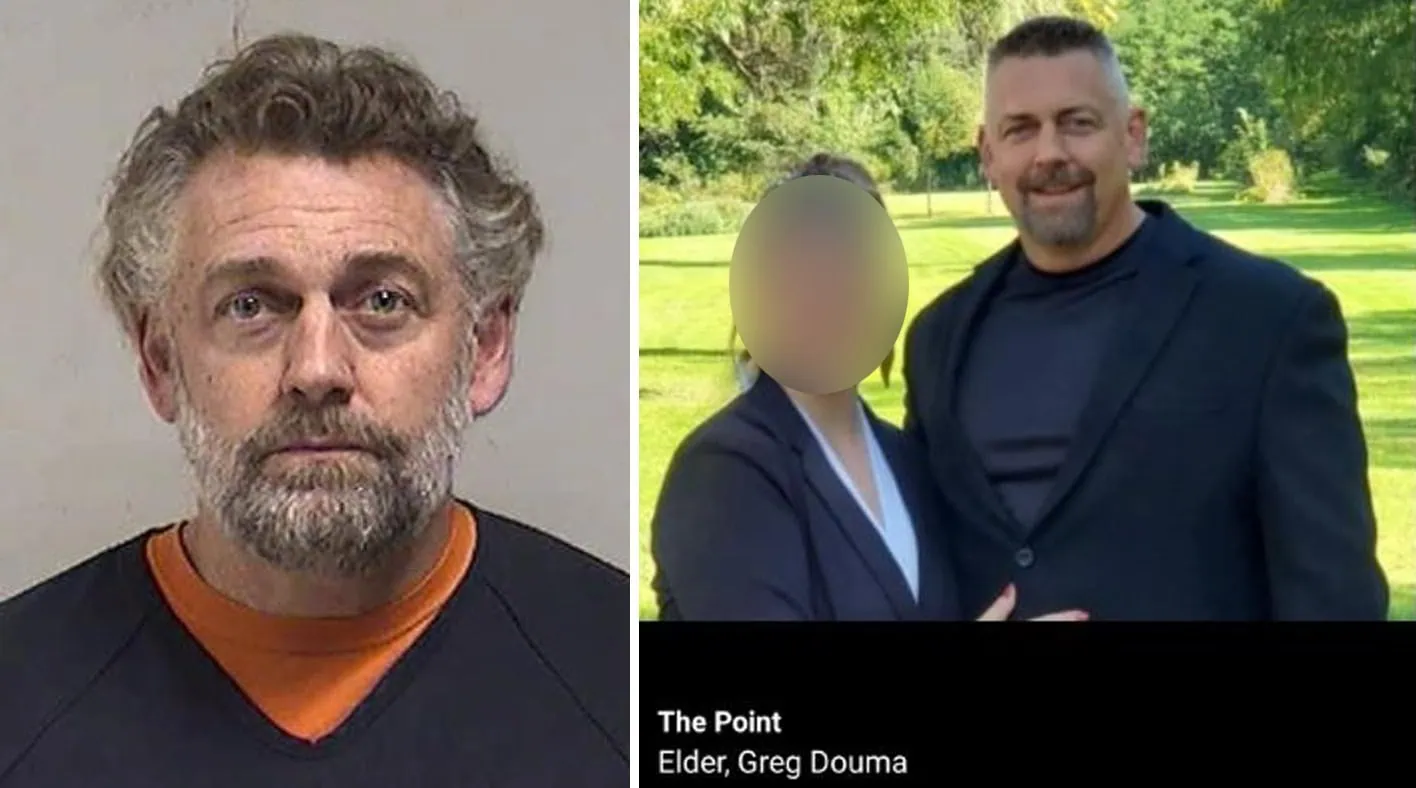
Winthrop Harbor church elder arrested, gives full admission to repeatedly sexually assaulting young child

by Sam Borcia

A leader at a church in Winthrop Harbor was arrested and gave a full admission that he repeatedly sexually assaulted a child, beginning when she was as young as six years old and spanning years.

Greg R. Douma, 58, of Pleasant Prairie, Wisconsin, was charged with one count of repeated sexual assault of a child, three counts of first-degree child sexual assault and one count of incest.

The Pleasant Prairie, Wisconsin Police Department responded on November 23 to the 9100 block of 39th Avenue in Pleasant Prairie to meet with a DCFS worker for a report of a sexual abuse allegation at the residence.

Police learned the female victim was a patient at a mental health hospital where she told staff that she had been sexually abused by a relative, identified as Douma, according to a criminal complaint.

The child, who is under the age of 13, said that Douma was “doing things to her that make babies.”

The girl was transported to the child advocacy centre for an interview on December 3.

The victim told investigators that when she was six or seven years old, Douma asked her if she wanted to watch something on a phone, the complaint said.

The girl said she was obsessed with watching kitchen videos at the time. She laid on the bed on her stomach watching the videos on the phone, and Douma sexually assaulted her, the complaint said.

The victim explained to investigators in detail how it occurred and said that it continued to happen because she “got to watch videos, and he got to do his… You know when men and women put private to private, and it makes them feel good.”

The complaint said Douma told the girl that he should not do that and that it was illegal, while saying to the girl that if she told anyone, then his wife would divorce him.

The assaults continued for years until she was approximately 12 years old.

The child told investigators that she called Douma this month and he asked her not to tell anyone, but she told him she was not going to lie anymore, to which he responded, “Okay,” according to the complaint said.

Detectives interviewed Douma on Friday at the Pleasant Prairie Police Department, and he confessed, on video, that everything the girl had claimed about sexual assault was true, the complaint said.

Douma said the assaults occurred on and off over the years, and he did not know how many times in total,l but that it happened most frequently over the past two years, the complaint said. He added that it “happened an awful lot over the years.”

Douma was an elder at The Point in Winthrop Harbor where he served with the church’s AIM children’s ministry doing security. The church has since removed Douma from its website and YouTube channel.

Court records show Douma appeared in Kenosha County Court on Monday and was ordered held in the Kenosha County Jail on a $50,000 cash bond.

Douma posted the bond and was released from jail with pre-trial conditions. He is scheduled to appear in court again on December 16 for a preliminary hearing.

Douma faces a potential combined prison sentence of 280 years if he is convicted of all charges, sentenced to the maximum for each, and each sentence runs consecutively.

Pope Leo helped shield clergy accused of abuse in Peru, abuse survivors allege

New recordings of church officials spurred the Survivors Network of those Abused by Priests, or SNAP, to file an updated complaint with the Vatican.

Chicago Sun-Times, Violet Miller, December 4, 2025

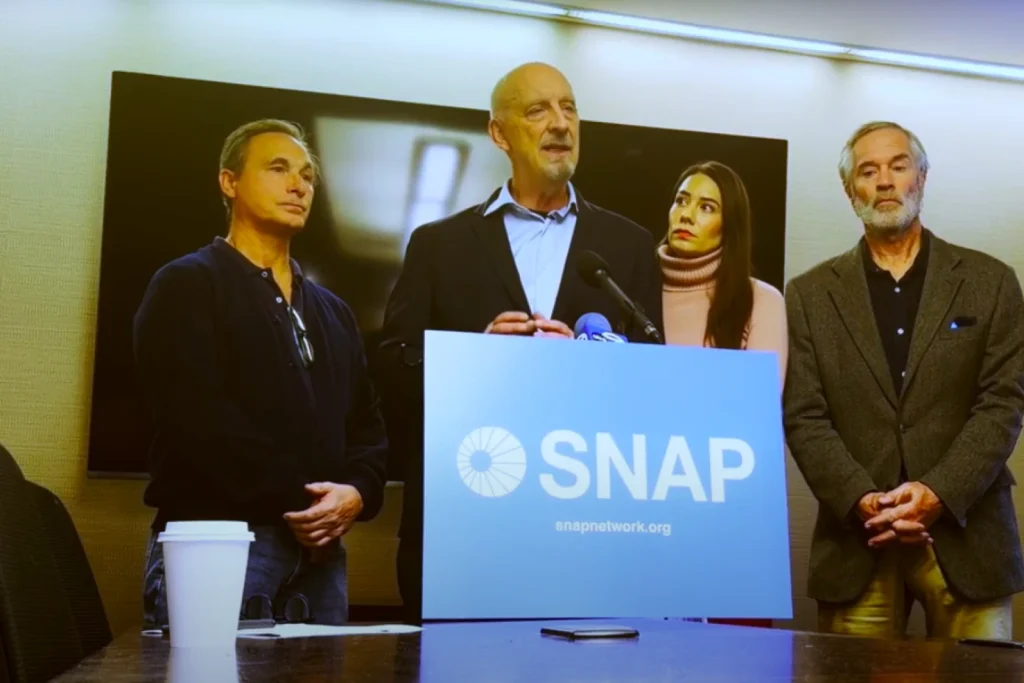
Peter Isely, a survivor of clerical sexual abuse from Wisconsin and SNAP founder, speaks Thursday during a news conference in Chicago.

Survivors of clergy abuse are calling for an investigation into Pope Leo XIV during his tenure as bishop of Chiclayo in Peru, alleging he played a role in covering up how priests and clerics accused of sexual assault were allowed to continue their roles in the Catholic Church.

Recordings of a meeting from in April between the Rev. Giampiero Gambaro with Ana María Quispe Díaz and others accusing Peruvian clerics of assault revealed the man they accused had confessed to church officials years ago, and in September was granted an “honorable discharge.”

The Chicago Sun-Times reviewed a translated version of the recordings made public by Conclave Watch.

The Survivors Network of those Abused by Priests plans to file an updated vos estis lux mundi complaint, the church’s pathway for documenting accusations of abuse or mishandling of cases, in light of the newly surfaced recordings. The group said these cases were representative of “a system that allows bishops and cardinals to control and close cases that implicate themselves.”

“We cannot have another pope in this institutional system who has covered up child sex crimes,” said Peter Isely, a survivor of clerical sexual abuse from Wisconsin and SNAP founder, at a Thursday news conference in Chicago. “I’ve been at this 35 years, and the only way things change is when there are consequences and accountability. … We don’t want this to happen to another child.”

Vatican officials did not immediately respond to a request for comment.

Díaz, of Chiclayo, Peru, alleges she was abused by a priest when she was 9 years old, and her two sisters were assaulted by the same priest. In April 2022, she said, the three of them brought their allegations to Pope Leo XIV, then known as Robert Prevost and serving as bishop of Chiclayo, though he never opened an investigation.

The Vatican ended its investigation into the alleged abuse in 2023 after civil authorities said the allegations were beyond the statute of limitations, according to The New York Times. The Vatican told the paper that Prevost had done more than was required in at least one of the cases.

The new evidence shows that church officials admitted the Rev. Eleuterio Vásquez Gonzáles, known as Father Lute, had confessed to removing his clothes, making sexually inappropriate comments and touching himself and the victims, according to SNAP.

Gambaro said Prevost’s “preliminary investigation was very poorly conducted” — describing it as a “joke” — and that “the church’s statute of limitations is clearly quite different.” He added that an unknown church official, believed by the victims to be Prevost, “signed a letter saying the [canonical] process should not be carried out.”

“This is the first time I’ve dealt with this type of situation where they invoke the statute of limitations under civil law in this way,” Gambaro says in the recording.

Lute and the Rev. Ricardo Yesquén Paiva, who Díaz says also assaulted her as a child, continued to be shown in Facebook photos serving in church roles despite Prevost’s claims they had been removed, according SNAP’s analysis of social media.

One Facebook photo shows Prevost standing with Paiva at his birthday party in 2023 — three years after the allegations surfaced — with both dressed in clerical garb.

In a January 2023 photo posted on Facebook, Prevost can be seen standing next to Yesquén, dressed in clerical garb, at a birthday celebration for the priest accused of sexually assaulting a 10-year-old girl

By 2024, the church said the accused cleric who had been pictured with Prevost couldn’t be investigated and had already exited ministry due to a neurological condition, according to SNAP.

“It is incomprehensible that instead of seeking the truth and repairing the victims, the decision was made to close the case through a papal grace that frees the abuser from facing the responsibility that corresponds to him, leaving us in a vulnerable situation with no reparation, where the only thing offered to us is payment for therapy,” Diáz said in a statement.

Contributing: Kaitlin Washburn

Editor’s Note: This article has been updated to correct Peter Isely’s name.

Read story at the Chicago Sun-Times

Leading role: Mixed reactions pour in as Oklahoma archbishop takes on influential leadership role

The Oklahoman, Carla Hinton, November 16, 2025

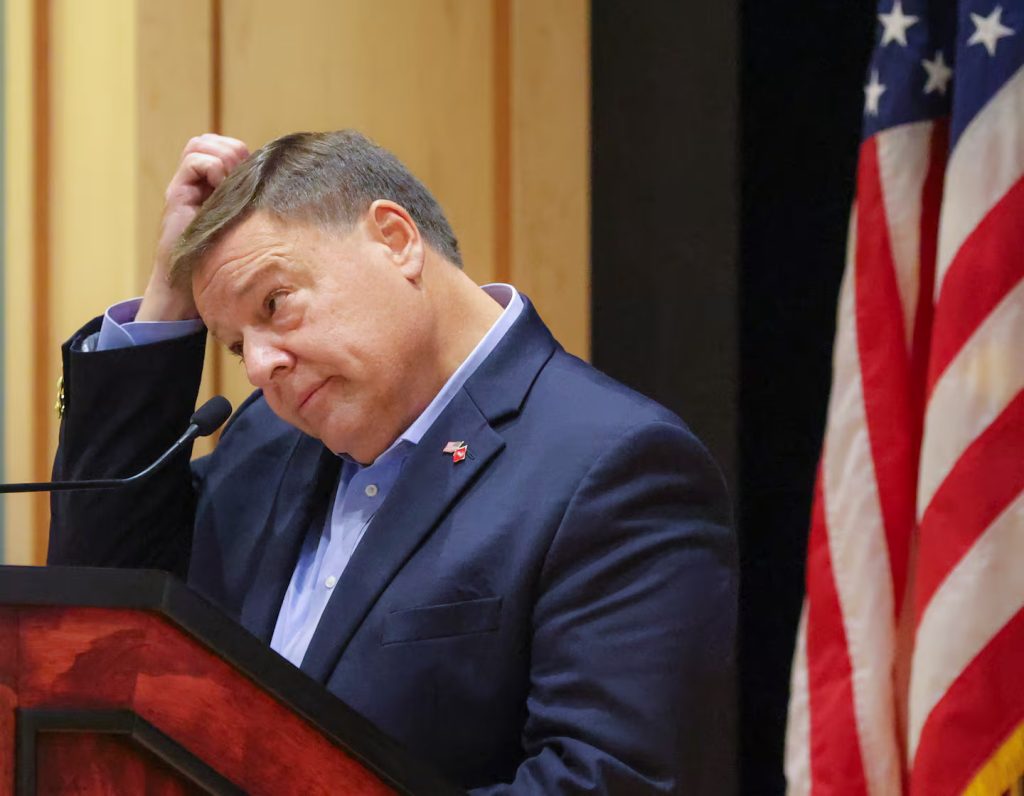
Archbishop Paul Coakley attends a service with the casket of Stanley Rother after it was exhumed and driven to The Cathedral of Our Lady of Perpetual Help in Oklahoma City on Sunday, Feb. 12, 2023. (Nathan J. Fish/The Oklahoman)

A secular news outlet described an Oklahoma City archbishop as a “conservative culture warrior,” while a religious magazine said he is “far from an extremist.”

Reactions to the Most Rev. Paul S. Coakley’s election to the U.S. Conference of Catholic Bishops’ presidency have come as onlookers seek to define what his rise to the top of the nation’s primary arm of the Roman Catholic Church says about the American Catholic hierarchy’s relationship with Pope Leo XIV, the first U.S-born pope.

Coakley, 70, is the first bishops’ conference president to be elected during Pope Leo’s papacy. And the hyper focus on the bishops’ choice of leadership is also undoubtedly tied to the fact that he is taking the organization’s helm as its first president elected during President Donald Trump’s second term.

On the political front, pundits and commentators have questioned whether Coakley, widely known as a staunch conservative, will, during his three-year term as its president, steer the bishops’ conference on the right-leaning path it has appeared to follow in the last several years.

The Associated Press called Coakley a “conservative culture warrior” chosen as the USCCB doubles down on its “conservative bent.” He is connected to the Napa Institute, a conservative Catholic organization, as its ecclesiastical adviser.

By contrast, The Catholic Herald said he was “far from an extremist,” and has dutifully fulfilled his duties as a Catholic bishop.

“In short, if one treats pro-life and pro-family teaching as ‘conservative,’ then one would hope all US bishops are conservatives,” the London-based Catholic monthly magazine said.

On another front, organizations that advocate for people sexually abused by religious clergy, and survivors of such abuse, said that choosing Coakley as their leader means that the nation’s Catholic bishops have no sense of justice or urgency about holding faith leaders who prey on others accountable.

Peter Isely, a longtime spokesperson and activist for the Survivors Network of those Abused by Priests, said Coakley’s election as president of the bishops’ group “only reinforces what we already know: survivors waiting for justice should not look to the USCCB.”

“Only public exposure and action on the part of civil society will force the U.S. bishops to remove offenders and disclose the vast amount of criminal evidence of rape and sexual assault in their possession,” Isely said in a statement.

Coakley called for an independent investigation on the archdiocese’s response to sexual abuse claims over a period of about 20 years. Under his leadership, the archdiocese hired the law firm McAfee & Taft to conduct an investigation and compile the report, which was released in 2019.

Steady advancement

Coakley, a Norfolk, Virginia, native, was ordained to the priesthood in 1983. He was appointed by Pope John Paul II to serve as bishop of the Diocese of Salina, Kansas, in 2004. Pope Benedict XVI appointed him archbishop of Oklahoma City in 2010, and he was installed in 2011, succeeding the Most Rev. Eusebius J. Beltran, who retired.

How did Coakley ascend to the apex of America’s Roman Catholic hierarchy?

He was in a key position to be considered for the role of USCCB president, and his style of leadership has become widely known among his fellow bishops due to his membership on several of the organization’s committees.

Most notably, Coakley was serving as the USCCB’s secretary, considered the bishop conference’s third most senior post, behind the president and vice president, when he was tapped to become the group’s president on Nov. 11.

And, he has served on 12 USCCB committees, three of which he served as chair. Coakley served on the USCCB’s Domestic Justice and Human Development Committee from 2019 to 2022. The archbishop has also served on the USCCB’s Committee on Priorities and Plans from 2022 to the present.

He served on Catholic Relief Services’ ‘board of directors from 2012 to 2019, serving as chair from 2014 to 2016. Catholic Relief Services is the USCCCB’s official international relief and development agency.

Leadership in Oklahoma

As others share their opinions on what Coakley will bring to his role as USCCB president, there’s no question that he has risen to prominence both in and outside Oklahoma due to his high profile stance on several issues. These include immigration, abortion and the death penalty.

Oklahomans, including those who have worked alongside Coakley and those who fall under his leadership, discussed how he has made the position of Oklahoma City archbishop his own since being appointed to the role. They said he has been willing to publicly weigh in on hot-button issues.

The Rev. Don Heath, co-pastor of Disciples Christian Church in Edmond, said the archbishop has spoken out numerous times over the years in opposition to the death penalty. Heath served as chairman of the Oklahoma Coalition to Abolish the Death Penalty for eight years.

“Every time I gave a statement, Coakley gave one, too,” Heath said. “He’s been faithful to that. He’s also a fierce advocate for the immigrants, and I hope he will continue.”

The Rev. Tim Luschen, an Archdiocese of Oklahoma City priest serving as senior pastor of Little Flower Catholic Church in south Oklahoma City, offered similar comments. Luschen is also a member of Voices Organized in Civic Engagement, or VOICE, a coalition of congregations, nonprofits, worker associations and schools on a mission to help Oklahoma City metro-area families face a wide range of challenges.

Luschen said Coakley has been given an opportunity to weigh in on issues of vital importance from a national platform, and he thinks the role suits the archbishop.

“This election has really given him an opportunity to speak for all the bishops in the U.S. on issues like sanctity of life — from the womb to natural death,” Luschen said. “He’s going to be speaking out on different things that affect our families like immigration, but also also how people are going to afford health care and how they are going to put food on their table.”

Like Heath, Monsignor Don Wolf, pastor of Sacred Heart Church and rector of the Blessed Stanley Rother Shrine, said Coakley’s opposition to the death penalty has been well known in Oklahoma.

Wolf said he thinks Coakley will continue to weigh in about the need for the humane treatment of undocumented migrants, even as he voices his agreement with nations having sovereign borders.

“Everyone wants a good and well-ordered society, and you can do that in a way that’s more humane, in a way that respects human dignity, and I think that’s what the archbishop has talked about,” the priest said.

“He’s trying to thread the needle when it comes to that. I think the archbishop has been pretty careful about that. He makes an attempt to speak clearly and carefully, and I know he’ll bring that to the national stage. His desire to communicate is on point.”

The Rev. Shannon Fleck, executive director of Faithful America, a national nonprofit organization that mobilizes Christians to take action for social justice, racial equality and democracy, worked with Coakley in her former role as executive director of the Oklahoma Faith Network, an ecumenical coalition of more than 16 Christian denominations and individual churches that partner with other organizations, including those affiliated with other faith traditions.

In 2018, the Archdiocese of Oklahoma City had been a longtime member of the network, then called the Oklahoma Conference of Churches, when Coakley withdrew the faith organization from the statewide coalition, which continues to include the Episcopal Diocese of Oklahoma, the Oklahoma United Methodist Conference and several Black faith denominations, among others. In his statement regarding the matter, Coakley cited what he deemed as coalition leadership’s shift from ecumenism to secular politics as the reason for his decision.

Fleck, who continues to reside in Oklahoma, said she had only been on the job a few months, and she felt that Coakley had pre-judged her and her work when he withdrew the archdiocese from the faith coalition. She said she is hoping in his new role at the helm of the USSCB, Coakley will see the importance of working with people with who he disagrees, for the sake of the common good.

“It was disappointing that he walked away from a table that sought to bring diverse voices together in dialogue, and I would hope that as he chooses to lead in this capacity, he is intentional about being in spaces with people that do not agree with him because that makes us better leaders,” Fleck said.

Read story at The Oklahoman

Deacon serving at church in Round Lake placed on leave after allegations of sexual abuse involving children

by Sam Borcia

A deacon at a church in Round Lake has been suspended after the Archdiocese announced an investigation into him regarding the sexual abuse of children.

Archbishop of Chicago Cardinal Blase J. Cupich announced the news in a letter to members of St. Joseph Catholic Church, 114 North Lincoln Avenue in Round Lake, on Wednesday.

Sex abuse lawsuit against Libasci dismissed after mediation

InDepth NH, Damien Fisher, October 31, 2025

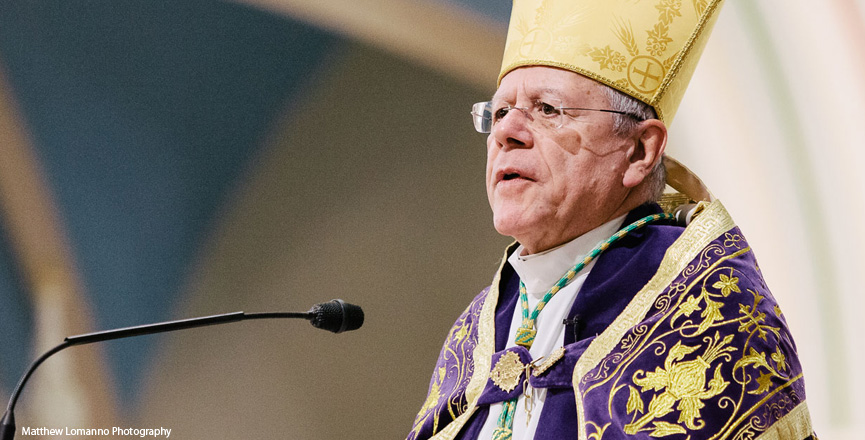
Bishop Peter Libasci (Matthew Lomanno Photography)

The New York sex abuse lawsuit filed against Manchester Bishop Peter Libasci is getting dismissed weeks after the case was sent to mediation.

Lawyers for the defendants, Libasci and the Roman Catholic order the Sisters of St. Joseph, and the estate of the alleged victim, Charles O’Connor, filed a joint stipulation this month in Suffolk County Supreme Court in New York to dismiss the case with prejudice. The agreement to permanently dismiss the case comes weeks after Judge Leonard Steinman sent the lawsuit to mediation.

Michael Connolly, Libasci’s attorney, said in an email Saturday: “The civil lawsuit filed in New York State Supreme Court in Suffolk County against Bishop Peter Libasci of the Diocese of Manchester, New Hampshire, has been dismissed with prejudice.

“The allegations in the lawsuit were false. Bishop Libasci never abused anyone. The proof revealed as much during the course of the lawsuit, and the lawsuit has been discontinued with prejudice and without Bishop Libasci paying any money,” Connolly said.

Manchester’s Communications Director Tara Bishop sent InDepthNH a brief statement: “The Diocese of Manchester is not a party to the lawsuit filed against Bishop Libasci.”

O’Connor filed his lawsuit against Libasci in the summer of 2021, but the case was frozen by the bankruptcy proceedings involving the Roman Catholic Diocese of Rockville Centre on Long Island. The diocese filed bankruptcy after being hit with hundreds of child sex abuse lawsuits. Libasci served as the auxiliary bishop in Rockville Centre until he took over Manchester in 2011.

O’Connor died last summer before a federal bankruptcy court approved Rockville Centre’s $323 million settlement with the survivors. After O’Connor’s passing, his estate took up the claims against Libasci and the organizations connected to the alleged abuse.

The bankruptcy settlement resulted in three defendant organizations named in O’Connor’s lawsuit getting dismissed; the Saints Cyril and Methodius Roman Catholic Church, the Saints Cyril and Methodius, and there Our Lady of Guadalupe School. That left Libasci and the Sisters of St. Joseph to face O’Connor’s accusations.

The parish and parochial schools where Libasci was assigned were named as defendants, as O’Connor’s lawsuit states the parish and school officials should have known Libasci should not have been around children.

O’Connor claimed the abuse happened when he was an altar boy in the 1980s, while Libasci was a parish priest. The lawsuit alleges Libasci groped the 13-year-old boy. Libasci has maintained his innocence since news of the lawsuit first broke. Libasci’s legal team filed a motion in 2021 that denies all of the allegations.

Under church law, Libasci now faces an internal investigation into the abuse claim, known as a Vos Estis investigation. That investigation is being handled by Worcester, Massachusetts Bishop Robert McManus. Under the internal process, the Vos Estis investigation cannot start until the civil lawsuit is resolved. Worcester diocesan spokesman Ray DeLisle has not responded to multiple requests for comment.

Sarah Pearson, with the Survivors Network of those Abused by Priests, or SNAP, said O’Connor, lay Catholics, and the rest of the public deserve more than the Vos Estis investigation.

“We don’t put a lot of stock in the accuracy of those investigations that are conducted by the Vatican,” Pearson said.

McManus is a problematic figure for sex abuse survivors, Pearson said, and should not be in charge of investigating a fellow bishop.

“He has his own history of actions related to concealing abuse,” Pearson said,

In 2023, McManus released a report on sex abuse allegations made in the Worcester diocese going back to 1950 which did not include the names of any credibly accused priests. The report also claimed that just one abuse case occurred in Worcester after 1998.

Pearson wants to see an independent third party investigation take over and make its findings public.

“We just want to see the truth come out,” Pearson said.

Whatever the outcome of the Worcester investigation, Libasci’s term in Manchester is coming to a close. He turns 74 in November, and the Vatican imposes a retirement age for priests and bishops when they turn 75.

Read story at InDepth NH

Quincy mayor under fire for linking clergy sex abuse crisis to ‘homosexual issues’

Boston Globe, Travis Andersen, September 25, 2025

Quincy Mayor Thomas Koch in 2023 (Matthew J. Lee/Globe Staff)

Mayor Thomas P. Koch of Quincy came under fire this week for comments he made linking the clergy sex abuse scandal to homosexuality.

Koch, who is Catholic, made the comments Monday during an interview with Dan Rea on WBZ News Radio.

When Rea at one point criticized the Catholic church over its response to the abuse crisis, chronicled extensively in a 2002 Boston Globe Spotlight team investigation, Koch said, “That was mostly homosexual issues, not pedophilia.” After Rea mentioned adolescent victims, Koch said pedophilia is defined as attraction to “a younger age” than a teenager.

Koch’s comments were swiftly condemned by Mitchell Garabedian, an attorney who has long represented victims of clergy sex abuse.

“For the Mayor of Quincy to blame mostly homosexual issues for the Catholic Church scandal is baseless, ill-advised, and harmful to victims or survivors,” he said in a statement. “After my review over the decades of thousands of Catholic Church documents involving childhood clergy sexual abuse, I have discovered no evidence to support the Mayor’s assertion.”

Such comments contradict “the evidence and [are] disrespectful to courageous clergy sexual abuse victims,” he said.

Koch told the Quincy-based Patriot Ledger that he was “inartful” in his comments, while also citing studies that he said showed most abuse victims were teenage boys.

“Having said that, I don’t believe that homosexual abuse is higher than heterosexual,” Koch said, adding that “if I offended anybody, I apologize. That was never the intent. … I have gay friends and relatives and all. I treat everybody the same.”

Koch could not immediately be reached for comment.

He was also criticized by the Survivors Network of those Abused by Priests, or SNAP, which said Wednesday that it was “appalled” by his comments.

“The conflation of homosexuality and pedophilia has been repeatedly refuted by medical and scientific experts,” the group said in a statement. “Mayor Koch’s comments serve to scapegoat gay men, imply that middle-school and high-school boys are not actually victims of abuse, and completely dismiss every girl or woman who has been assaulted in the Catholic Church.”

During the interview with Rea, Koch said he believes the church has been unfairly singled out in the press for its abuse issues, which have also arisen in areas such as youth sports and schools.

“The church was not very popular with the secular media,“ Koch told Rea. ”They took a beating. … You don’t read about it every day when it happens around the country in other circumstances.”

Koch had come onto Rea’s show mainly to discuss a lawsuit filed by a group of Quincy residents seeking to block the installation of two Catholic statues outside the public safety building. The suit remains pending.

Read story at the Boston Globe

Documentary brings Father Marko Rupnik abuse allegations to big screen

Catholic News Agency, Francesca Pollio Fenton, Hannah Brockhaus, September 20, 2025

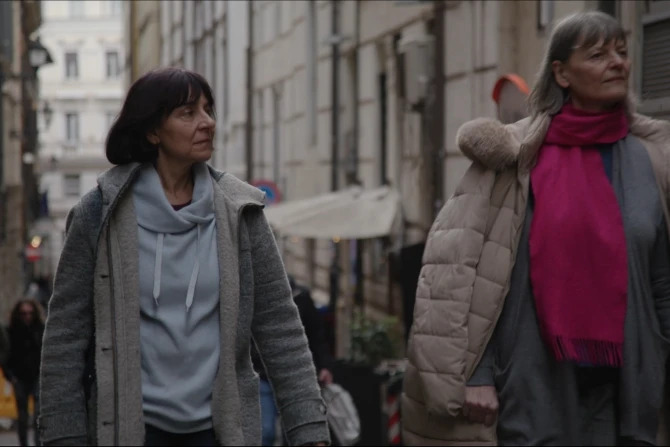
“Nuns vs. The Vatican” includes the detailed stories of Gloria Branciani (left) and Mirjam Kovac, two of three former members of the Loyola Community in Slovenia in the 1980s and early 1990s, when Father Marko Rupnik, a co-founder of the community, is accused of having committed sexual, psychological, and spiritual abuse against dozens of women religious. (Filippo Piscopo/Film2 Productions)

A documentary on Father Marko Rupnik’s alleged abuse of consecrated women, the personal fallout for two of his alleged victims, and what happened when the claims became public decades later premiered at the Toronto Film Festival earlier this month.

“Nuns vs. The Vatican” includes the detailed stories of Gloria Branciani, Mirjam Kovac, and Klara (identified only by her first name), three former members of the Loyola Community in Slovenia in the 1980s and early 1990s, when Rupnik, a co-founder of the community, is accused of having committed sexual, psychological, and spiritual abuse against dozens of women religious.

Through the stories of Branciani and Klara, the film, which premiered Sept. 6, argues that Rupnik’s alleged abuse was inextricably linked to his religious art. It also claims he was protected in the Catholic Church, in which he shot to stardom in the 1990s, and interviews experts who say the Vatican’s response has been inadequate.

Branciani was part of the Ignatius Loyola Community in Slovenia, which was co-founded by Rupnik in the 1980s. In the documentary, she recalls how Rupnik allegedly groomed and then sexually and psychologically abused her in the early ’90s and how the abuse was intricately connected with the creation of his art.

According to Branciani, her complaints about Rupnik went unanswered, she was punished by the community’s mother superior at the time, Ivanka Hosta, and forced out of religious life by Father Tomáš Špidlík, a Czech cardinal and Jesuit who died in 2010. Špidlík, who was close to Rupnik and the priest’s art and spirituality center in Rome, the Centro Aletti, allegedly wrote the resignation letter on her behalf.

In addition to testimony from the alleged victims and their lawyer, it includes the voices of journalists, psychologists, and other abuse experts, including Barbara Dorris, a former director of the Survivors Network of those Abused by Priests (SNAP), who was sexually abused by a priest between the ages of 6 and 13.

Dorris and Laura Sgrò, a lawyer for some of Rupnik’s alleged victims, are highly critical of the Church hierarchy’s response to clerical sexual abuse throughout the documentary.

No one from the Vatican participated in the documentary. The film said requests for comment from Rupnik and the former head of the Loyola Community, Hosta, were ignored.

Sarah Pearson, a spokesperson for SNAP, said in a statement to CNA that “SNAP is proud of the legacy of Barbara Dorris, a longtime leader and tireless advocate for the 1 in 3 nuns who experience sexual abuse by priests.”

Pearson continued: “The case of Jesuit priest Father Marko Rupnik illustrates this catastrophe with tragic clarity. Despite overwhelming reports of abuse, Rupnik was shielded for years — kept in ministry through the Vatican’s intervention under Pope Francis. Only after prolonged public outrage was he finally subjected to a canonical process.”

Italian Lorena Luciano directed the film. It was produced by Filippo Piscopo. “Law and Order: Special Victims Unit” star Mariska Hargitay is among the documentary’s executive producers.

A spokesperson for “Nuns vs. The Vatican” told CNA the documentary will continue to be shown at film festivals in North America, and they are working on getting a screening at the Vatican.

“We are also waiting to see whether Pope Leo will push for the ecclesiastical trial against Rupnik to happen in the fall,” a spokesperson for the production company added.

Earlier this year, the Vatican removed artwork by Rupnik from its official websites. Digital images of the Slovenian priest’s sacred art, which were frequently used by Vatican News to illustrate articles of the Church’s liturgical feast days, are no longer found on the digital news service.

The changes to the Vatican News and the Dicastery for Communication websites came soon after Pope Leo XIV met with members of the Pontifical Commission for the Protection of Minors on June 5.

Read story at the Catholic News Agency

Is Pope Leo a man of action on sexual abuse cases? Or the opposite?

The New York Times, Julie Turkewitz, Simon Romero, Mitra Taj and Elisabetta Povoledo, June 28, 2025

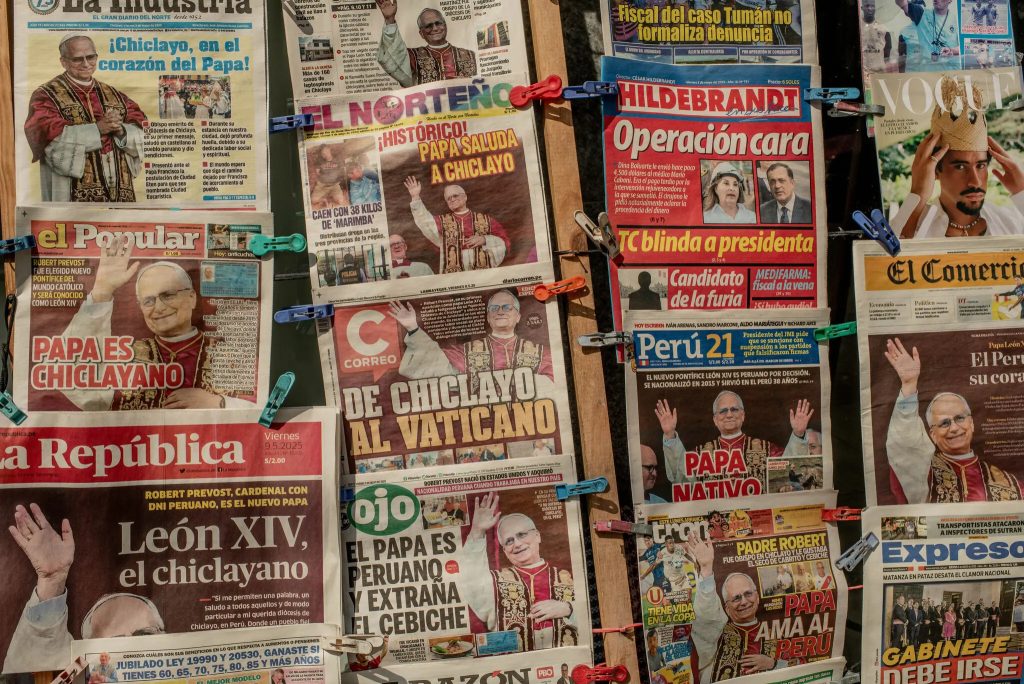
Newspapers in Chiclayo the day after the selection of a new pope was announced by the Vatican. (Tomás Munita/New York Times)

The contrasts are glaring.

In one case, Pope Leo XIV — then known as Bishop Robert Prevost — sided with victims of sexual abuse, locking horns with powerful Catholic figures in Peru. He sought justice for victims of a cultlike Catholic movement that recruited the children of elite families and used sexual and psychological abuse to subordinate members.

In another case, Bishop Prevost was accused of failing to sufficiently investigate claims by three women that they had been abused by priests as children. The accused were two priests in Bishop Prevost’s diocese in a small Peruvian city, including one who had worked closely with the bishop, according to two people who work for the church.

As Leo assumes the papacy, becoming leader of the world’s 1.4 billion Catholics, his handling of clergy sexual abuse will be closely scrutinized, and the two cases have left him open to starkly diverging judgments — praise for helping victims in one, claims that he let them down in the other.

In the first, victims have hailed as heroic his work taking on the ultraconservative group, Sodalitium Christianae Vitae, which had grown more influential after Pope John Paul II gave it his pontifical stamp of approval.

Breaking with other powerful Catholic figures in Peru, Bishop Prevost arranged talks between victims and church leaders and helped those who suffered abuse to get psychological help and monetary settlements. As he rose through the Vatican’s ranks, Bishop Prevost kept raising the pressure on Sodalitium, which was ordered to disband only weeks before he became the first American to lead the Catholic Church.

In the second case, in the northern Peruvian city of Chiclayo, the three women and victims’ advocates say, Bishop Prevost conducted a superficial investigation that led the Vatican to close the case relatively quickly.

They also say that despite a church order prohibiting one of the accused priests, the Rev. Eleuterio Vásquez, from practicing amid the inquiry, he continued leading public Masses.

Photographs and video posted on Facebook and verified by The New York Times showed Father Vásquez leading church ceremonies during the investigation, raising questions among some critics about what oversight, if any, Bishop Prevost put in place to ensure that victims were protected from a potential abuser.

Vatican guidelines discourage “simply transferring” an accused priest to another parish while an investigation is ongoing.

Bishop Prevost also appointed a priest, the Rev. Julio Ramírez, to counsel the women. Father Ramírez warned them that they should not expect much accountability from Rome because their abuse had not involved “penetration.”

“I don’t want it to sound bad,” Father Ramírez told one of the women in a recorded telephone conversation, a copy of which was obtained by The Times. “Nor are we defending him. But since it hasn’t reached a situation — I know what you’ve experienced is traumatic — but it hasn’t reached a situation of rape, it seems that they’ve given priority to other cases.”

The Vatican says Bishop Prevost followed church protocol after the women went to him with their abuse claims, conducting an initial investigation and sending his findings to Rome, where a final decision would be made.

Ulices Damián, a lawyer for the Chiclayo diocese, said it was “false” that the bishop did nothing to help the women. “He acted in accordance with the procedures,” he said.

The Times also identified a second case of a priest accused of abusing a minor who was able to continue his clerical duties for years while Bishop Prevost led the diocese in Chiclayo — even after the church ordered him to cease work in his parish while an investigation was conducted.

The Vatican has struggled to rebuild trust after years of clergy misconduct and what advocates for abuse victims say has been a woeful response by church leaders.

The Vatican’s existing rules to protect children, even if the pope followed them when he was in Chiclayo, are one of the fundamental problems, advocates say, failing to provide full accountability or justice.

Activists have asked for changes that include a universal zero-tolerance law, which would permanently remove from ministry clergy who are found guilty by a church tribunal of abuse or covering up wrongdoing. Currently, only Catholic authorities in the United States has imposed such standards. The law would also mandate independent oversight of bishops handling abuse cases.

In Leo’s past, some see a man who will take strong steps against abuse. Some of Sodalitium’s victims say the criticism of his actions in Chiclayo has been exaggerated and amplified by forces favorably disposed to Sodalitium, as an act of retaliation.

“He was never at all an indifferent, indolent or cowardly bishop,” said Pedro Salinas, a journalist and Sodalitium abuse victim.

But others look at the pope’s time in Chiclayo and see a man who will push few boundaries when it comes to rooting out abuse.

“Survivors don’t trust him,” said Peter Isely, a founding member of the Survivors Network of Those Abused by Priests. “He’s going to have to prove his trust and he’s going to have to bend over backwards to prove it.”

The reporting stunned the Catholic establishment.

Just as Bishop Prevost took over as leader of the Chiclayo diocese in 2015, two Peruvian journalists released a book containing shocking details about Sodalitium, which was founded in 1971 by a layman, Luis Fernando Figari.

The book, “Half Monk, Half Soldier,” by Mr. Salinas and Paola Ugaz, said the group evolved into a fanatical far-right movement with a culture of sexual abuse.

In a subsequent independent probe, investigators, including a former F.B.I. official, found that Mr. Figari would use a whip with metal points to punish members, make his dog bite them, burn them with a lit candle and make them wear a belt that caused electric shocks.

In interviews with The Times, several survivors said few church leaders in Peru were willing to take their claims seriously.

Of those who did, “the most important was Robert Prevost,” said Oscar Osterling, who recalled Mr. Figari summoning him as a youth, making him strip naked and filming him.

Dozens of victims eventually came forward.

Sodalitium members included Archbishop José Antonio Eguren, a powerful church leader in the northwest city of Piura, a three-hour drive from Chiclayo.

In 2018, Bishop Prevost helped organize a meeting in Lima, the capital of Peru, between senior clergy and Sodalitium victims, helping them obtain mental health counseling and financial payments, victims said.

For a bishop in the Peruvian church, taking such measures was trailblazing. For years, prominent Catholic clergy opted to look the other way even as victim after victim came forward with harrowing tales of sexual, physical and psychological abuse by Sodalitium’s leaders.

Then, in April 2023, Francis brought Bishop Prevost from Chiclayo to the Vatican, where he was appointed to run an influential department overseeing the selection of many new bishops. Francis also made him a cardinal that year.

Soon, the Vatican sent two top investigators to Peru to look into claims against Sodalitium.

Part of their inquiry focused on Archbishop Eguren, who Ms. Ugaz had said was involved in a scheme, together with companies tied to Sodalitium, to drive poor farmers off their lands.

One of the Vatican investigators, Msgr. Jordi Bertomeu, told Spanish news media that Cardinal Prevost had played an “essential” role in taking on Sodalitium, including demanding that Archbishop Eguren resign.

The archbishop did, stepping down in April 2024.

But Bishop Prevost was already facing a different challenge.

Though he was called a champion for victims of Sodalitium, the three women from a working-class neighborhood in Chiclayo who claimed they had been victims of clerical abuse say they received very different treatment.

It started with a visit they made to the future pope in 2022.

As children, they told Bishop Prevost, they had been abused by two priests in the diocese. One, Father Vásquez, had taken two of the girls to a mountain retreat on separate occasions, they later told a news outlet, Cuarto Poder, and he had gotten into bed with them.

“He started lifting me up and rubbing me on him,” one of the women told the television program. She was 11 at the time, according to the news report, and said she did not understand what was happening.

One of the women, Ana María Quispe, now 29, has since spoken out extensively on TikTok and Facebook and in Peruvian media, and said she had decided to go to Bishop Prevost because she was haunted by the idea that her silence might have let an abuser continue to do harm.

“This could happen to my daughter,” she said on TikTok. “I can’t stay quiet — no more cowardice.”

Ms. Quispe said on TikTok that Bishop Prevost told the women he believed them and even encouraged them to report the abuse to civil authorities, which they did.

But then, Ms. Quispe said, not much seemed to happen.

The diocese claimed in public statements that Father Vásquez had been “prohibited” from celebrating Mass amid an investigation.

Social media posts reviewed by The Times, however, showed Father Vásquez continuing to participate publicly in Mass at least three times during the period the Vatican said an inquiry was being conducted. He was even photographed jointly officiating Mass with Bishop Prevost.

In abuse cases, Vatican guidelines instruct church leaders to conduct an initial investigation and send their findings to Rome. The Vatican suggests that leaders assemble testimony and establish basic facts, but gives them broad latitude in deciding what to report to higher-ups.

A spokesman for the Vatican, Matteo Bruni, said Bishop Prevost’s investigation went “beyond the requisites” and included receiving a written report from the women and searching the archives of the diocese for similar accusations against Father Vásquez.

Prosecutors in Peru closed their civil investigation in 2022, according to the diocese, the same year the women went to Bishop Prevost with their accusations, because the claims went back so many years that they fell outside the statute of limitation. Prosecutors declined to comment.

The Vatican closed its own investigation into the women’s claims in August 2023, citing the decision by civil authorities and a lack of evidence.

In the other case in Chiclayo identified by The Times, the diocese had ordered a priest, the Rev. Alfonso Raúl Obando, accused of sexually abusing a minor, to stop any clerical work in his parish.

But more than a dozen Facebook posts identified by The Times, many of them from the period when Bishop Prevost led the diocese, showed the priest continuing to work as a priest — often with children. In one instance, Father Obando used a church Facebook page to ask children to to send him their photographs directly on WhatsApp.

The Vatican recently stripped Father Obando of his clerical status, but he has continued working in Chiclayo. Father Obando did not respond to calls and text messages seeking comment.

Ms. Quispe was outraged over the handling of her case and, starting in November 2023, began speaking out on online, accusing church leaders of failing to deliver justice or accountability and laying part of the blame on Bishop Prevost.

“They always protect them,” she said on TikTok of accused priests, giving them “total freedom to continue doing harm with no repercussions.”

An intermediary eventually put the frustrated women in touch with the Rev. Ricardo Coronado, a priest with conservative leanings who had been photographed socializing with Sodalitium members.

It was Father Coronado who connected the women with the news program Cuarto Poder, he said in an interview, which further amplified the critique of Bishop Prevost.

Similar criticism of Bishop Prevost had already been ramping up in Peruvian media, especially on conservative websites like La Abeja, which had tried to discredit investigations into Sodalitium.

Some Sodalitium victims said they believed the group was behind these efforts, effectively weaponizing the women’s claims to target Prevost.

“They mounted a smear campaign against Prevost, just as they did against me,” said Rocío Figueroa, 57, who said she was sexually abused by a Sodalitium leader when she was 15.

Father Coronado’s involvement in the case was brief. After a few months representing the women, he was defrocked amid separate claims of misconduct.

In the interview, he maintained that he was defrocked to remove him from the case. He also insisted that he had not acted on behalf of Sodalitium to represent the women.

A lawyer for the women declined to comment. The church declined to make Father Vásquez available for an interview.

A second priest accused by Ms. Quispe has a degenerative illness, the diocese said in a statement, and “is unable to defend himself, so no case can be opened against him.”

In late 2023, citing Ms. Quispe’s decision to speak out, the Chiclayo diocese said it had reopened the investigation into Father Vásquez.

With the case continuing, Father Vásquez recently asked to leave the priesthood, according to a person with direct knowledge of the case. The person asked not to be identified, fearing retaliation from the church. Father Vásquez is awaiting a decision from the Vatican.

Mr. Coronado, the defrocked canon lawyer, said he believed the new pope had mishandled the women’s claims in Chiclayo — not out of malice, but because of inexperience.

“The pope is another human being,” he said. “He’s not God.”

Read story at the New York Times

New Jersey can have a grand jury investigate clergy sex abuse allegations, high court rules

Associated Press, Mike Catalini, June 16, 2025

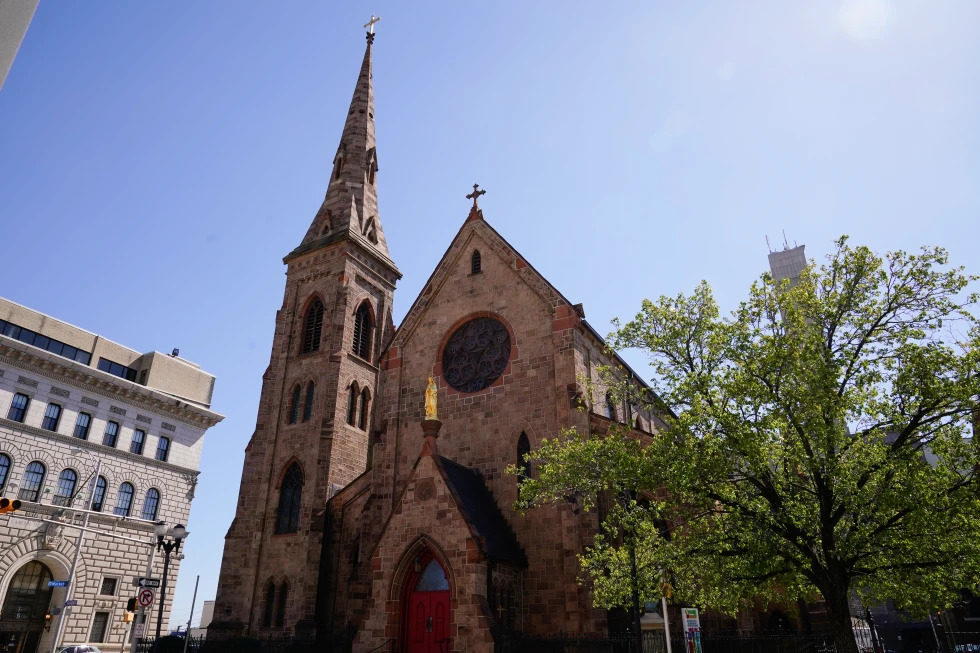
The Cathedral of the Immaculate Conception in Camden, N.J., Wednesday, April 20, 2022. (AP Photo/Matt Rourke, File)

TRENTON, N.J. (AP) — New Jersey can have a grand jury examine allegations of clergy sexually abusing children, the state’s Supreme Court ruled Monday, after a Catholic diocese that had tried for years to block such proceedings recently reversed course.

The Diocese of Camden previously had argued that a court rule prevents the state attorney general from impaneling a grand jury to issue findings in the state’s investigation into decades of allegations against church officials. But the diocese notified the court in early May that it would no longer oppose that. Camden Bishop Joseph Williams, who took over the diocese in March, said he’d met with stakeholders in the diocese and there was unanimous consent to end the church’s opposition to the grand jury.

The seven-member Supreme Court concluded such a grand jury inquiry is allowed.

“Courts cannot presume the outcome of an investigation in advance or the contents of a presentment that has not yet been written,” the court wrote in an opinion joined by all seven justices. “We find that the State has the right to proceed with its investigation and present evidence before a special grand jury.”

The state attorney general’s office praised the decision in an emailed statement and said it’s committed to supporting survivors of sexual abuse.

“We are grateful for the New Jersey Supreme Court’s decision this morning confirming what we have maintained throughout this lengthy court battle: that there was no basis to stop the State from pursuing a grand jury presentment on statewide sexual abuse by clergy,” First Assistant Attorney General Lyndsay V. Ruotolo said in an emailed statement.

The Camden Diocese is still committed to cooperating with the effort, it said in a statement.

“To the victims and all those impacted by abuse, we reaffirm our sorrow, our support, and our unwavering resolve to do what is right, now and always,” the diocese said.

An email seeking comment was sent Monday to the Catholic League, an advocacy and civil rights organization that still opposed the grand jury after the diocese’s change.

Where New Jersey’s investigation began

Pennsylvania grand jury report in 2018 found more than 1,000 children had been abused in that state since the 1940s, prompting the New Jersey attorney general to announce a similar investigation. The results of New Jersey’s inquiry never became public partly because the legal battle with the Camden diocese was unfolding amid sealed proceedings.

Then this year, the Bergen Record obtained documents disclosing that the diocese had tried to preempt a grand jury and a lower court agreed with the diocese.

The core disagreement was whether a court rule permits grand juries in New Jersey to issue findings in cases involving private individuals. Trial and appellate courts found that isn’t allowed.

Hearing arguments on April 28, members of the high court repeatedly questioned whether challenging the state was premature, since lower court proceedings prevented New Jersey from seating a grand jury that would investigate any allegations or issue findings, called a presentment.

Lloyd Levenson, the church’s attorney, answered that “you’d have to be Rip Van Winkle” not to know what the grand jury would say.

“The goal here is obviously to condemn the Catholic Church and priests and bishops,” he said.

The court said Monday it wasn’t ruling on any underlying issues and a trial court judge would still have the chance to review the grand jury’s findings before they became public.

Mark Crawford, state director of the Survivors Network for those Abused by Priests, said Monday in a text message he’s “elated” by the court’s decision.

“Decades of crimes against children will finally be exposed,” he said.

How the diocese won early rulings

In 2023, a trial court judge sided with the diocese, finding that a grand jury would lack authority because it would be focused on “private conduct,” rather than a government agency’s actions. An appeals court affirmed that judgment last year, and the attorney general’s office appealed to the state Supreme Court.

Documents the high court unsealed in March sketched out some of what the state’s task force has found so far, without specific allegations. They show 550 phone calls alleging abuse from the 1940s to the “recent past” came into a state-established hotline.

The diocese argued a grand jury isn’t needed, largely because of a 2002 memorandum of understanding between New Jersey Catholic dioceses and prosecutors. requiring church officials to report abuse.

But the Pennsylvania report led to reexamining the statute of limitations in New Jersey, where the time limits on childhood sex abuse claims were overhauled in 2019. The new law allows child victims to sue until they turn 55 or within seven years of their first realization that the abuse caused them harm. The previous statute of limitations was age 20, or two years after realizing abuse caused harm.

Also in 2019, New Jersey’s five Catholic dioceses listed more than 180 priests who have been credibly accused of sexually abusing minors over several decades. Many listed were deceased and others removed from ministry.

The church has settled with accusers

The Camden diocese, like others nationwide, filed for bankruptcy amid a torrent of lawsuits — up to 55, according to court records — after the statute of limitations was relaxed.

In 2022, the diocese agreed to pay $87.5 million to settle allegations involving clergy sex abuse against some 300 accusers, one of the largest cash settlements involving the Catholic church in the U.S.

The agreement, covering six southern New Jersey counties outside Philadelphia, exceeded the nearly $85 million settlement in 2003 in the clergy abuse scandal in Boston, but was less than settlements in California and Oregon.

Read story at the Associated Press