Abuse reformers launch ‘Against the Clock’ in Missouri

Co-founder of No More Victims Alliance Elizabeth Carlock Phillips

JEFFERSON CITY, MO — No More Victims Alliance has launched a new advocacy campaign called “Against the Clock” in response to the stalling of two statute of limitations reform bills in Missouri as part of its national effort to expand abuse survivor access to justice.

Currently, Missouri law blocks survivors of childhood sexual abuse in the state from pursuing civil claims past the age of 26 against a liable institution.

Against the Clock aims to raise awareness of how outdated statute-of-limitation laws deny survivors a path to justice, barring them from the courts before they are ready to come forward. Mamy survivors don’t even know they’re on a deadline dependent on the ZIP Code in which they were abused. In Missouri, these arbitrary deadlines create a clear and urgent barrier to truth and justice.

The campaign urges Missourians to call on their lawmakers to pass SJR-93 and/or its companion bill, HJR-130, before the end of session May 15.

Passage would put a vote on the ballot asking Missourians if they would like to amend the state’s Constitution to allow retrospective statute of limitation reform to be made into law, specifically in contexts regarding sexual abuse. This would give Missouri voters the opportunity to decide whether the Legislature should have the authority to address this issue and open a path to justice for survivors.

Right now, both bills are stalled.

More than 30 states already have enacted similar laws, often called “lookback windows,” allowing previously barred civil claims to be evaluated based on evidence and established legal standards. Missouri is currently unable to enact similar reforms due to constitutional limits on retroactive civil laws.

On May 15, the Missouri legislative session will conclude. If the bill is not calendared and voted on by then, it will die.

The campaign urges immediate action on legislation to give voters a say in whether the state can fix these gaps.

In an interview with BNG, co-founder of No More Victims Alliance Elizabeth Carlock Phillips said the two leaders who need to hear this plea most are President Pro Tempore Cindy O’Laughlin and Senate Majority Leader Tony Luetkemeyer. These are the leaders with power to calendar and carry out a vote.

One problem, Phillips said, is that most voters don’t understand the confusing legal process SJR-93 and HJR-130 are facing.

“When we’re talking about a constitutional amendment, there’s a lot of jargon and a lot of legalities. The goal of Against the Clock is to help break this down for the public, and for Missourians in particular, while we have these joint resolutions filed. Help them understand why it’s important to get this on the ballot: So they can vote and have a voice in what their legislature is able to address moving forward.”

Current law in Missouri says survivors of child sexual abuse may file civil claims against their direct perpetrators until the survivor reaches age 31, but only until age 26 for liable institutions. A competing bill, HB-1664, aims to increase the statute of limitations regarding litigation with direct perpetrators, and has been endorsed by O’Laughlin, who is refusing to calendar a vote for SJR-93.

Phillips believes the changes HB-1664 proposes would not be enough.

“When suing a direct perpetrator in civil court, how do you collect on that? There have been $20 million judgments against Pete Newman, but he’s not making money in prison. That doesn’t do anything for survivors who need legal remedies that serve their healing and can cover the cost of treatment or loss of income,” explained Phillips.

Essentially, survivors have a better chance of benefitting from the litigation when liable institutions are required to deliver damages. They’re often the only parties who can.

Phillips and other survivors have traveled to Jefferson City, Mo., every year since 2021 to lobby for changes. Still, legislators are hesitant to amend the Constitution, despite the fact it has been amended nearly 130 times.

For survivors whose statute-of-limitations clock has run out, this makes it difficult to get justice.

“I’m so grateful for survivors who have been showing up to Jefferson City with me since 2021 and here we are with still no remedy,” she said. “Until we resolve the retroactivity issue through a constitutional amendment and a vote of the people, we’re just talking in circles. Five years is long enough. We want these legislators to know they’re on the clock. Are they going to get reelected if they continue to defend perpetrators?”

Opposing lobbyists say retroactive reform shouldn’t be allowed because it would hurt businesses in Missouri that could be found liable for past abuse.

“Even the Chamber of Commerce has opposed this, saying that opening the door to future lawsuits in Missouri would put all these businesses under. I think if we really digest that statement, if that’s true, Missouri has a much bigger pedophile problem than we realized,” Phillips said.

“The Chamber of Commerce and the insurance lobbyists and tort reform lobbyists— which is big, big money — come forward and we’re just survivors and advocates up against those machines. The power disparity is glaring and it’s ugly. It needs to change and survivors need to be heard.”

Read original article
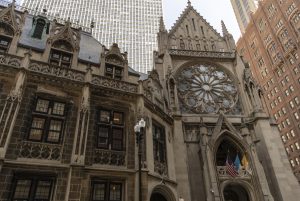
Priest Working at Near West Side Church Removed after Allegations of Inappropriate Conduct with Women, Children: Archdiocese

The Archdiocese of Chicago received allegations of a priest working in Little Italy parish engaged in “improper and inappropriate” behavior toward children and women. Tyler LaRiviere/Sun-Times

CHICAGO, IL — A priest who was ministering at St. Francis of Assisi Catholic Parish on the city’s Near West Side has been removed after allegations that he “engaged in improper and inappropriate conversations and communications with minors and adult women,” according to a letter sent Saturday to the parish by Cardinal Blase Cupich, the Archbishop of Chicago.

Rev. Jose Molina has served as temporary minister at the parish, located in the Little Italy neighborhood, since August 2025, the letter states.

“We have received allegations that Father Molina engaged in improper and inappropriate conversations and communications with minors and adult women,” Cupich writes. “In keeping with our protection policies, I have removed his faculties to minister in the Archdiocese of Chicago.”

According to the letter, Molina is a priest of the Institute of the Incarnate Word (IVE) and has returned to the provincial house of that order. Cupich says the Archdiocese of Chicago is cooperating with IVE’s investigation.

“Moreover, as is required by our child protection policies, we have reported the allegations to civil authorities, and the persons who made the allegations have been offered the services of the archdiocese’s Office of Assistance Ministry,” Cupich’s letter states.

“I want to stress that the welfare of our parishioners, and especially the children entrusted to our care, is our paramount concern. The Archdiocese of Chicago takes all allegations of misconduct seriously. We appreciate the courage it takes to step forward and encourage others who believe they have experienced abuse or inappropriate behavior by a member of the clergy, religious or lay employee of the Archdiocese to report it to the Office for the Protection of Children and Youth. They will be received with compassion and respect.”

Complete information about reporting sexual abuse can be found on the Archdiocesan website at archchicago.org.

Read original article.

Little Italy priest being investigated for alleged ‘improper conversations’ with minors, women

Jose Molina, a priest in Little Italy parish, has been removed from ministry.

CHICAGO, ILCardinal Blase Cupich has removed a priest from ministry at Little Italy’s St. Francis of Assisi after the Archdiocese of Chicago received allegations that he engaged in improper and inappropriate conversations and communications with minors and adult women.

Rev. Jose Molina, identified by church officials, had been serving at the parish since August 2025 as a temporary minister. The archdiocese said it has reported the allegations to civil authorities and has offered support services to anyone affected.

In a letter to the St. Francis community, Cupich told parishioners that Molina, a member of the Institute of the Incarnate Word, will return to his religious order and that the Archdiocese will cooperate with the order’s investigation, as reported by the Chicago Sun-Times. The letter also revoked Molina’s faculties to minister in the Archdiocese of Chicago and reminded parishioners that support services had been offered to anyone who may have been harmed. Molina and representatives of the Institute could not immediately be reached for comment.

Order’s troubled history raises questions

The Institute of the Incarnate Word, which oversees Molina, has been under scrutiny in recent years after reports that its founder was found guilty by Vatican authorities of sexual misconduct with seminarians and that the community drew Vatican intervention, according to analysis in The Pillar. Reporting from Catholic News Agency has also detailed that history and past interventions, and some dioceses and watchdogs say those ties warrant close scrutiny when IVE priests are assigned to parishes. That backdrop means local Catholics are likely to watch closely as both the order and the archdiocese review the allegations against Molina.

What happens next in Chicago

The archdiocese told parishioners it has reported the allegations to civil authorities and will cooperate with any investigation, and that Molina will be returned to his order while the matter is addressed, as reported by the Chicago Sun-Times. No criminal charges were announced in the letter, and civil authorities will determine whether the allegations warrant a criminal probe. Parish leaders said they will work with the archdiocese and continue to offer support to anyone in the community affected by the news.

Advocates who track clergy misconduct say transparency around religious orders and Vatican interventions has often been uneven, which can muddy public understanding of how such cases are handled, according to watchdog coverage. BishopAccountability and other outlets note that congregations with troubled pasts tend to draw extra scrutiny from local faithful and diocesan leaders as investigations move forward.

Read original article

N.Y. clergy abuse settlement plan could threaten N.J. survivor protections | Opinion

The Archdiocese of New York’s proposed settlement requires unanimous survivor consent, a model that could spread to New Jersey dioceses and eliminate judicial oversight protections.


By Mark Crawford — New Jersey has spent years confronting the painful legacy of clergy sexual abuse. Survivors in this state fought for — and won — some of the strongest civil statute of limitations reforms in the nation.

We opened a two-year look back window. We ended charitable immunity protections that once shielded institutions instead of children. We built a system that finally gave survivors a path to justice.

But a new threat is emerging just across the Hudson River, and it has the potential to undermine everything survivors in New Jersey and across the country have fought for.

The Archdiocese of New York is not in bankruptcy. Yet it has proposed a global settlement structure that mirrors a bankruptcy plan while avoiding the judicial oversight that bankruptcy requires.

At the center of this proposal is a requirement that every single survivor must agree before the Archdiocese will pay a single dollar.

No bankruptcy court in the United States has ever approved such a requirement. Not in the Boy Scouts case. Not in USA Gymnastics. Not in any diocesan bankruptcy. Unanimous consent is not a legal standard. It is a pressure tactic.

And if this model succeeds in New York, it will not stay in New York.

Why New Jersey should be paying attention

Several New Jersey dioceses are currently negotiating settlements with survivors. If the Archdiocese of New York — one of the most powerful dioceses in the world — can secure a unanimity-based settlement outside of bankruptcy, other dioceses will see an opportunity to follow the same path.

That would mean:

  • No judicial oversight
  • No public accounting of assets
  • No independent valuation of property
  • No discovery into institutional conduct
  • No court-mandated voting structure
  • No transparency

Instead, survivors would be forced into a private process designed by the very institutions that harmed them.

This is not a hypothetical risk. It is a blueprint.

Unanimity is not fairness — it is coercion

In every major mass-tort bankruptcy, courts recognize that survivors are not a monolith. They have different experiences, different needs and different levels of trust in the process. That is why bankruptcy law requires a supermajority, not unanimity.

Unanimity gives extraordinary power to a single individual — and extraordinary leverage to the institution demanding it.

It also creates a dynamic that is uniquely harmful to survivors of sexual abuse. It forces survivors into conflict with one another. It pressures them to police each other’s decisions, to persuade or plead with those who cannot or will not agree. It recreates the very isolation and silence that allowed abuse to flourish.

A “win-win” for the Archdiocese — and a “lose-lose” for survivors

The most troubling aspect of this model is how it positions the Church to claim victory no matter what happens.

If survivors accept the settlement unanimously, the Archdiocese gets exactly what it wants:

  • A private process
  • No judicial scrutiny
  • No discovery
  • No public accounting
  • No precedent that could bind other dioceses

But if even one survivor cannot agree — because the offer is too low, because the process feels coercive or because they simply want their day in court — the Archdiocese still wins.

It will say: “We made a generous offer. We tried. The survivors rejected it.”

This narrative shifts blame onto survivors themselves, turning their trauma into a public relations shield for the institution that harmed them. It allows the Church to portray itself as reasonable and compassionate while painting survivors as the obstacle to resolution.

Meanwhile, survivors lose either way.

If they accept, they accept under pressure. If they refuse, they are blamed for the collapse of the deal — by the Church, by the public and potentially by other survivors who feel forced into conflict.

This is not justice. It is manipulation.

A direct message to Archbishop Ronald A. Hicks

Archbishop Hicks, the settlement structure your Archdiocese is advancing is not merely flawed. It is immoral and dangerous. It asks survivors to bear the burden of unanimity — a burden no court would ever impose — while the institution that harmed them avoids the scrutiny that bankruptcy would require.

If the Archdiocese believes its offer is fair, it should file for bankruptcy and present it to a judge. If it does not believe a judge would approve it, then the public deserves to know why.

The national implications are enormous

If this model succeeds, it will become a template for institutions across the country — not just Catholic dioceses, but universities, youth organizations and any entity facing systemic abuse claims.

They will see a path to:

  • Avoid court oversight
  • Avoid public accountability
  • Avoid discovery
  • Avoid transparency
  • Avoid survivor-majority voting requirements

And they will use it.

Survivors nationwide could find themselves trapped in private settlement structures that demand impossible levels of agreement and weaponize the threat of bankruptcy to force compliance.

New Jersey survivors have already waited long enough

Many survivors in New Jersey came forward during the state’s look back window believing they would finally have their day in court. They trusted that the system would protect them. They trusted that institutions would not be allowed to manipulate the process.

A unanimity-based settlement model would betray that trust.

It would replace the protections survivors fought for with a system designed to benefit institutions, not victims. It would turn trauma into leverage.

It would pit survivor against survivor. And it would set a precedent that could shape the future of institutional abuse cases for decades.

We cannot allow this to happen

New Jersey has been a national leader in supporting survivors. We strengthened our laws. We expanded access to justice. We recognized that transparency and accountability are essential.

We cannot allow a private settlement model in New York to undo that progress.

Survivors deserve a process grounded in fairness, not fear. They deserve transparency, not secrecy. They deserve a system that recognizes the complexity of trauma, not one that exploits it.

The Archdiocese of New York is testing a model that could reshape how institutional abuse cases are resolved nationwide. New Jersey — and the country — should pay attention. Because if this becomes the new standard, survivors everywhere will pay the price.

Mark Crawford is a New Jersey-based survivor of clergy sexual abuse and one of the state’s most longstanding advocates for institutional accountability and statute of limitations reform.

Calling your elected representative in the state Assembly or Senate is the most effective way to influence policy. To find your state Assembly member and Senator to voice your position, go to the New Jersey Legislature website’s Legislative Roster.

Read original article

Diocese removes priest following sexual allegation, Vatican investigating complaint

A Catholic priest in Louisiana has been removed from ministry. (Source: WAFB)

BATON ROUGE, LA — The Diocese of Baton Rouge has removed Catholic Priest Father Charbel Jamhoury from ministry.

According to the Diocese, it has also revoked his Safe Environment credentials and forbade him from further public ministry after allegations surfaced of inappropriate sexual behavior between the priest and an adult male.

On Feb. 8, Bishop Michael Duca removed Jamhoury from St. Isidore the Farmer Catholic Church in Baker, four months after the complaint was initially filed with the Diocese.

In a letter by the whistleblower and alleged victim sent to the parishioners, they urged parents to talk to their kids.

“Due to the serious nature of the allegations and our Bishop’s proportionate response, it would be prudent to have an informed conversation with your children (or any vulnerable person under your care) to learn if they ever experienced an uncomfortable or inappropriate interaction with Fr. Charbel, or if they witnessed anything inappropriate between Fr. Charbel and another person,” the letter read.

The individuals cautioned parishioners to use discretion about sharing the letter online.

“Our sincere request is that this letter not be shared on social media but only amongst those who have come into contact with Fr. Charbel,” the letter read.

A complaint was filed with the Diocese of Baton Rouge last October by the alleged victim. A second complaint made by a whistleblower was later elevated to the Catholic Bishop Abuse Reporting Service about the diocese not taking action.

It is alleged that Jamhoury offered an adult male oral sex, asked for a back massage, and made inappropriate comments.

The complaint alleges the priest also admitted to having a sexual relationship with a 20-year-old male, and the priest allegedly told the alleged victim it was OK to perform small sins but not big ones.

Jamhoury was said to have maintained his full credentials until the Diocese of Baton Rouge revoked them in February, with the investigation not being formally announced in the parish at that time.

The alleged victim said that when he initially brought this to the diocese’s attention, he was asked if he wanted money and if he was trying to get paid. He shared in an interview that he does not have a lawyer and just wanted the Diocese of Baton Rouge to do the right thing and remove Jamhoury.

A complaint about the alleged mishandling of this case by the Diocese of Baton Rouge was also sent to the Archdiocese of New Orleans.

The Diocese of Baton Rouge is part of a territorial division of the church that is subordinate to a principal Archdiocese.

A permanent representative of the Holy See, the Central governing body of the Catholic Church, authorized Archbishop James Checchio in New Orleans to initiate an investigation to collect information for them in this matter, which was reported.

Archbishop Checchio has 20 days to organize the investigation, then 30 days to complete the investigation, followed by 15 days to send his report, according to correspondence obtained.

Jamhoury is a Lebanese Maronite priest who was assigned to St. Isidore in the summer of 2025. Before that, he served as Parochial Vicar of Our Lady of Mercy in Baton Rouge and also worked at St. Agnes.

Calls to him were not returned this week.

Luke Zumo is a long-time friend of the victim and a strong supporter of the Diocese of Baton Rouge.

“This is a nightmare for me,” Zumo said.

Zumo served in multiple capacities within the organization, including on the vocations team, which is tasked with interviewing seminarians, men trying to become priests for the diocese.

“He (Jamhoury) detailed a history and a desire for oral sex with minor boys in graphic detail,” Zumo said. “If there’s a case where you suspect potential child abuse, as a volunteer for the Diocese of Baton Rouge, I’m a mandated reporter.”

Zumo said once he learned of the inappropriate behavior, he scheduled meetings with the Vicar General, Father Jamin David, and Bishop Michael Duca.

However, after two months of nothing happening and Jamhoury still showing up at church, Zumo said he went to the authorities last December.

“After I hung up the phone with the detective, I actually received an urgent call from Bishop Duca. So I’m assuming Father Jamin and Bishop Duca read my email, and Bishop Duca called me urgently,” Zumo said. “He said, Luke, you don’t need to call law enforcement. You’re just going to muddy the waters.”

The East Baton Rouge Parish Sheriff’s Office acknowledged a complaint was made by a third party, saying something happened with another adult, but as of yet, they have not found anything to substantiate, and the investigation has been suspended pending new evidence.

Zumo said Bishop Duca scheduled an in-person meeting with him.

“Bishop Duca shared with me that the diocese knew that Father Charbel had, quote, unquote, gone outside of his boundaries. He had admitted to requesting hand-holding. He had admitted to requesting a massage from his parishioner behind closed doors. But he said everything else beyond that was simply a misunderstanding,” Zumo said.

A document obtained from the diocese shows that after that meeting, the diocese sent Jamhoury to “a full health evaluation of his physical, mental, and psychological well-being at a professional, inpatient facility outside of the diocese.”

On Feb. 2, Zumo said the victim was told Jamhoury was fit to return. That’s when they informed the bishop that, against the wishes of the diocese, they would be telling parishioners at St. Isidore what happened.

Days later, Jamhoury was removed from the church.

This week, Zumo said he received correspondence from the Archdiocese in New Orleans that the Vatican authorized an investigation to commence.

“The diocese’s decision to leave Father Charbel at the parish and their decision to withhold these allegations from his parishioners was a betrayal of every mother, father, and child in our diocese that we had been betrayed,” Zumo said.

According to Zumo, after everything, this situation has strengthened his faith and led him to follow a higher calling to weed out alleged bad behavior, as his sanctity and respect for the church have driven him to fight for the truth.

“I can’t stress enough that all of us who brought this to light, we love our church, we love our bishop, we love our priests, and we’re simply trying to do the Lord’s will. We’re trying to follow Jesus’ example,” Zumo said.

DIOCESE OF BATON ROUGE RESPONSE

In October 2025, the Diocese of Baton Rouge received a report of serious boundary violations with an adult regarding Father Charbel Jamhoury, a priest of the Maronite Lebanese Order, who served as pastor of St. Isidore the Farmer in Baker. After receiving information regarding these allegations, the diocese contracted with an independent, private investigator to examine the matter further. It was announced on the weekend of 27/28 December 2025 that Father Jamhoury would temporarily leave the parish for a full health evaluation of his physical, mental, and psychological well-being at a professional, inpatient facility outside of the diocese.

After extensive conversation with all parties involved and an investigation which also included interviews by law enforcement, the diocesan investigation, and the full health assessment of Father Jamhoury, Bishop Duca determined that Father Charbel be removed from his office as Pastor of St. Isidore effective immediately, and this was accomplished in early February. Since that time, the following statement, which was read by Bishop Duca at all Masses at St. Isidore Parish the weekend of 07/08 February 2026, has been publicly available on our diocesan website concerning the matter.

Read original article

Wheeling-Charleston Diocese: Former Bishop Michael J. Bransfield Dies At 82

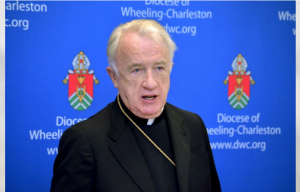
Former Bishop Michael J. Bransfield

WHEELING, WV — Michael J. Bransfield, the former bishop of the Roman Catholic Diocese of Wheeling-Charleston, died Thursday. He was 82.

Diocesan officials in Wheeling announced Bransfield’s death via email, with the following statement attached: “As it is the tradition in our Church to pray for the dead as well as for the living, we pray for the repose of his soul, asking God’s mercy upon him. His funeral and burial will not take place in West Virginia, but we invite all the faithful to pray at this time for his family, friends, and caregivers.”

Bransfield, a Philadelphia native who moved back to his family property after resigning from the church in West Virginia, served as bishop of the Diocese of Wheeling-Charleston from 2005-18. Among the projects completed during his watch was the addition of Tower 5 at Wheeling Hospital, which at that time was Diocesan property.

The former bishop had a sordid tenure as head of West Virginia’s Catholic churches. Allegations of abuse, lavish spending, harassment and more followed him for years, all of which were detailed in the 60-page “Bransfield Report” commissioned by Archbishop William Lori of Baltimore.

The report found “credible” evidence that Bransfield had engaged in inappropriate behavior. As for his spending, the report indicated he used diocesan funds for alcohol purchases, at about $1,000 per month; nearly $200,000 for fresh flowers daily to the chancery offices in Wheeling; about $4.6 million to renovate his church residence in Wheeling; church funds for a personal chef and chauffeur; and nearly $2.5 million for corporate jet, limo services and hotel stays.

Also during Bransfield’s tenure as bishop, the Diocese of Wheeling-Charleston spent $187 million more than it took in, causing the former bishop to draw from the diocese’s endowment and mineral rights account to make up the deficit, according to the report.

Following his resignation, Bransfield offered a short apology in 2020 for his actions.

“I’m sorry if I offended anyone,” he wrote. “I am writing to apologize for any scandal or wonderment caused by words or actions attributed to me during my tenure as bishop of the Wheeling-Charleston Diocese.”

Read original article

Rep. John Lawn: “I’m a Survivor of Child Sexual Abuse” — Calls for End of Statute of Limitations

MA State Rep. John Lawn

WATERTOWN, MA — Watertown State Rep. John Lawn revealed that he was sexually abused by adults when he was a child in an Op-Ed he wrote for the Boston Globe, in which he also called for the end of statute of limitations in Massachusetts for child sexual abuse cases.

Lawn wrote that he was abused by a “trusted leader” at a local pool and skating rink and a Catholic priest, both of whom are now dead. He went on to say that he remained silent even when revelations of abuse in the Catholic church arose, and even when asked by his mother after one of his abusers was arrested for abusing others.

Massachusetts’ current child sexual abuse gives abuse victims can file suits up to age 53, and in cases of repressed memory, adults have seven years after realizing they were abused as children to file claims against abusers.

“Trauma does not operate on a legal timeline,” Lawn wrote.

In the Globe piece, he advocated for passage of legislation currently on Beacon Hill to remove the statute of limitation for civil sexual abuse cases.

Lawn filed the bill in the House, H.1829, and State. Sen. Will Brownsberger co-sponsored the bill in the Senate, S.1169.

Read John Lawn’s piece in the Boston Globe by clicking here.

Read original article

Deadline for Justice: Uncovering clergy abuse cases in Southwest Louisiana

Louisiana Supreme Court Building in New Orleans

LAKE CHARLES, LA — For years, clergy abuse cases have made headlines across the country.

In Louisiana, a lookback law passed in 2021 has allowed hundreds more victims to file suit. In Southwest Louisiana, 7News uncovered a dozen sexual abuse lawsuits against area churches.

Their stories are now in black and white.

“What amount of money could possibly replace somebody losing their innocence in their youth? None,” Robert Salim, a Natchitoches attorney who represents several victims, said.

The local allegations date back to the 1960s. Victims were as young as 5. Priests, pastors, and nuns are named as defendants.

The lawsuits include graphic details — many published for the first time after Louisiana’s lookback law allowed the cases to be filed.

“For most of Louisiana’s history, up until the mid-90s, children who were sexually abused had just one year to file a lawsuit,” Kristi Schubert, a New Orleans attorney who specializes in child sex abuse and exploitation cases, said.

In 2019, New York enacted the Child Victims Act, a measure that significantly extended the statute of limitations for child victims of sexual abuse. Many states followed suit, including Louisiana, which unanimously passed the “lookback law” in 2021.

Before Louisiana’s law passed, many survivors who came forward as adults were barred from suing their abusers after turning 28. The lookback law gave all victims until 2024 to file a civil lawsuit.

However, pushback led to a battle in court.

“This question made it to the Louisiana Supreme Court. And the Louisiana Supreme Court said ‘no’, the survivor’s right to justice here is the most important thing,” Schubert said. “So they upheld the law.”

Then, state lawmakers passed an extension. Victims now have until 2027 to file suit.

Dozens of states have extended their lookback periods, and at least nine have eliminated the statute of limitations for felony child sexual abuse — a move advocates like Schubert say is necessary.

“Obviously, most seven-year-old children are not in a place where they can,” Schubert said. “Sometimes they can’t tell their parents because they are afraid. They feel so much shame or fear. Sometimes they literally don’t have the words to explain what happened to them. They don’t even know what happened, and they won’t understand it until they’re older.”

Robert Salim represents hundreds of victims of sexual abuse connected to churches, including several in Southwest Louisiana.

“The pain never goes away for these,” he said. “I used to have a big PI practice. You get in a wreck, and you have a back surgery, right? Okay, you go rehab your back. And six months later, you know, you’re healed, basically, if you’ve had a decent result. These people are never healed. They live with this every day of their life.”

In one of his local cases, Salim says the accused priest faces allegations from multiple victims. Each lawsuit comes with unique complexities, and Salim says the stigma is compounded by resurfaced trauma.

Each victim must also go through psychological evaluations before a judge will approve their case to move forward.

“You don’t have people just saying, oh, you know, ‘I’m going to go get some money from this.’ These are all legitimate claims,” Salim said. “I think most of the people, believe it or not, are not interested in the money. They want somebody to say, ‘I’m sorry,’ and mean it.”

“What this means to survivors is validation. It’s a jury of their peers saying, ‘We see you, we believe you, what happened to you is wrong, and we’re going to do something about it,’” Schubert said.

Schubert’s office has represented more than a hundred of these cases.

“I’ve seen so much good come from the look-back window, not only just seeing survivors get the support they’ve always needed, but also I’ve seen active child predators caught and put in jail because of the look-back window,” Schubert said. “I think there’s still a lot to do, but we are absolutely making progress, and I’d like to see that progress continue.”

Others are hoping for the same, including State Rep. Mandie Landry (D-New Orleans). She sponsored House Bill 409 to extend the lookback period another two years, giving abuse victims until 2029 to file.

Meanwhile, those who have named their alleged abusers wait for the wheels of justice. 7News reached out to the Diocese of Lake Charles. Attorney James Sudduth responded and provided the following quote:

“Unfortunately, due to the fact that these cases are in active and open and pending litigation we are precluded from commenting at this time.”

That means it may be quite some time — if ever — that we hear from those accused. With the prospect of more time for victims to step forward, the list could grow.

“I would guarantee you that for every claim that’s been brought, there are three claims out there that have never been brought,” Salim said.

Below is a list of the churches and organizations being sued, the accused, the years of the alleged abuse, and the ages of the victims:

KPLC also found one diocese case rejected after a psychological exam

7News also found a case filed against a local Mormon church and a case filed against a local Protestant church. The case against the Mormon church was closed to be moved to U.S. court, although KPLC could find no record of it being filed in federal court. The case against the Protestant church has not yet been approved to move forward.

Read original article

N.Y. Archdiocese Offers $800 Million to Settle Sex Abuse Claims

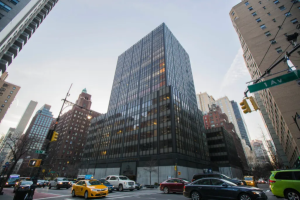
The Archdiocese of New York sold some of its most valuable real estate holdings to fund sex-abuse settlements, including its headquarters on First Avenue in Manhattan. Credit…Hiroko Masuike/The New York Times

NEW YORK, NY — The Archdiocese of New York has proposed paying $800 million to settle claims from the 1,300 people who say they were sexually abused as minors by priests and lay staff, according to lawyers representing 300 accusers.

The archdiocese would pay each accuser at least $250,000, according to a letter describing the potential settlement that was sent on Monday to the accusers by two of the plaintiffs’ lawyers, Jeff Anderson and Trusha Goffe.

The lawyers urged their clients to accept the deal, warning that the archdiocese would most likely file for bankruptcy if they did not — a move that could prolong the litigation and reduce the size of future settlement payments.

“The archdiocese needs all survivors to agree to the proposed settlement in order for it to go forward,” the lawyers wrote in the emailed letter, which was obtained by The New York Times.

Under the proposed terms, which were presented after several months of mediation, the two sides agreed that “all survivors” with pending cases against the archdiocese must accept the settlement. The phrase “no holdouts” is written in bold and underlined.

“If there are any holdouts, the global settlement will not be consummated,” documents reviewed by The Times read, and the archdiocese and “participating parties may file for Chapter 11 bankruptcy.”

The proposal comes months after the archdiocese announced plans to drastically cut its costs to fund the settlement. In December it said it planned to raise at least $300 million and had reduced its operating budget by 10 percent. It also sold some of its most valuable properties, including its headquarters on First Avenue and the land it owns beneath the Palace Hotel on Manhattan’s East Side, which sold for roughly $490 million.

Several Catholic dioceses in New York have filed for Chapter 11 bankruptcy protections, including ones on Long Island and in Buffalo. None is as large or influential as the Archdiocese of New York, which represents 2.5 million Catholics at nearly 300 parishes in Manhattan, the Bronx, Staten Island and the city’s northern suburbs. The archdiocese is also one of the city’s largest landowners, with billions of dollars in real estate holdings. In April, Our Town, a local news outlet, reported that church leaders with the Archdiocese of New York were warned that bankruptcy was an option.

In February it installed Bishop Ronald A. Hicks as its 11th archbishop, replacing Cardinal Timothy Dolan, who had led the archdiocese for more than 16 years and helped steer it through the sexual abuse settlement process. Cardinal Dolan submitted his resignation to the pope last year after turning 75, the age at which bishops traditionally retire.

Bishop Hicks updated members of the archdiocese about the mediation process in a letter on Friday, saying that lawyers on the committee that represents victims of sexual abuse have begun reaching out to victims’ legal representatives.

“It is our sincere hope to achieve full participation; we cannot begin to compensate victims until full participation is achieved,” he wrote. “If a truly global settlement can be achieved, compensation will become available to victim survivors in the fastest, most comprehensive manner possible, without the need for lengthy painful litigation for victim-survivors or bankruptcy proceedings for the Archdiocese.”

Under the proposed terms, the archdiocese would pay $800 million into a trust for the 1,300 survivors in two payments over 15 months. The first payment of $615 million would be made on July 27, according to documents.

Accusers would have the option of a $250,000 “quick pay” agreement or a claims review process administered by the trust and performed by a claim reviewer. The review would take into account what happened to each plaintiff and the effect it had on them.

The archdiocese would also have to publicly disclose information about the offenders and other “secret documents” that would help “better protect kids in the future,” the lawyers said. And it would be required to maintain on its website a list of bishops, priests and deacons who had been “credibly accused” of abuse, and periodically update the list with “future substantiated claims.”

Up to $100 million of the initial $615 million payment would go toward administrative costs, including the expenses of the accusers’ lawyers, $30 million for the archdiocese’s insurance counsel, and $25 million for any additional claims that could arise against the archdiocese based on the city’s Gender-Motivated Violence Act.

Mr. Anderson, who initially declined to comment, issued a statement on Friday characterizing the proposed settlement as a “transcendent triumph of courage by the survivors who have endured so much for so long. It is far from full accountability, but it is a measure of responsibility and required transparency by the archdiocese.”

The archdiocese had enlisted Daniel J. Buckley, a retired judge from California, to mediate the terms of the settlement. Judge Buckley negotiated a settlement between the Archdiocese of Los Angeles and victims of sexual abuse in October 2024, resulting in an $880 million settlement — the highest single sum paid by a diocese.

One accuser, who asked for anonymity to discuss their reaction to the proposed settlement, said they felt as if they were being bullied into accepting the terms of the agreement because of the requirement that there be “no holdouts” before the offer could move forward.

Mr. Anderson and Ms. Goffe wrote that they had been in weekly mediation sessions for several months. The lawyers said they had reviewed the archdiocese’s finances, assets and the availability of insurance to achieve the “best possible outcome” for the accusers.

“If the cases against the archdiocese do not settle now, then the archdiocese will almost certainly file for Chapter 11 bankruptcy,” the lawyers wrote. “This would start a lengthy bankruptcy process resulting in several more years of fighting about the archdiocese’s assets, battling with their insurance companies, millions of dollars spent on bankruptcy costs and fees, and likely the same or worse financial outcome for survivors.”

Read original article

Local News Toledo Board of Honor to consider honorary Kei’Mani Latigue street name, removal of Monsignor Jerome Schmit sign

TOLEDO, OH — The Toledo Board of Honor is scheduled to meet Thursday, May 7, to consider a proposal for a new honorary street designation in memory of 13-year-old Kei’mani Latigue and a request to remove a sign honoring Monsignor Jerome Schmit.
Board members will discuss recommending to Toledo City Council that a portion of Wilmot street be given the honorary name of Kei’mani Latigue Way.

The board is considering this designation for Latigue, whose 2025 death drew significant attention.

Following a multi-day search after she was reported missing, authorities discovered her body in an abandoned house on the corner of Miami and Wilmot streets. Her father, Darnell Jones, currently faces multiple felony charges including aggravated murder, kidnapping, and rape in relation to the case.

If approved, a yellow honorary street name sign would be placed on top of the existing Wilmot street sign.

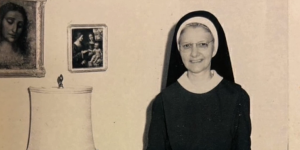
The board will also hear from Lee Pahl, the nephew of Sister Margaret Ann Pahl, and Claudia Vercellotti of the Survivors Network of those Abused by Priests.

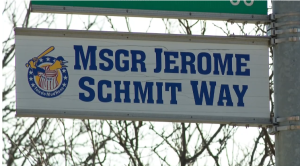
They are seeking the removal of the “Monsignor Jerome Schmit Way” street sign located near Fifth Third Field.

Pahl and Vercellotti have advocated in the past for the sign to be removed, arguing that Monsignor Schmit helped the Catholic Church obstruct the investigation into the 1980 murder of Sister Margaret Ann Pahl.

The 1980 murder of Sister Margaret Ann Pahl is at issue in removing a sign dedicated to Msgr. Schmit

Their efforts recently gained momentum from the WTOL 11 documentary, “Her Name Was Sister Margaret Ann,” which recounted how the church’s involvement seemingly helped end the initial investigation into Father Gerald Robinson.

Days after Sister Margaret Ann’s murder, Monsignor Schmit interrupted an interrogation of Father Robinson and left the police station with the priest. The initial investigation into Robinson effectively ended days later, even though detectives testified years later that the priest was their only suspect.

Robinson was eventually convicted in May 2006.

The documentary has since been viewed 140,000 times on YouTube and is streaming in 43 other markets nationwide.

In addition to these items, the board will consider a request for an honorary designation for Lee Liddell Sr. and Vernon Liddell at the intersection of Junction and Indiana avenues.

The meeting is set for 2 p.m. in the 21st floor conference room at One Government Center.

Read original article


Join our mailing list

SNAP © 2026. All Rights Reserved. | PO Box 42515, 5636 Connecticut Avenue, NW, Washington, DC 20015-9998