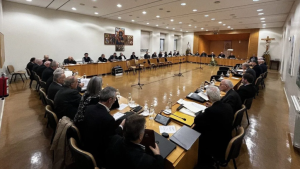
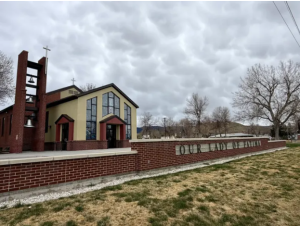
BALTIMORE, MD — The Maryland Supreme Court ruled Monday that prosecutors may not publicly identify more than a dozen clergy and laypeople accused of concealing or failing to report child sexual abuse within the Archdiocese of Baltimore, finding that such disclosures would violate long-standing grand jury secrecy rules.
At the center of the case is Maryland Rule 4-642, which only permits disclosure of grand jury material when there is a “particularized need.” The court concluded that a general interest in public accountability — including identifying alleged enablers of abuse — is not sufficient to override the privacy rights of uncharged individuals.
“One of the primary purposes of grand jury secrecy is to protect uncharged persons from public disgrace in the absence of a criminal charge and a forum in which to seek vindication,” Supreme Court Justice Jonathan Biran wrote in his opinion, finding the attorney general’s office had not shown a need for disclosure “beyond the public’s interest in learning the information.”
The ruling reverses lower court decisions that allowed the potential release of names and sends the case back with instructions to deny those disclosure requests.
Church spokesperson Christian Kendzierski said Tuesday that the archdiocese respects the court’s affirming “longstanding” practices and preventing “serious reputational harm to several individuals who stand accused of no crime.”
It also underscores the secrecy of grand jury proceedings, which courts have said is intended to protect the reputations of people who are investigated but not indicted. Judges must weigh requests for disclosure on a case-by-case basis, the court said, and cannot approve broad or blanket releases based solely on public interest.
Angela Walker, executive director of the Survivors Network of Those Abused by Priests, told The Baltimore Sun that “transparency is essential to repairing the damage done to survivors of clerical sexual abuse.”
“Too often, a culture of silence surrounds clerical sexual abuse, marginalizing survivors and protecting abusers and those who choose to shield them from accountability … The community has a right to know to protect their children,” she said.
At the same time, the court affirmed the attorney general’s authority to investigate the archdiocese under a directive issued by former Gov. Larry Hogan. That directive, rooted in the state constitution, allowed the office to pursue a wide-ranging probe into “crimes of exploitation,” including child sexual abuse.
A marked victory for survivors, the report also spurred Maryland lawmakers to eliminate the deadline on when someone can file a child sexual abuse claim against an institution — a landmark bill that generated thousands of new lawsuits and sent the archdiocese into bankruptcy.
The court on Monday rejected arguments that the investigation overstepped constitutional bounds or infringed on the authority of local prosecutors, finding that governors may authorize such inquiries and that the attorney general can share prosecutorial authority in those cases.
While the attorney general retains the power to produce investigative reports based on grand jury findings, the court made clear that naming uncharged individuals requires a higher legal threshold that was not met in this instance.
The decision leaves intact the broader findings of the archdiocese investigation but draws a firm line on how much detail, particularly identities, can be made public.
NEW YORK, NY, April 28, 2026 – An unnamed priest in the archdiocese of New York says forcing parishes to fund abuse settlements would be a “disaster” for the archdiocese, and describes bankruptcy as “the nuclear option.” Those are not disasters.
The disaster happened each and every time the approximately 1,700 survivors in New York, and the many who still are not ready to come forward, were molested, raped and silenced. There is little doubt that those crimes were enabled by priests, bishops and cardinals, who covered up abuse and paid expensive attorneys to paper those secrets.
Child sexual abuse happened in every corner of the New York archdiocese. Every parish, school and archdiocesan legal entity should contribute whatever it takes to compensate these courageous men and women who as children were irreparably harmed. New York survivors are owed respect, dignity and the truth.
To threaten bankruptcy after simultaneously selling a billion dollars of high-rise real estate is cowardly. The archdiocese is a wealthy institution that doesn’t pay taxes on its property and its donations. It used those advantages to buy comprehensive insurance policies and to fund expensive capital building campaigns.
“The archdiocese of New York sits in the wealthiest enclave in the world’s wealthiest country,” said Angela Walker, SNAP Executive Director. “It should be illegal for nonprofit entities that enable the sexual assault of children to declare bankruptcy as a means of avoiding responsibility for their crimes.”
Catholic priest abuse in New York dwarfs even the stupendous amount of abuse reported in the Los Angeles archdiocese, the largest archdiocese in the United States. Los Angeles stepped up and compensated its 1,300 victims without ever threatening survivors with a “nuclear option.”
The United States congress should reconsider how it permits bankruptcy laws to be applied.
“Financial bankruptcy is not the same as moral bankruptcy. The archdiocese is certainly morally bankrupt, but money or assets that easily convert to money is not in short supply,” Walker said. “What is in short supply is decency and transparency.”
Billionaire Leslie Wexner, right, and his wife, Abigail, at the Wexner Center for the Arts in Columbus, Ohio. Credit: AP Photo/Jay LaPrete, File
NEW ALBANY, OH — More than 100 alumni of Wexner Foundation fellowships and professional development programs have started a fund to aid survivors of sexual abuse and exploitation.
Rachel Faulkner was working at a Jewish nonprofit that advocates for gender equity when she was selected for a prestigious, three-year professional development fellowship through the Wexner Foundation.
Established by retail billionaire Leslie Wexner, the foundation headquartered in New Albany, Ohio, had been highly regarded for its competitive and rigorous fellowships that train midcareer Jewish leaders, both clergy and lay.
Faulkner said she had heard that Wexner had tiesto sex offender Jeffrey Epstein, who once was Wexner’s financial manager, when she accepted the fellowship in 2022. But she was not aware of the extent of the two men’s collaboration. Especially after Wexner’s congressional testimony in February on the heels of the Epstein files’ release, she said, she has now felt the need to distance herself from the foundation and to make amends for her association with Wexner’s foundation.
Earlier this month, Faulkner and a handful of other Wexner alumni launched a fund to help survivors of sexual violence and exploitation. The Ashru Fund’s first goal is to raise $100,000 for two nonprofits helping victims of sexual trafficking: World Without Exploitation and the National Survivor Network. It has raised more than $46,000 as of Tuesday (April 28).
“The reality is that (Wexner’s) money was mixed up with Epstein’s, and it’s the same money that I benefited from through this program,” said Faulkner, 40, senior director of events and programs with the National Council of Jewish Women.
More than 100 alumni of the Wexner Foundation professional development programs have so far contributed to the fund — about 15% of the total number of Jewish leaders who have taken part in the organization’s offerings.
A longtime Ohio resident, Wexner is a former top executive of Victoria’s Secret and other retail giants such as Bath & Body Works and Abercrombie & Fitch.
A lawsuit filed against Wexner last month on behalf of 11 women who say they were sexually exploited by Epstein alleges the billionaire retailer enabled Epstein’s crimes. The suit, filed in New York state Supreme Court, alleges Wexner gave the sex offender $200 million, a six-story New York City townhouse and an airplane — all of which the plaintiffs say were used for sexual trafficking, often of underage women.
Wexner, who is now 88, has denied the claims cited in the suit. He told Congress he didn’t know about the late sex offender’s crimes and did not participate in Epstein’s abuse of girls and young women. His foundation declined to comment for this story.
There is little dispute, however, that Wexner hired Epstein to manage his personal finances in the late 1980s and granted him power of attorney in 1991, giving him control over his business deals and properties. The two severed their relationship around 2008, after Epstein entered into a plea deal that would require him to serve 18 months in a Florida jail on a state charge of soliciting prostitution from a minor.
Wexner told members of Congress in February that he had been “conned” by the sex offender, whom he accused of stealing from him. He told his foundation the same thing in in 2019, when Epstein was found dead in his jail cell, with the death ruled as a suicide. Wexner said Epstein “misappropriated vast sums of money” from him and his family.
Wexner has never been charged with a crime. But the ongoing Epstein revelations — Wexner’s name appears more than 1,000 times in the Epstein files released by the U.S. Department of Justice — continue to inflict reputational harm to his foundation. Epstein was a trustee of the Wexner Foundation from the early 1990s to mid-2000s.
Now, several Jewish professionals, including Faulkner, said they’ve removed any reference to the Wexner fellowships from their resumes.
Rabbi Josh Feigelson, a Wexner alum who is now CEO of the Institute for Jewish Spirituality, said he was invited to be a scholar in residence at a synagogue in February. He asked the person introducing him to omit any reference to his participation in a Wexner fellowship.
“I told her, ‘I think you should just leave it off because I don’t want to spend the weekend having to deal with people asking me about the Wexner Foundation,’” Feigelson said. “It’s an example of how it had stopped becoming an asset and, in fact, had become a liability.”
Feigelson joined with Faulkner to create the Ashru Fund. The name is a Hebrew reference to a passage from the first chapter of Isaiah in which the prophet beseeches his listeners to “aid the wronged.”
He said he hoped the Wexner Foundation would donate money to help survivors.
“They don’t need to contribute to this fund, but I think there’s a wonderful opportunity for the Wexner Foundation to become a leader in helping the Jewish community understand the relationship between money, power, sex and philanthropy,” Feigelson said. “It would really be amazing if the foundation decided this should really become a focus of the work, and if it also then engaged in restoring and rehabilitating Epstein’s victims.”
Rabbi Danya Ruttenberg, a Wexner alumna who divested from the foundation by donating the advance she received for her 2022 book, “On Repentance and Repair,” to the National Survivors Network, said monetary contributions can make a difference.
“Alumni of the Wexner Foundation programs benefited ultimately in financial ways, so it makes sense that financial reparations would be the way,” she said. “It makes perfect sense because concrete amends, instead of words, is a way to have a real impact.”
In this photo published by El País, the Salesian priest Giuseppe Corò, canonically convicted of pederasty at the Ricaldone Technical Institute in El Salvador, appears in an image from the 1980s
MADRID — José Napoleón Lemus assures that he knows at least 50 other victims of Father Giuseppe Corò, with whom he has been able to contact over two decades.
More than two decades have passed since José Napoleón Lemus left El Salvador to try to forget a pain that, at the time, no one wanted to hear. Today, with evidence in hand, with a case of abuse accepted by the Salesian congregation, he seeks justice in his country. It was 1985 and he was studying his baccalaureate at the Ricaldone Technical Institute, in San Salvador, a Catholic institution under the tutelage of the Salesian congregation.
Lemus was a boy with learning disabilities, who many years later discovered that it was dyslexia. By the end of 1985, his educational problems had escalated and affected him greatly. The Italian Salesian priest, Giuseppe Corò, was the rector of the institution and also taught two subjects, religion and sex education, “ironically,” says this Salvadoran.
“He had a good friendship with Father Corò, and he privately interacted with me and quickly told me that if I ever needed help, to seek it out; its doors were open whenever he wanted. I took this gesture as a sign of friendship and began to see him as a second father,” Lemus recounts in a letter he wrote in 2019, where he narrated the abuse.
At the end of the year, in November 1985, Father Corò asked him to meet him, after 6:00 in the afternoon, at the school. The priest gave him directions on how to enter and that the security agents would let him pass.
Upon entering, Lemus relates that the priest took him and began to touch and kiss him. “I was paralyzed,” he said. In an interview with Diario El Mundo, Lemus said that the priest tried to bribe him: “They were words that I will never forget again in my life: ‘If you come at least once a month, you don’t have to worry about studying again.’ It was a sexual bribe in the sense that I could graduate. And I never went back to school,” said this Salvadoran living in Canada.
José left school and that same day he told his mother what had happened. “My mom didn’t believe it. My mom thought it was an excuse that I didn’t want to study,” years later, under pressure not to continue studying and in the midst of being recruited in the armed conflict, Lemus left El Salvador, traveled to the United States and later to Canada, which has been his home for decades.
“I have avoided arriving in El Salvador all my life,” he tells Diario El Mundo in a phone call, acknowledging that he still has nightmares about returning to the country and that this child, whose childhood was stolen, still screams in pain.
A decree and a “rebuke”
But this story is not only recorded in a letter, after seeking help and that all doors will be closed to him, in 2019, the Vice Province “Mary Seat of Wisdom” in Rome, Italy, a special circumscription of the Salesian Congregation at the global level, decided to listen to him, sent representatives to his place of residence in Canada and was heard in a long conversation. Although José recognizes that the Salesians who visited him were only looking to prove that everything was false, a year later, in February 2020, he received a letter from the superior of the Vice Province agreeing with him.
It is a decree signed by the Salesian rector, Fr Eugenio Riva, where he refers to a preliminary investigation initiated against the Reverend Giuseppe Corò, accused of crimes “more serious things against sexto” (crimes against the sixth commandment, which according to the Bible dictates to believers: “You shall not commit impure acts”).
That decree concludes that the cleric Giuseppe Corò committed the abuses, although he does not use the term, and that the age of the victims at the time of the events was considered. The document ends by saying that appropriate canonical sanctions were decreed against the Italian priest, on February 12, 2020, in relation to his religious life and priestly ministry.
The document cites the Code of Canon Law, Canon 1339 §2, which consists of “rebuking anyone who causes scandal or grave disturbance.”
“The father who is rector of it (Giuseppe Corò), where he is retired, sent me a written apology and told me that they were going to collaborate with me. And the rector also, who is the rector of the Salesians in Central America, was the one who approved the psychological help that I was having for three years here in Canada,” Lemus said.
Our Lady of the Rosary Church, a Roman Catholic parish in the Diocese of Oakland, where abuse occurred, leading to hundreds of cases tied up in bankruptcy proceedings. (Beth LaBerge/KQED)
OAKLAND, CA, April 23, 2026 – A jury awarded a survivor of abuse by Stephen Kiesle, a defrocked Catholic priest of the Oakland (California) diocese, $16 million yesterday.
The abuse occurred in a blue-collar parish called Our Lady of the Rosary in Union City, California. That parish, with an elementary school, hosted at least three other priests accused of abuse, including George Crespin, who supervised Kiesle and was later elevated to be the Vicar General and Chancellor of the Oakland Diocese. Crespin is named in multiple lawsuits.
While no amount of money can ever recapture a lost childhood or make up for a lifetime of trauma, the court system has sent a message that covering up and enabling the sexual assault of children cannot be tolerated.
Kiesle has over 60 cases pending in the Oakland diocese bankruptcy, and dozens of other victims. He isn’t the only bad guy who wore the clerical collar and committed abuse. Oakland has over 100 others accused of abusing 290 other victims in this round of litigation, representing over $5 billion of harm, based on this award.
The Oakland bishop has low-balled, delayed, and stiff-armed victims for the past six years. His paltry $214 million bankruptcy offer is nowhere near enough to compensate for the harm an unbiased jury has recognized. At an average of $600,000 per survivor, that offer is 4% of the value of this jury award. It is pennies on the dollar.
Now that a jury has listened to the evidence and spoken, SNAP is calling on the bishop of Oakland to either dramatically increase his offer, or, to exit bankruptcy and try all 350 cases.
Every single survivor in the Oakland diocese deserves the justice delivered today.
Manuel Montoro, a victim of abuse within the Church, on April 13. Credit: PACO PUENTES
MEXICO / MADRID — More than half of the cases are located in Colombia, and the rest in Argentina, Bolivia, Cuba, El Salvador, the United States, Mexico, and Venezuela.
The investigation that EL PAÍS has undertaken in recent years into clerical pedophilia in the Americas, in which it has already published dozens of cases, continues with the delivery to the Vatican of a report containing 21 testimonies accusing a total of 24 priests, religious members, and laypeople from eight countries. Colombia accounts for more than half of the cases, a total of 13, and the rest are located in Argentina, Bolivia, Cuba, El Salvador, the United States, Mexico, and Venezuela.
This more than 100‑page report accompanies the sixth dossier of cases from Spain that the newspaper has also submitted to the Holy See, bringing to 841 the number of testimonies gathered in Spain over the past five years. Together, they exceed 1,800 pages. This first case report from the Americas expands the investigative project to the entire continent.
EL PAÍS began preparing these dossiers for the Vatican in 2021 after receiving an overwhelming number of testimonies through its victim‑support email account, which was also opened to readers in the Americas in 2022 (abusosamerica@elpais.es). The initiative emerged from the impossibility of publishing every case and from evidence that most allegations were being covered up locally by dioceses and religious orders.
By compiling the information, the Dicastery for the Doctrine of the Faith could be made aware of the complaints and investigate them, as it is required to do whenever it receives any report. Several cases included in this new dossier from the Americas once again show that many allegations never reach Rome, despite the fact that reporting them has been mandatory since 2001. Instead, they have been ignored.
The stories now coming to light reveal that in almost all of the Catholic Church in Latin America, there is still much to be done, in contrast to the progress already made in the United States, Europe, and Australia. Only the Church in Chile has undertaken anything similar to the Ryan Report from Ireland or the MHG/Dressing Report from Germany, according to academics Veronique Lecaros, from the Pontifical Catholic University of Peru, and Ana Lourdes Suárez, from the Catholic University of Argentina, editors of a recent book titled Abusos eclesiales en América Latina. Una crisis en el corazón del catolicismo (Ecclesiastical Abuse in Latin America: A Crisis at the Heart of Catholicism). In 2020, a report published in Chile by the Commission for the Analysis of the Crisis in the Catholic Church documented 568 victims of sexual abuse, 320 of whom were minors, and identified 225 perpetrators.
“In Chile, a series of circumstances forced a more serious approach to the problem,” the academics assert, “but elsewhere, no country has given any indication that it will do anything similar.” The driving force was Pope Francis himself, who personally took charge of the Chile case and forced the entire episcopal leadership to resign in one stroke. It was an exception — the result of the Argentine pontiff’s own determination — alongside the investigation and dissolution of the Sodalicio de Vida Cristiana in Peru.
The EL PAÍS investigation seeks to break through that wall of silence. In this new report on cases in the Americas, the identities of those who provided testimony are withheld, but the newspaper will share them with Church authorities if requested once an investigation is opened and the individual gives consent. Some of the accused could not be identified because the person giving testimony does not remember — something that is common in cases of child sexual abuse. Even so, their accounts contain details that may allow the Church to identify them.
Mexico: Abuses during confession at a school
This is the case of Nadja Fernández, a former student at the Ignacio L. Vallarta School in the metropolitan area of Mexico City, run by the Congregation of the Daughters of the Holy Spirit, back when the school was located in Lomas de Chapultepec. She recounts having suffered abuse between 1997 and 1998, when she was eight years old, at the hands of a priest whose name she no longer remembers.
“It was an all-girls school in an area where exclusivity and power were palpable, and those of us who didn’t meet those standards were humiliated by classmates, teachers, and nuns,” says Fernández. One of the routines at the school was confession. The nuns would enter the classrooms and, if no one volunteered, they would choose a girl themselves. Instead of a traditional confessional with a lattice separating the priest and the penitent, Fernández describes “a small cubicle, about two meters by two, with two chairs facing each other.”
She remembers that the priest was tall, blond, and spoke with a strong Argentine accent, and that at first he asked her personal questions — what she watched on television, what she feared most. “After one or two confessions, that’s when the first rape happened. I didn’t scream or cry because I didn’t really understand what was happening, but I felt fear and shame, and I knew something was wrong. When he finished, he straightened his cassock and told me, ‘If you say anything, your father will die.’” She had told him that her father was the person she loved most in the world. She never dared tell anyone.
“From that moment on, most of the time I was sent to him, the abuse was repeated: he took advantage of that confined space to touch me, ask me vulgar questions about my body, and force me to touch him,” she says. “The abuse lasted two years, until I turned 10. One day, when he saw me come in, he told me that this would be goodbye, because I was ‘too old’ for him now,” she adds. Fernández believes that this abuse led her to develop eating disorders “so that I would stop being attractive to him.”
Years later, during a therapy session, the memories came flooding back. She told her family, and her twin sister, who had studied with her, said she had also been a victim. Fernández believes that “the school authorities knew what was happening” and is willing to identify the perpetrator if any photographs or videos from that time surface. “I’m not seeking revenge,” she concludes, “but rather to have it documented that in that tiny cubicle, a priest used confession as a pretext to abuse me when I was eight years old.”
For scholars Veronique Lecaros and Ana Lourdes Suárez, cases within the Latin American Catholic Church share features with those in other countries but also reflect a distinct “socio‑ecclesiastical” context. “As in other parts of the world, new communities that have formed around very strong leadership, with a membership characterized by blind obedience and closed-group control, often end up with abuse of power and sexual abuse,” they say in a joint interview.
They cite the cases of the Legionaries of Christ in Mexico, the Sodalicio de Vida Cristiana in Peru, the Arautos do Evangelho (Heralds of the Gospel) in Brazil, the group surrounding Fernando Karadima in Chile, the Discípulos de San Juan Bautista (Disciples of St. John the Baptist) in Argentina, and the Comunidad de Jerusalén (Jerusalem Community) in Uruguay. “They have in common that their founders were accused of sexual abuse,” say the academics. The EL PAÍS report includes extensive testimony from a former member of the Heralds of the Gospel who recounts cases of abuse in various countries.
In addition to these communities — often linked to power groups and the far right — there is another context for abuse in parishes located in marginalized areas. “There, when it happens, since the priest is essentially a local strongman with considerable power over the population, the victims don’t dare to report it because they don’t have sufficient social capital,” they reflect.
They cite the case of Jesuit priest Alfonso Pedrajas in Bolivia, revealed by EL PAÍS in 2023. The scandal came to light because Pedrajas had left a personal diary describing his abuse of approximately 85 minors at a boarding school. “Those children would never have reported it, as it was beyond their comprehension,” they explain. Other contexts where these abuses have been detected include seminaries and formation houses, as well as parishes and schools.
Argentina: 15 complaints in a scout group in Buenos Aires
In Argentina, there’s a prime example in the Boy Scouts of Our Lady of Luján Parish in Longchamps, south of Buenos Aires. Nicolás Sisman joined the group as a child in the mid-1980s. There he met the 15 or so young men who, decades later, remain his close friends.
Since some of them don’t live in Argentina — Ángel lives in Spain; Sebastián, in Colombia — they took advantage of the pandemic to reconnect via WhatsApp. The idea was the same as always: to talk. But when the possibility of inviting the man who had been their scout leader between the ages of 14 and 18 came up, they also broke open a trauma they had silently shared for decades.
The WhatsApp group is still called “Survivors.” They survived the alleged abuse by Omar Esposito, whom the 15 friends — one of whom has since died — ultimately reported to the Argentine justice system with a harrowing account of those years of silence. “Secrecy is part of the Scouts. When Omar said, ‘What’s said here, stays here,’ you left believing it was part of the Scout mystique, not part of the modus operandi of a depraved man,” Sisman told EL PAÍS. Esposito has not responded to this newspaper’s messages.
The modus operandi required the boys to masturbate in a group, put on a condom — education about prophylaxis was one of the excuses — and then show it to him, the head scout leader, so he could check how much they had ejaculated. This happened not only in camps but also in his own home, not far from the parish, on the marital bed. Another of his phrases was: “What doesn’t go into your head goes in through your anus,” Sisman recalls.
An Argentine judge referred the case to a Juicio por la Verdad (Truth Trial), a procedural path similar to the one used years ago to address crimes committed during the dictatorship. But the process is currently suspended because the court responsible for hearing the case has refused to proceed, claiming that the statute of limitations on the crimes has expired. The survivors have filed a complaint against the court for dereliction of duty.
The Diocese of Lomas de Zamora, which oversees the Longchamps parish and the Scout group, acknowledged the events in a meeting with the complainants and through a document obtained by EL PAÍS. “The representatives of the Diocesan Team state that they believe the victims regarding the reported events,” the document reads, “and offer the victims spiritual and psychological support as victims of sexual abuse.” “They also commit to continuing to publicize what happened between 1980 and 1999, in order to identify any other victims of the accused,” it concludes.
The meeting took place at the diocesan headquarters in Lomas de Zamora and was attended, among others, by Héctor Eduardo Laffeuillade, parish priest and head of the diocese’s multidisciplinary team for assisting victims of sexual crimes. “The first thing we told them was that we believed them, and we asked their forgiveness on behalf of the Church. They had been bound to silence by the control this man exercised over them, which is a constant in this type of abuse,” Laffeuillade acknowledges in a phone conversation with this newspaper.
The catechist was immediately removed from all duties within the Church. However, the multidisciplinary team ended up resigning because Church officials did not act on the complaint. “Yes, that’s what some [team members] said,” admits Laffeuillade himself, who nevertheless reiterates his support for the complainants. Despite this, the victims have not received any compensation.
“I can’t understand how he had so much power over us,” says Ángel Maximiliano Queirolo, another of the complainants, who currently lives in Spain, speaking by phone. “I never once spoke about it with anyone. We’re talking about a group of friends, for example, who are three brothers. He abused all three of them, and none of them ever spoke about it among themselves. One of them, the oldest, even filed a complaint first, and then withdrew it. We don’t know why, and there was never an explanation,” Queirolo adds. “Being able to speak out and report it was, in a way, being able to start living again,” says Diego Bacarat, a librarian and another of the friends who filed a complaint. “I feel like I was dead inside for 30 years,” he adds.
Lecaros and Suárez indicate that, unlike in the “global north,” where the priest’s sacred power manifests itself during the sacraments, in Latin America, his magic extends beyond the Eucharist or extreme unction. “There is an enchanted atmosphere, where the clergyman is asked, for example, to bless almost anything, becoming a figure who can bring about substantial changes and bring people closer to God. This, combined with the fact that they often act as mediators with the state and its aid programs, gives them power within popular religiosity,” they explain.
El Salvador: Salesians admit to abuse at a school in the 1980s
In El Salvador, this newspaper’s report includes three testimonies detailing abuse that occurred between 1979 and 1985 at the Ricaldone Technical Institute in the capital city of San Salvador. The victims accuse the Salesian priest Giuseppe Corò, and the Salesian congregation, when consulted about the case, admits that it removed him in 2007 amid suspicions of abuse and sent him to Rome, where, the order claims, he had no further contact with minors. Then, in 2019, two complaints resulted in a canonical conviction. The individuals who filed those complaints are two of the people who spoke with this newspaper: José Napoleón Lemus Guzmán and Patrick Castro Salazar.
The victims were between 14 and 17 years old, and their accounts describe a consistent modus operandi: approaching students who were struggling academically and offering solutions to their problems in exchange for sexual favors.
“I was a victim of abuse by Giuseppe Corò when he was the headmaster, and I was a student at the school,” says Lemus Guzmán, who is now over 55 years old. “I have dyslexia and struggled in class. The priest would approach anyone who was having problems and told me to come find him in his office after school,” he explains. “I arrived, knocked on the door, and it opened immediately. He was waiting in the doorway. He grabbed my hand, dragged me into the office, and right there, he started kissing and touching me all over. He pushed me to the floor, was about to take off his pants, and I started crying,” Lemus describes. “Then he stopped and said to me, calmly, as if it were perfectly normal: ‘I want this to happen at least once a month, and I guarantee you’ll graduate; I want you to enjoy it and participate,’” he recalls.
Reynaldo Cortés Figueroa, 60, tells a virtually identical story. “I was having problems at school, and he summoned me to his office at 6 p.m.,” Cortés begins. He recalls that Corò closed the blinds, took his hands, and told him they were going to pray for the Virgin Mary to guide them. “Suddenly, I felt his breathing as if he were getting aroused, and he brought his lips close to mine, but I pushed him away forcefully. He threw me out of the office, and the next day I was expelled,” he recounts.
Cortés was a friend of his classmate Patrick Castro Salazar, 61. He suffered abuse on several occasions between 1979 and 1982. He also had problems with his studies. He helped with extracurricular activities like preparing the high school yearbook, which meant he spent time alone with Corò, who was around 40 at the time. “When I told him my troubles, he would hug me; there came a point when his penis would get hard, and I could feel it,” he explains. “On several occasions, he tried to kiss me, and more than once we ended up on the floor.” Later, he discovered that a relative of his had also been abused by the priest.
According to information provided by the Salesians, Corò passed through Guatemala in 1964 before his ordination. He then lived in El Salvador until 1990, when he returned to Rome. He then lived in Costa Rica between 1994 and 1997. After returning again to the Italian capital, he stayed in Saltillo, Mexico, between 2002 and 2007, until the first suspicions of abuse arose there, at which point he returned permanently to Italy.
Spanish priests accused of abuse sent to Latin America
In the sixth report on cases in Spain compiled by EL PAÍS, released simultaneously with the report on the Americas, there are also Spanish clergymen accused of abuse who were transferred to Latin America. In one case, that of Father J. G. Z., assigned to the Spanish diocese of Santander, he is accused of assaulting a minor in Cuba, in the town of Sancti Spíritus, in the diocese of Santa Clara, between 1996 and 1998.
Among the Jesuits, there are two additional cases. The first is J. A. S., accused at the Sarrià school in Barcelona, and who, according to the account of a former student, was sent to Ecuador after the father of another minor protested. The order says it has no record that a complaint was the reason for the transfer, but confirms that this Jesuit spent the years 1958 to 1968 in the South American country — in Quito, Guayaquil, and Portoviejo.
Another Jesuit from the same school is Father J. A. M. E., who was accused by a former student of abuse dating back to 1966–1967. The Jesuits admit that there were two complaints against him in 2012 at a summer camp he organized in Bolivia, a country where he had lived between 1991 and 1992. He was accused by two girls who traveled there as volunteers, and as a result, he was removed from contact with minors as a precautionary measure.
A fourth testimony points to a priest from Linares, province of Jaén, J. F. J., who is accused of abuse between 1967 and 1969. According to one individual, after his father reported him to the bishopric, the priest was sent to Central America.
In 2018, EL PAÍS launched an investigation into pedophilia within the Spanish Church and maintains an up-to-date database of all known cases. If you know of any cases that have not yet been reported, you can write to us at: abuses@elpais.es. For cases in Latin America, the address is: abusesamerica@elpais.es
GREEN BAY, WI — Collin Killoren, the former Kaukauna area teacher accused of possessing child sexual abuse material (CSAM), received his sentence on Thursday.
Killoren, 31, was sentenced to 10 years in prison, followed by 10 years of extended supervision, court records show.
The former teacher at St. Ignatius Catholic School initially faced 30 counts of child sexual exploitation and possession of child pornography. However, 13 counts were dismissed, and he was sentenced on the remaining 17.
WASHINGTON, DC — A cross-party effort caused two House members to resign on Tuesday under threat of expulsion — and the two female lawmakers who helped lead that push say additional members of Congress could face pressure next.
In an interview with CBS News, Rep. Anna Paulina Luna and Rep. Teresa Leger Fernández — a Republican and a Democrat, respectively — described how they coordinated to push Democratic Rep. Eric Swalwell and GOP Rep. Tony Gonzales to step down this week rather than face votes to remove them from office over allegations of misconduct.
Multiple women in recent days haveaccused Swalwell of sexual assault or sending unsolicited explicit messages, which he has denied, and Gonzales has faced scrutiny over an affair with a staffer who later died by suicide. Swalwell also dropped out of the California gubernatorial race over the weekend, while Gonzales dropped his bid for reelection last month.
Luna and Leger Fernández said they worked in tandem to introduce separate expulsion efforts, building support across party lines and increasing pressure on both men to leave. Luna said there was already enough backing in the chamber to remove them if votes had taken place, telling CBS News that “we had two-thirds support for both people to be gone.”
Leger Fernández said the dual resignations on Tuesday were the result of members stepping in when House leadership did not immediately act.
“If it wouldn’t have been for those resolutions that we were each filing, they wouldn’t have resigned,” she said, adding that the situation only came to light because women involved “were willing to break the silence.”
The two said their coordination began informally, after Luna started publicly pushing for action and the two connected to align their efforts. Because House rules require separate members to bring expulsion resolutions, they agreed to support each other’s moves.
House Speaker Mike Johnson told reporters late Tuesday that he did not have a hand in causing Swalwell and Gonzales to resign in rapid succession. He called the outcome appropriate, and said the allegations against Swalwell in particular were “alarming.”
Johnson has alsoargued in the past that it’s important for members who face misconduct allegations to receive due process, including investigations by the House Ethics Committee, which was looking into Gonzales and Swalwell. CBS News has reached out to Johnson for additional comment.
Luna and Leger Fernández indicated to CBS News that their efforts could extend to other members currently under scrutiny.
Luna said she would support expulsion if warranted in additional cases, including those involving Republican Rep. Cory Mills and Democratic Rep. Sheila Cherfilus-McCormick.
Mills is under investigation by the House Ethics Committee over alleged campaign finance violations, sexual misconduct and other accusations. And Cherfilus-McCormick has been charged by federal prosecutors with improperly using millions of dollars in federal pandemic relief funds in connection with her campaign.
The Ethics Committee determined last month that most of the allegations against Cherfilus-McCormick were substantiated, though it has not yet issued a recommendation on punishment.
“If you’re knowingly breaking the law, then you need to go,” Luna said, adding, “I think the threshold will be met.”
Leger Fernández pointed to the Ethics Committee findings in Cherfilus-McCormick’s case, saying, “We expect the committee report to come out just in a few days.” She emphasized that lawmakers must meet “a high level of integrity” to remain in office.
Mills and Cherfilus-McCormick have denied wrongdoing. Mills, speaking to reporters Tuesday, pushed back on the idea that he could face expulsion, arguing he is being unfairly grouped with other lawmakers and noting he is not facing criminal charges or allegations involving staff.
“There’s absolutely no criminal charges being filed against me… no inappropriate behavior or actions with a staffer or intern on the Hill,” he said.
Cherfilus-McCormick told CBS News in a statement that she does not plan to resign, and said it would set a “dangerous precedent” to expel members without formal findings against them. She also noted that the allegations against her “are not the same as those facing some of my colleagues.”
“Lumping them together, particularly with cases involving sexual assault and rape, is inaccurate and irresponsible,” Cherfilus-McCormick said.
Both Luna and Leger Fernández framed this week’s resignations by Swalwell and Gonzales as part of a broader push to address misconduct within Congress, particularly when it involves power dynamics between members and staff.
“No means no,” Luna said. “You cannot sexually harass or assault people and not expect the law to come down on you.”
Leger Fernández said the goal was to make clear that such behavior will not be tolerated.
“We are going to hold men accountable,” she said, “and we will not let women continue to be silenced.”
They also raised concerns about the pace of the House Ethics Committee’s work, arguing that the process often takes too long to address serious allegations. Luna described the committee — made up of five Democrats and five Republicans — as “where things go to die,” while Leger Fernández said changes are needed to ensure cases are handled more quickly.
Republican Rep. Michael Guest, who chairs the ethics panel, told reporters Tuesday that “some investigations can be accomplished much quicker than others,” noting that probes like the one into Cherfilus-McCormick are difficult because they involve large numbers of documents and multiple attorneys. He said the committee’s members and their staff are “working diligently to move these cases through as quickly as possible.”
Expelling a member of the House requires a two-thirds vote, a threshold that has historically made it a rare outcome. Only six members of the lower chamber have been expelled in U.S. history, most recently Republican Rep. George Santos, who was charged with wire fraud, money laundering and campaign finance violations.
But Luna suggested the recent developments could lead to further action, saying the situation may trigger “a chain reaction.”
Plenary assembly of the Portuguese episcopal conference. Credit: Vatican Media.
PORTUGAL — The president of the Portuguese bishops’ conference confirmed Tuesday that “significant cuts” were made to the recommendations from an independent commission for financial compensation packages to victims of clerical sexual abuse.
On Tuesday The Pillar broke the news that the Portuguese bishops’ conference voted in a February closed-door meeting to make cuts to the amounts proposed by an independent Compensation Determination Commission, which had been formed in 2024 by the bishops’ conference.
But until news reporting was published April 7 on the subject, the bishops’ conference had declined to confirm the cuts, telling The Pillar earlier this month only that “the final amounts attributed were defined in accordance with the procedural regulation, which allowed for a distinction between the technical report and the final decision” and “taking into consideration” the work of the CDC.
The independent commission was composed of seven legal experts,including two judges, along with several lawyers and university law professors.
The Pillar has confirmed that the cuts applied by the bishops slashed tens of thousands of euros from the compensations packages recommended for victims by the commission. According to the Portuguese bishops’ conference, the amounts finally awarded to the victims range from between 9,000 and 45,000 euros — around $10,500 to $52,000.
In a Tuesday afternoon interview with Ecclesia, the official news agency of the Catholic Church in Portugal, bishops’ conference president Bishop José Ornelas confirmed the cuts.
“There was a significant reduction of the value presented by the Compensation Determination Commission. It was considered that, taking into account the reality of the Church in Portugal, Portuguese jurisprudence and the response of other European Churches, we should lower the amount,” the bishop explained.
In a separate interview with Portuguese news agency Lusa, Ornelas stressed that “the Church in Portugal is not rich”, and said that victims in Germany and France received maximum compensations of 50,000 and 60,000 euros [around $57,000 thousand and $69,000 dollars], respectively.”
“I can accept that some might find [the Portuguese compensation packages] too low,” the bishop said, adding that “if anyone prefers to take the issue to court, they can.”
Sources close to the bishops’ conference have told The Pillar that the decision to cut the compensation packages proposed by the CDC caused significant discomfort among its members and other people connected to the process, with some lamenting that a closed-door vote to reduce recommended amounts undercut the bishops’ commitment to transparency.
On Tuesday, Bishop Ornelas, who is bishop of Leiria-Fátima, said he informed the members of the commission personally about the cuts, adding that “they accepted that we were doing our duty. Some agreed more, others less, of course, as with all processes. But we were very open about it.”
The Catholic Church in Portugal will expend a more than 1.6 million euros on compensation for 57 people whose requests have already been validated. Nine cases are still awaiting evaluation.
But The Pillar has confirmed that compensation commission will not be tasked evaluating remaining cases. The bishops’ conference has said that “the outstanding cases will be assessed using the same criteria as those applied to cases that have already been concluded. The [bishops’ conference] will announce in due course who will carry out this assessment, should it be deemed appropriate.”
Asked how deeply compensation recommendations were cut by the bishops’ February vote on the subject, a spokesperson for the conference said the bishops did not consider it appropriate to make that information public.
The compensation recommendations were made for alleged victims of clerical sexual abuse whose cases could not be litigated in court because of the civil statute of limitation in Portugal.
According to the bishops’ conference, 95 people applied for financial compensation, of whom 78 were considered initially eligible. Eleven of those claims were later rejected, and 66 cases approved for compensation. Fifty-seven have had compensation already awarded, and nine others are pending analysis. One case was still awaiting a judicial decision by the Holy See when the bishops issued their statement.
Our Lady of Fatima Catholic Church in Casper, Wyoming. (Joshua Wolfson/WyoFile)
CHEYENNE, WY — A former Wyoming Catholic youth minister and teacher in Casper sexually assaulted three boys while they took part in youth programs facilitated by a local church and the Diocese of Cheyenne, a lawsuit filed Tuesday alleges.
The civil complaint alleges that then-Wyoming Catholic youth minister Doug Hudson sexually assaulted the three boys in the 1990s. The complaint also lists the Diocese of Cheyenne, which oversees parishes throughout Wyoming, and Our Lady of Fatima Church in Casper as defendants, stating that they failed to “supervise and control” Hudson and protect the plaintiffs, which allowed for the alleged sexual assaults to occur.
A spokesperson for the diocese declined to comment on the lawsuit until diocesan officials have consulted with legal counsel. He said in an email to WyoFile that the diocese plans to respond publicly to the allegations “in the near future.”
WyoFile attempted to contact Hudson through multiple phone numbers listed online under his name and through other people. Some calls were disconnected. WyoFile left voice messages at two numbers. A reporter called another, but the person who answered hung up when the reporter asked if the number belonged to Hudson. Other people that WyoFile asked didn’t have Hudson’s contact information or declined to share it.
Hudson’s court summons lists a North Carolina address, although WyoFile found records that appear to show a person with his name moved from North Carolina to Kentucky in 2024.
The allegations
As minors, the plaintiffs had taken part in Our Lady of Fatima Church’s youth programs, where Hudson worked as a youth minister under the Diocese of Cheyenne, the complaint states. All three allege that Hudson sexually assaulted them during one of these programs.
The Diocese of Cheyenne and Our Lady of Fatima Church provided Hudson with housing on its Casper campus for conducting youth activities and services. Two of Hudson’s accusers say he assaulted them at that home, the complaint states.
Plaintiffs allege that the Diocese of Cheyenne and Our Lady of Fatima Church knew Hudson was inviting minors to his house on campus. They also believe the diocese and the church were aware that Hudson had organized at least one off-campus overnight trip for youth activities and services.
At the time, Hudson was supervised by Father Pietro Philip Colibraro, the lawsuit states. The Diocese of Cheyenne acknowledged a substantiated allegation of sexual abuse, reported in 2005, against Colibraro that involved an adolescent male. Colibraro, who died in 2017, became co-pastor of Our Lady of Fatima Church in 1990, then sole pastor of the church in 1997. He stayed there until his retirement in 2001.
According to the complaint, Colibraro was warned that Hudson was “plying adolescent males with alcohol.” The lawsuit doesn’t say who warned Colibraro or how this information came to light.
The lawsuit alleges Hudson sexually assaulted plaintiffs Anthony Jacobson and Ryan Axlund in 1995 and 1997, respectively, at the house provided by the Diocese of Cheyenne and the church. At the time, they were both minors.
According to the complaint, Hudson had “plied” each of them “with copious amounts of alcohol, including Southern Comfort” and assaulted them when they were intoxicated. Both “passed out from the alcohol intoxication,” the lawsuit states.
The complaint alleges Hudson sexually assaulted another plaintiff, James Stress, in 1996 or 1997 at a hotel during an off-campus overnight trip. According to the complaint, Hudson was assigned through the church’s youth ministry to be Stress’ personal counselor. The minister was also Stress’ teacher at Saint Anthony Tri-Parish Catholic School.
At the hotel, Hudson gave Stress “copious amounts of alcohol” and sexually assaulted him while he was intoxicated, according to the lawsuit. Stress eventually blacked out, the document states.
The complaint seeks damages of at least $50,000 per plaintiff to pay for their “bodily injury,” including past and future medical expenses and “mental pain and suffering and loss of enjoyment of life.”
Statute of limitations
While allegations of sexual abuse at the hands of Catholic leaders have occurred across the country, prosecutors in many states have run out of time to press charges.
Wyoming, however, is one of a handful of states that doesn’t have a statute of limitations for child sexual abuse crimes, meaning criminal charges can be brought at any time in the future. For civil litigation, like the case against Hudson, accusers can file a complaint within eight years after a minor turns 18, or within three years after the “discovery” of injury caused by childhood sexual abuse, whichever is later.
While he didn’t speak specifically about his clients, Dallas Laird, one of the plaintiffs’ attorneys, said that sometimes people “don’t discover what happened to them until they wonder why their life has gone the way it has, and they go to therapy.”
The lawsuit states that Jacobson and Axlund discovered in March 2024 and Stress discovered in April 2024 that Hudson had allegedly sexually assaulted them. It does not provide additional details about those discoveries.
According to Laird, one of the plaintiffs made a complaint to Casper police “when he found out what he thought happened to him.” A spokesperson for the Casper Police Department didn’t confirm or deny this, stating in an email that Wyoming law bars the department “from disclosing any information that may reasonably identify a victim or suspect in a sexual assault investigation until that investigation has been formally filed in district court.”
Laird, who lives in Casper, said he had never talked with Hudson before. “But I hope to be able to take his deposition at some point,” he added. Two Cheyenne attorneys, James and Michael Fitzgerald, are also representing the plaintiffs.
Laird said he advised his clients not to speak with the press.
The new allegations add to a list of abuse accusations against Catholic leaders and staff in Wyoming, perhaps the most infamous being former Wyoming Bishop Joseph Hart, who faced multiple sexual abuse allegations found credible by the Diocese of Cheyenne. People first came forward with allegations of abuse in 1989, but Hart, who died in 2023, steadfastly maintained his innocence, and a Vatican investigation later exonerated him of multiple allegations.
Meanwhile, Wyoming’s current bishop, Steven Biegler, announced in 2018 that an examination initiated by the diocese and conducted by an outside investigator concluded Hart sexually abused two boys in Wyoming. A month later, the diocese reported a third abuse allegation against Hart that it deemed credible.
 BALTIMORE, MD — The Maryland Supreme Court ruled Monday that prosecutors may not publicly identify more than a dozen clergy and laypeople accused of concealing or failing to report child sexual abuse within the Archdiocese of Baltimore, finding that such disclosures would violate long-standing grand jury secrecy rules.
 NEW YORK, NY, April 28, 2026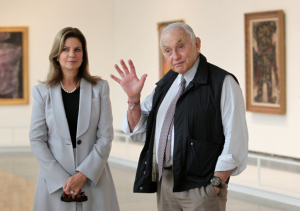

 GREEN BAY, WI — Collin Killoren, the former Kaukauna area teacher accused of possessing child sexual abuse material (CSAM), received his sentence on Thursday.
 WASHINGTON, DC — A cross-party effort